
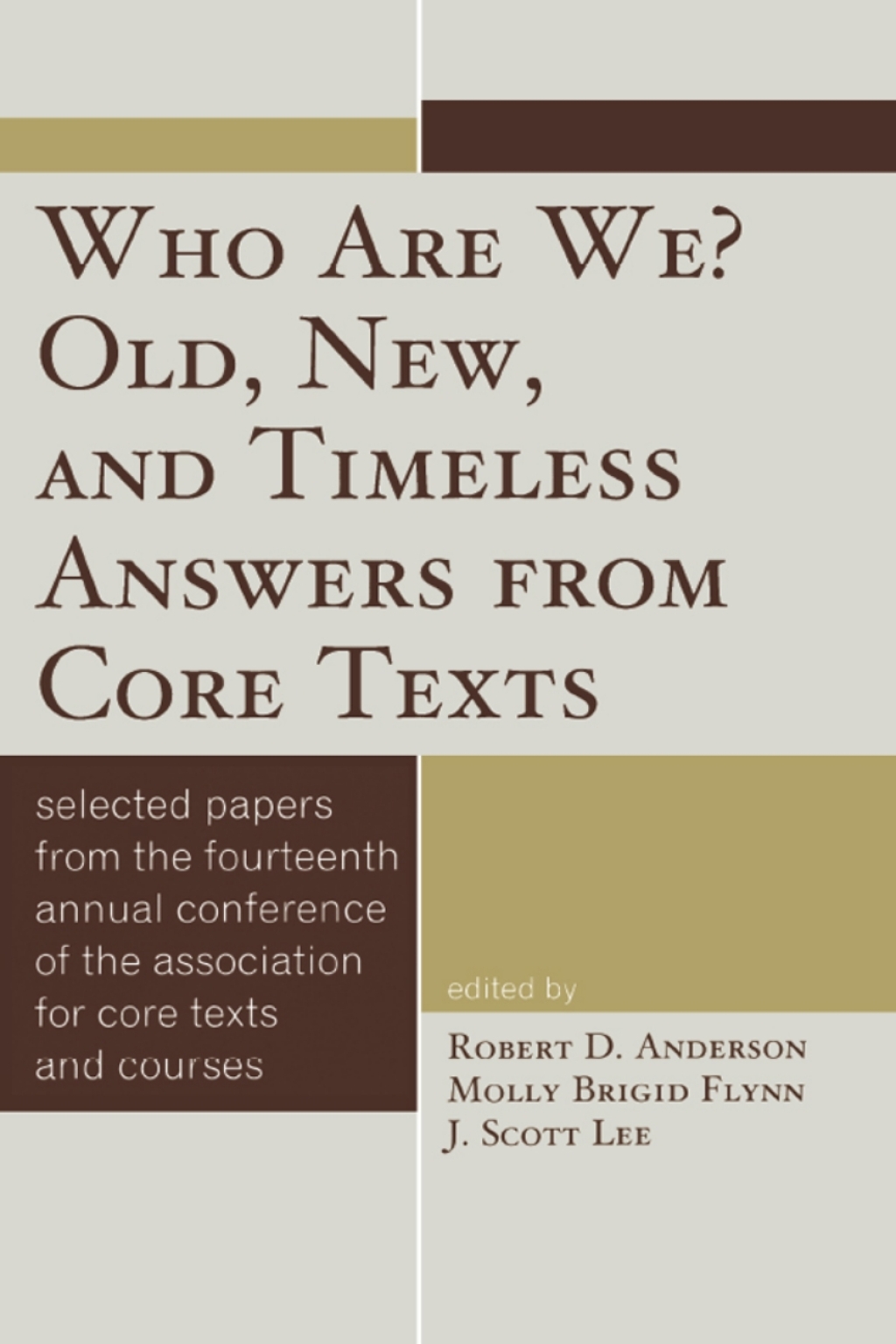
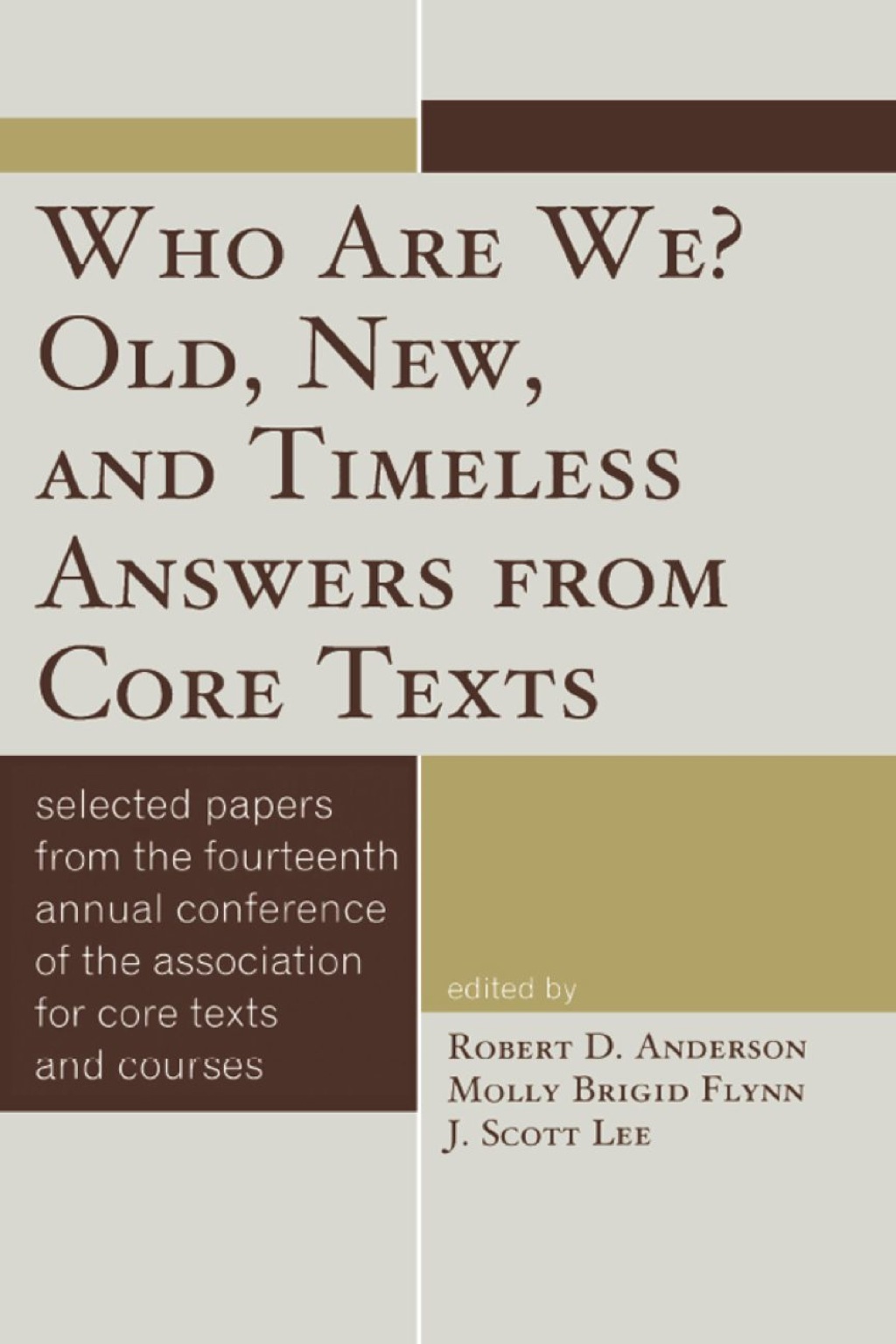
Who Are We? Old, New, and Timeless Answers from Core Texts 1st Edition – PDF/EPUB Version Downloadable
$49.99
Author(s): Robert D. Anderson
Publisher: University Press of America
ISBN: 9780761853718
Edition: 1st Edition
In this volume, the Association for Core Texts and Courses has gathered essays of literary and philosophical accounts that explain who we are simply as persons. Further, essays are included that highlight the person as entwined with other persons and examine who we are in light of communal ties. The essays reflect both the Western experience of democracy and how community informs who we are more generally. Our historical position in a modern or post-modern, urbanized or disenchanted world is explored by yet other papers. And, finally, ACTC educators model the intellectual life for students and colleagues by showing how to read texts carefully and with sophistication — as an example of who we can be.
Related products

Who Are We? Old, New, and Timeless Answers from Core Texts 1st Edition – PDF/EPUB Version Downloadable
$49.99
Author(s): Robert D. Anderson
Publisher: University Press of America
ISBN: 9780761853718
Edition: 1st Edition
In this volume, the Association for Core Texts and Courses has gathered essays of literary and philosophical accounts that explain who we are simply as persons. Further, essays are included that highlight the person as entwined with other persons and examine who we are in light of communal ties. The essays reflect both the Western experience of democracy and how community informs who we are more generally. Our historical position in a modern or
post-modern, urbanized or disenchanted world is explored by yet other papers. And, finally, ACTC educators model the intellectual life for students and colleagues by showing how to read texts carefully and with sophistication — as an example of who we can be.