
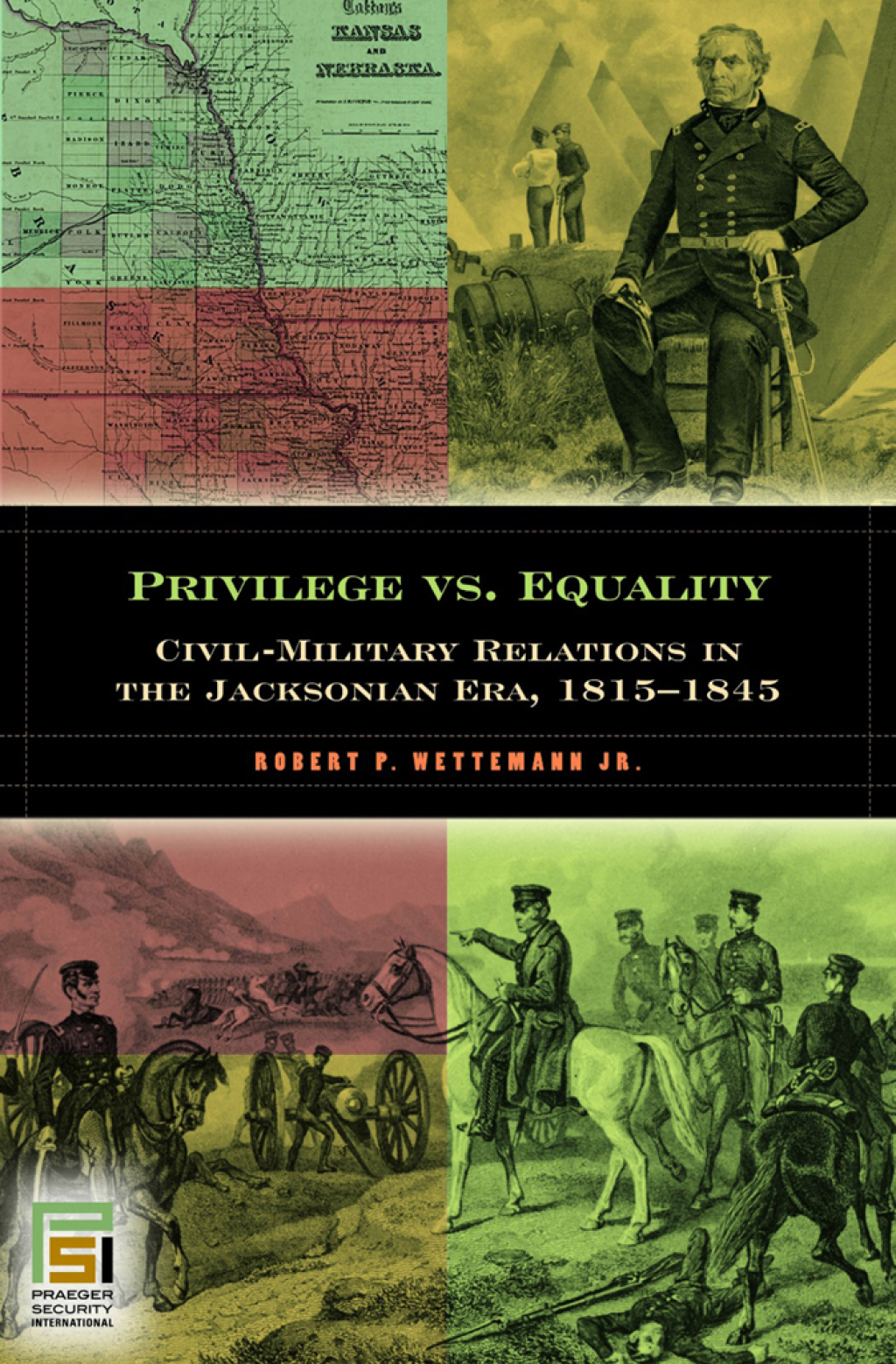
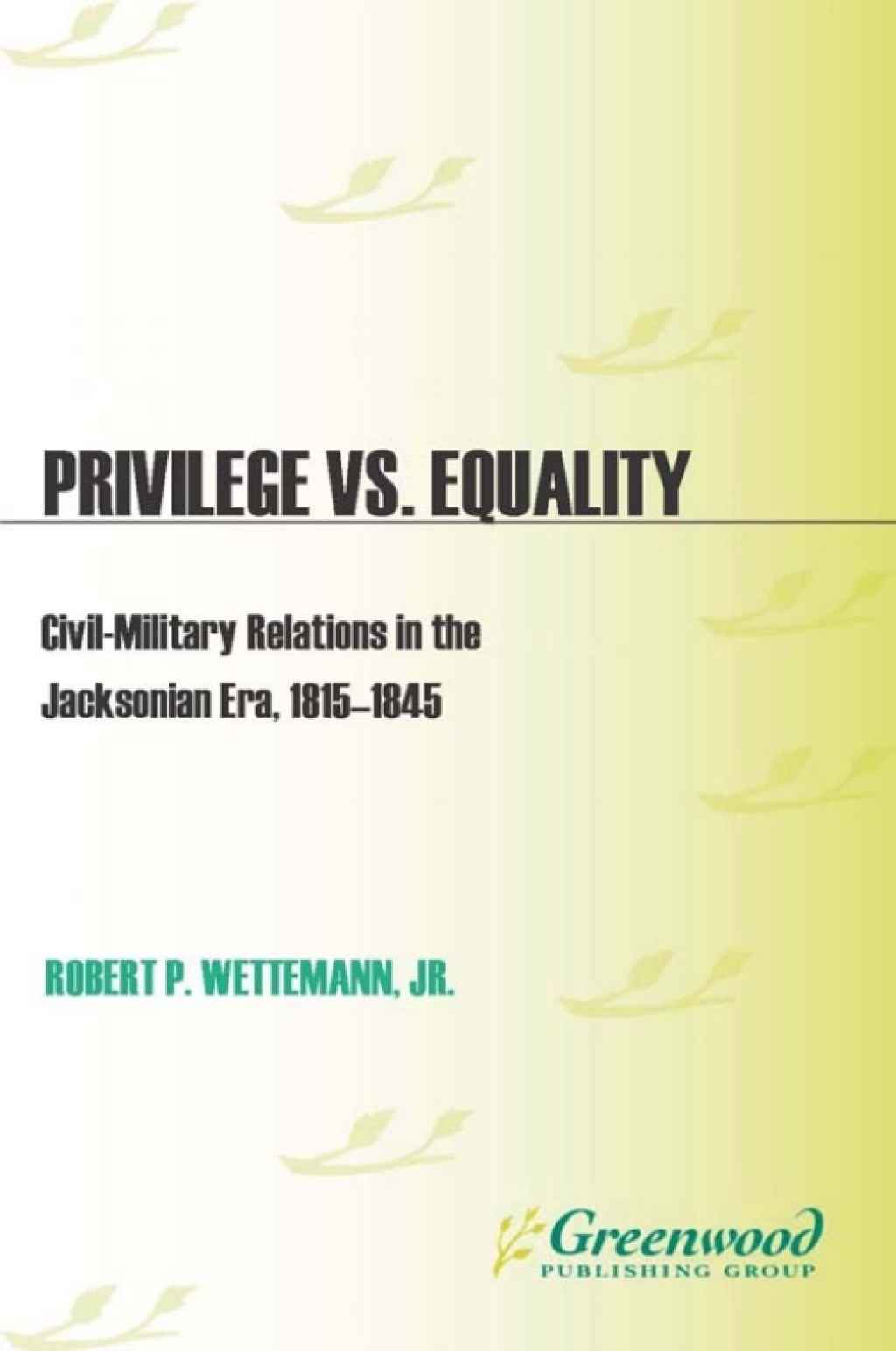
Privilege vs. Equality Civil-Military Relations in the Jacksonian Era, 1815-1845 1st Edition – PDF/EPUB Version Downloadable
$49.99
Author(s): Robert P. Wettemann Jr.
Publisher: Praeger
ISBN: 9798216132639
Edition: 1st Edition
Between 1815-1860, the tiny American army took on many new and often daunting tasks. In the face of civil opposition to the very existence of a professional military, the first battle officers and supporters had to win after 1815 was that of simply preserving some small professional force. As American interests expanded further west and conflict with Native Americans increased, the army was charged with the dual responsibility of peacekeeper and conqueror. Its most dramatic successes, however, came during the Mexican War and the conquest of the American Southwest. Against this back drop, Wetteman crafts a narrative overview of the rivalries, personalities, and events that defined civil-military relations during this era. Beginning in 1815, the U.S. Army struggled for existence within a society that was not convinced that a standing army was worth the expense. At the same time, many questioned the viability of a professional officer corps, citing the innate ability of the American fighting man as demonstrated in earlier conflicts. Although efforts were undertaken early on to define the role and status of a peacetime army, issues of national defense, domestic security, Indian policy, and internal improvements shaped civil military relations over the next 4 12 decades. While the true position of the citizen-soldier in relation to a standing army had not been clearly defined by 1860, the nation had made giant strides towards full acceptance of the idea that the U.S. Army, a standing force commanded by military professionals, was a national necessity.
Related products





Privilege vs. Equality Civil-Military Relations in the Jacksonian Era, 1815-1845 1st Edition – PDF/EPUB Version Downloadable
$49.99
Author(s): Robert P. Wettemann Jr.
Publisher: Praeger
ISBN: 9780313049583
Edition: 1st Edition
Between 1815-1860, the tiny American army took on many new and often daunting tasks. In the face of civil opposition to the very existence of a professional military, the first battle officers and supporters had to win after 1815 was that of simply preserving some small professional force. As American interests expanded further west and conflict with Native Americans increased, the army was charged with the dual responsibility of peacekeeper and conqueror. Its most dramatic successes, however, came during the Mexican War and the conquest of the American Southwest. Against this back drop, Wetteman crafts a narrative overview of the rivalries, personalities, and events that defined civil-military relations during this era. Beginning in 1815, the U.S. Army struggled for existence within a society that was not convinced that a standing army was worth the expense. At the same time, many questioned the viability of a professional officer corps, citing the innate ability of the American fighting man as demonstrated in earlier conflicts. Although efforts were undertaken early on to define the role and status of a peacetime army, issues of national defense, domestic security, Indian policy, and internal improvements shaped civil military relations over the next 4 12 decades. While the true position of the citizen-soldier in relation to a standing army had not been clearly defined by 1860, the nation had made giant strides towards full acceptance of the idea that the U.S. Army, a standing force commanded by military professionals, was a national necessity.
-1st-edition-%E2%80%93-pdfepub-version-downloadable-8741-yaq5g.jpg)