

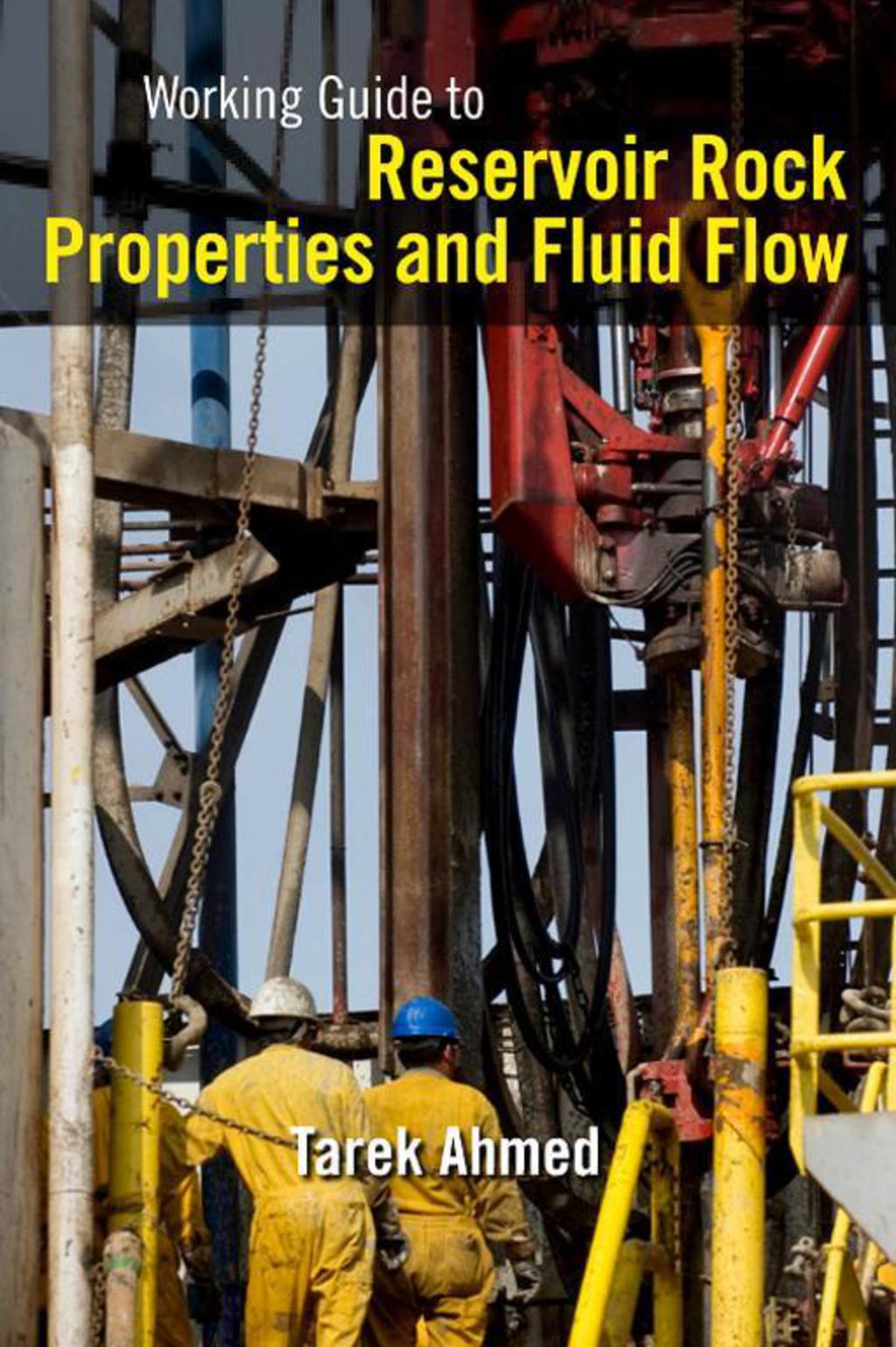

Working Guide to Reservoir Rock Properties and Fluid Flow – PDF/EPUB Version Downloadable
$49.99
Author(s): Tarek Ahmed
Publisher: Gulf Professional Publishing
ISBN: 9781856178259
Edition:
Working Guide to Reservoir Rock Properties and Fluid Flow provides an introduction to the properties of rocks and fluids that are essential in petroleum engineering.
The book is organized into three parts. Part 1 discusses the classification of reservoirs and reservoir fluids. Part 2 explains different rock properties, including porosity, saturation, wettability, surface and interfacial tension, permeability, and compressibility. Part 3 presents the mathematical relationships that describe the flow behavior of the reservoir fluids. The primary reservoir characteristics that must be considered include: types of fluids in the reservoir, flow regimes, reservoir geometry, and the number of flowing fluids in the reservoir. Each part concludes with sample problems to test readers knowledge of the topic covered.
Critical properties of reservoir rocks Fluid (oil, water, and gas)
PVT relationships
Methods to calculate hydrocarbons initially in place
Dynamic techniques to assess reservoir performance
Parameters that impact well/reservoir performance over time
Related products
-1st-edition-%E2%80%93-pdfepub-version-downloadable-8741-yaq5g.jpg)










Working Guide to Reservoir Rock Properties and Fluid Flow – PDF/EPUB Version Downloadable
$49.99
Author(s): Ahmed, Tarek
Publisher: Gulf Professional Publishing
ISBN: 9781856178259
Edition:
Reservoir Rock Properties and Fluid Flow covers properties of natural rocks and fluids that are important in Petroleum and Natural Gas Engineering. In this book major emphasis is placed on fluid storage in reservoir rocks and in flow of fluids through the rock’s pore structure. These phenomena dominate calculations that are common in the areas of reservoir and production engineering. This book is designed for technical professionals and introduces readers to the fundamental as well as the advanced aspects of reservoir engineering. Theoretical concepts coupled with numerous practical case histories are presented to assist reservoir and exploitation engineers in their primary functions—the determination of oil and gas reserves and the maximization of hydrocarbon recovery under primary, secondary, and tertiary schemes.
Critical properties of reservoir rocks Fluid (oil, water, and gas)
PVT relationships
Methods to calculate hydrocarbons initially in place
Dynamic techniques to assess reservoir performance
Parameters that impact well/reservoir performance over time