
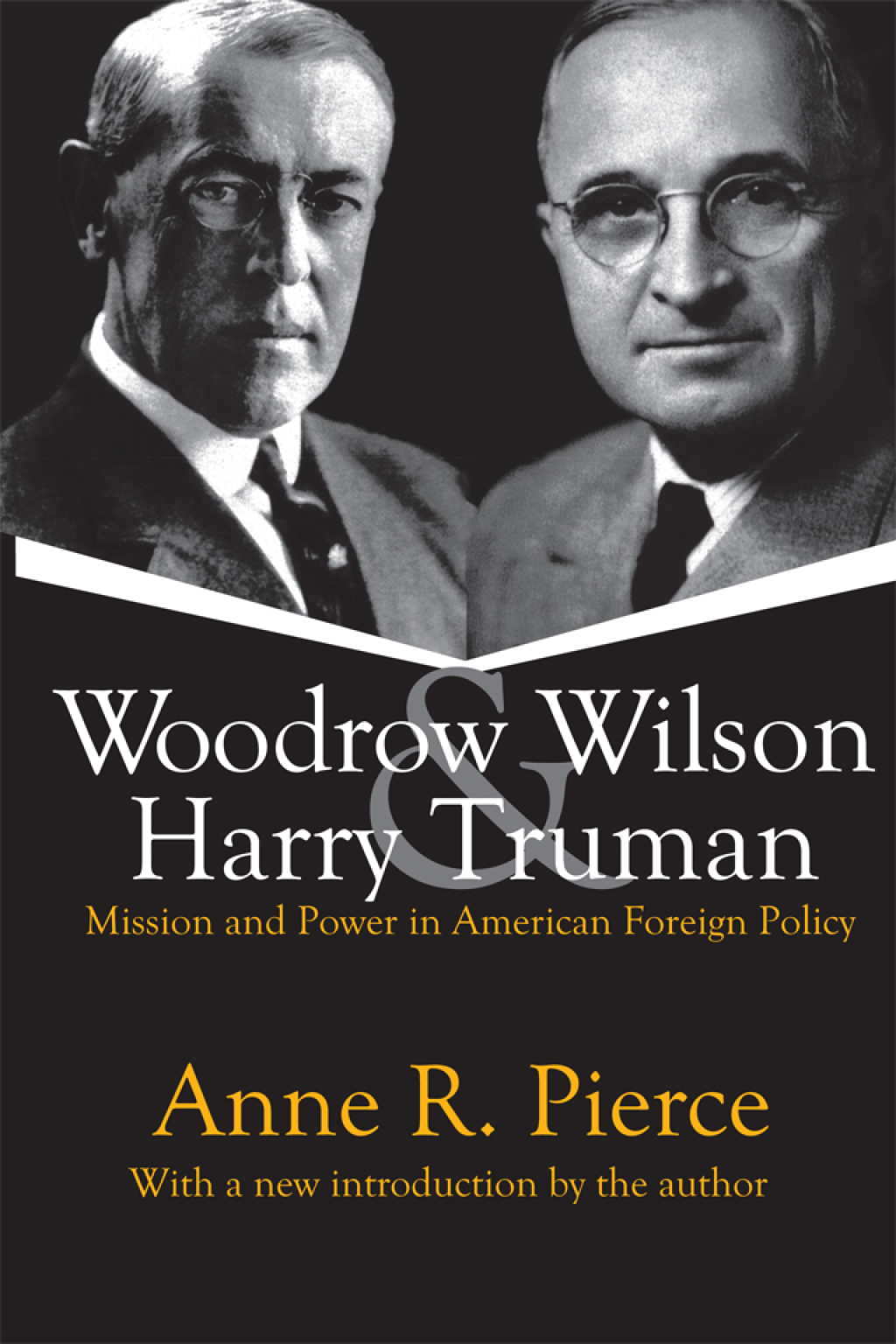

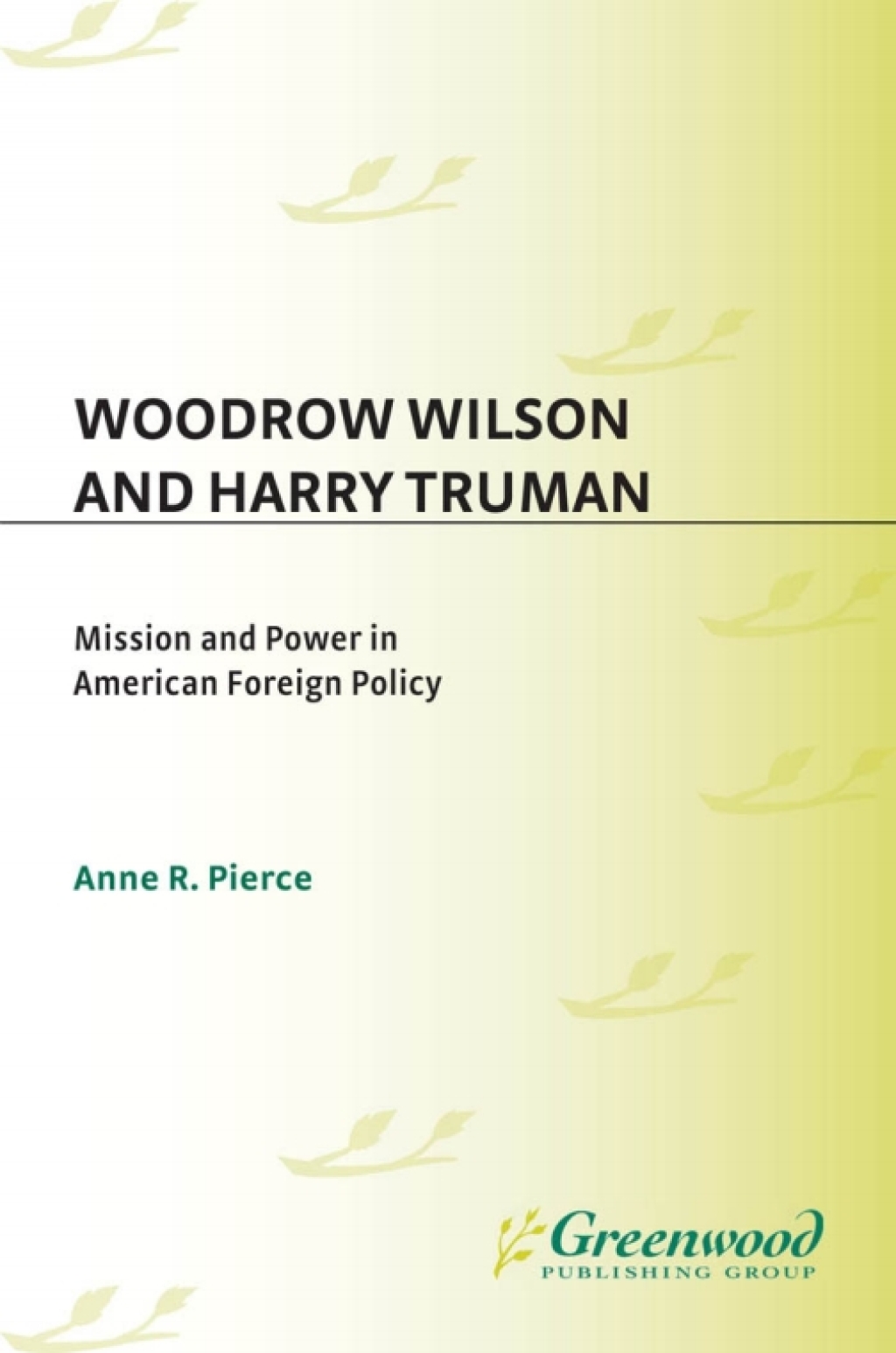
Woodrow Wilson and Harry Truman Mission and Power in American Foreign Policy 1st Edition – PDF/EPUB Version Downloadable
$49.99
Author(s): Anne Pierce
Publisher: Routledge
ISBN: 9781138540712
Edition: 1st Edition
The modern world derives part of its meaning and definition from the foreign policy formulations of Woodrow Wilson and Harry Truman. These presidents viewed the enhancement of American power and the invigoration of American principles as the only response to modem problems such as imperialism, bolshevism, fascism and “total war.” The fact that Europe and Asia had submitted to the disastrous consequences of their ideas meant that we had to project and promote our democratic alternative. If we were to live up to our mission and our character, we had to accept radically new responsibilities. This work reveals the important relationship between these presidents and explores the reverential, yet revolutionary relationship each had with broader American traditions. Wilson came to power at a time when both need and the means for change were apparent. In the face of looming war and global turmoil, Wilson took full advantage of America’s emerging world-power status. While he held to the traditional American ideal of setting a democratic example, he reconceived it as an obligation to actively promote democracy and self-determination abroad. Indeed, he construed our increased involvement in the world as the logical fulfillment of our democratic purpose. In the heated aftermath of World War II, Truman echoed Wilson’s assertion that only the fortification of democracy and the “influence” of America could ease European tensions and prevent future wars. While Truman’s early foreign policy is often said to exhibit Wilsonian internationalism, his later “power politics,” Pierce shows that all of his foreign policy was underlain by his determination never to let what had happened during and between two world wars happen again. Pierce demonstrates that even Truman’s most avid departure from Wilsonianism, his plunge into geopolitics and his build-up of the military power of the free world, was saturated with Wilsonian ideals. “Containment” was underlain by the conviction that, even though it faced fascism and bolshevism, freedom was on the march, and by the surety that democracy is lasting, peaceful and beneficial. As Pierce studies these presidents within the synergistic interplay of ideas and policies, she compels us toward a fruitful dialogue with the American past. Truman’s brilliantly construed version of Wilsonianism, this book argues, holds great promise for us today.
Related products





Woodrow Wilson and Harry Truman Mission and Power in American Foreign Policy 1st Edition – PDF/EPUB Version Downloadable
$49.99
Author(s): Anne Pierce
Publisher: Praeger
ISBN: 9780313389580
Edition: 1st Edition
Recurring throughout our history are the ideas that repressive governments are doomed to failure; that liberty is a motivating force; that freedom comes with responsibilities and must be guided by principles; that the example of our democracy is a challenge to all forms of political repression and an inspiration to those desiring to be free. Wilson and Truman took these ideas as the starting point for their policy formulation and pronouncements. Truman both acknowledged his indebtedness to Wilson and learned from his mistakes. This study places the two presidents within the broader American tradition and explores the way they combined reverence for the past with innovative policies. Pierce provides a cohesive argument against those who simplify and categorize American ideals in order to demean them. Her findings show that the assumption that Wilson was an idealist while Truman was a realist distorts our understanding of these men and denies the seriousness of their positions. She reveals Truman’s brilliance as a foreign policy strategist and his fervency as a spokesperson for American ideals. He was never willing to dispense with geopolitics for the sake of internationalism, nor with internationalism for the sake of geopolitics, but insisted that our mission and our power were combined threads in our work for freedom. Truman’s wisely construed version of Wilsonianism, which itself was an interpretation of America’s mission and power, holds great promise for the United States today.
-1st-edition-%E2%80%93-pdfepub-version-downloadable-4292-c4gaw.jpg)