
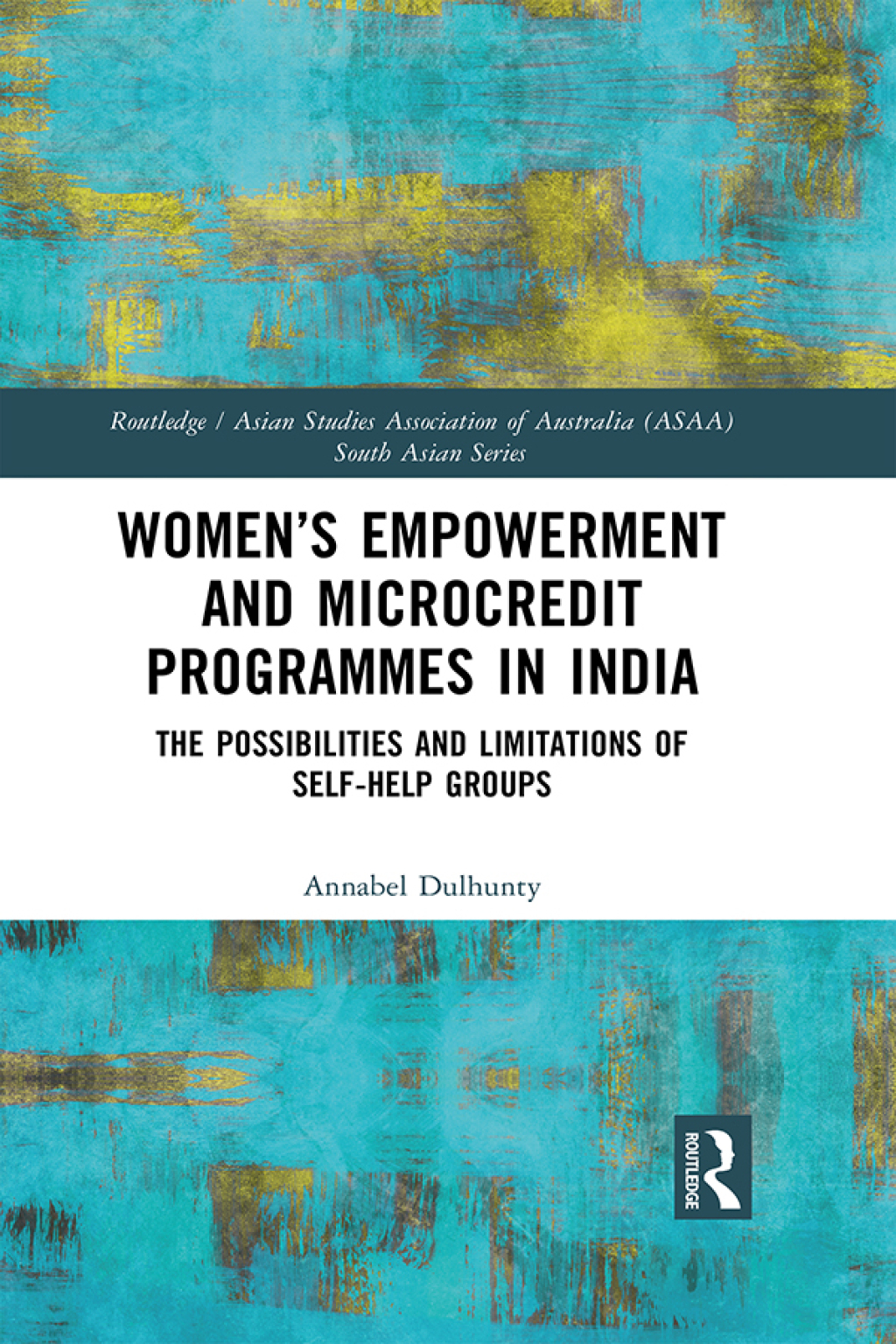

Women’s Empowerment and Microcredit Programmes in India The Possibilities and Limitations of Self-Help Groups 1st Edition – PDF/EPUB Version Downloadable
$49.99
Author(s): Annabel Dulhunty
Publisher: Routledge
ISBN: 9781032411309
Edition: 1st Edition
Women’s Empowerment and Microcredit Programs in India examines the value of microcredit-based self-help groups (SHGs) for women in India and provides an alternative model for women’s empowerment programming. The microcredit sector continues to boom globally – with private investors, governments and multilateral financial institutions all investing substantial amounts in self-help group programming. Nowhere is this more evident than in India, where the industry has further been deregulated in recent years. Much of the rationale for increased investment in microcredit is based on the idea that it improves ‘women’s empowerment’. But is this true? Researchers have fiercely debated the value of microcredit programs for women, with some arguing that it is exploitative, and others contending that it is empowering. This book provides new insights into women’s empowerment and microcredit programming, elaborating on the themes of power, dignity, mobility and solidarity. It takes a nuanced view of the complexities surrounding self-help group programming and women’s empowerment and argues that the model of microcredit self-help group programming is key to whether it helps or harms women. By focusing on the experiences and voices of microcredit self-help group members in West Bengal, India, this book elaborates on the idea of microcredit models existing on a continuum, from ‘smart economics’ to more holistic feminist versions of programming. It will be of interest to scholars in development studies, anthropology, sociology, gender studies and public policy and Asian Studies.