
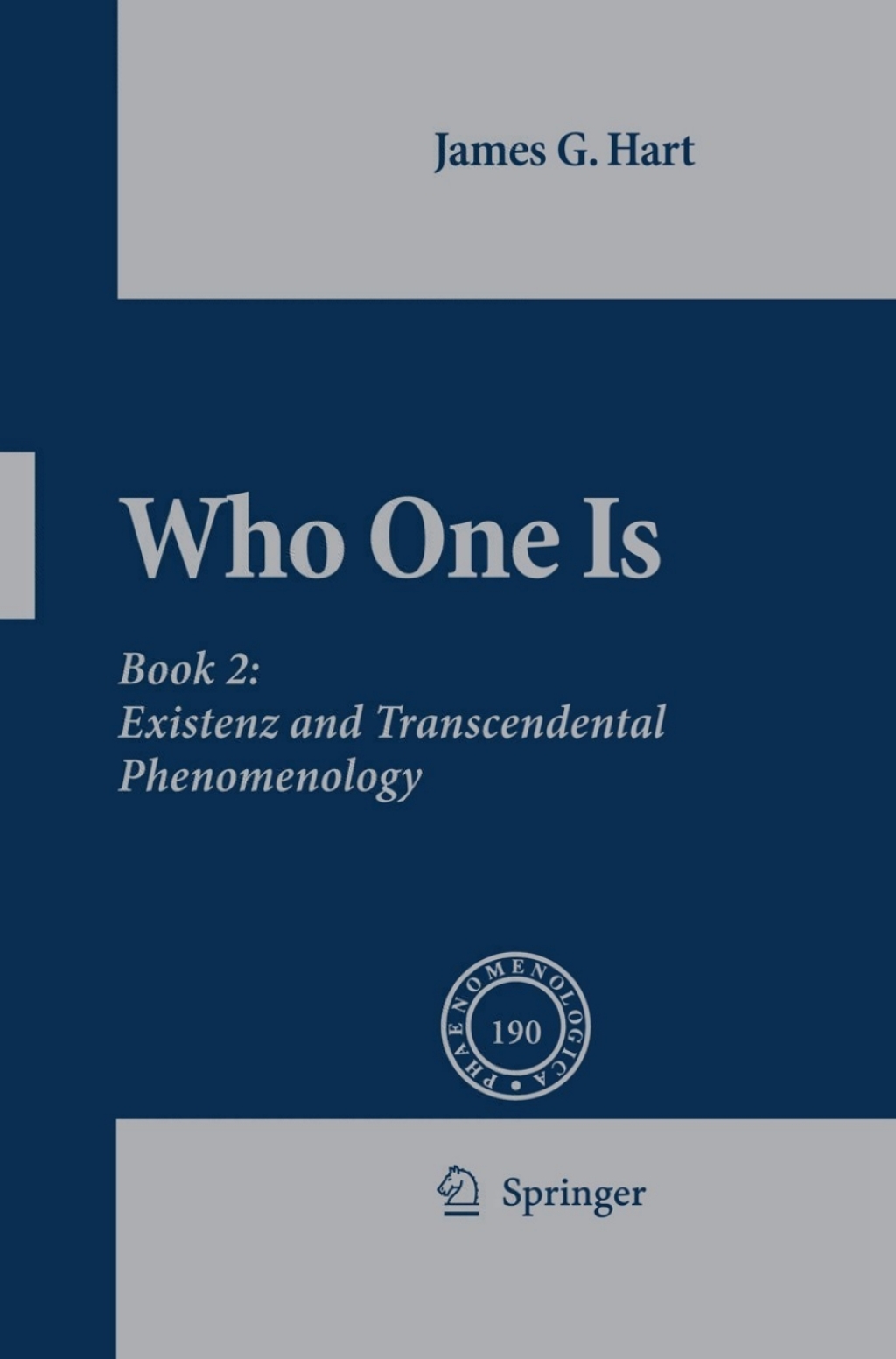


Who One Is Book 2: Existenz and Transcendental Phenomenology – PDF/EPUB Version Downloadable
$49.99
Author(s): J. G. Hart
Publisher: Springer
ISBN: 9781402091773
Edition:
If I am asked in the framework of Book 1, “Who are you?†I, in answering, might say “I don’t know who in the world I am.†Nevertheless there is a sense in which I always know what “I†refers to and can never not know, even if I have become, e.g., amnesiac. Yet in Book 2, “Who are you?†has other senses of oneself in mind than the non-sortal “myselfâ€. For example, it might be the pragmatic context, as in a bureaucratic setting; but “Who are you?†or “Who am I?†might be more anguished and be rendered by “What sort of person are you?†or “What sort am I?†Such a question often surfaces in the face of a “limit-situationâ€, such as one’s death or in the wake of a shameful deed where we are compelled to find our “centersâ€, what we also will call “Existenzâ€. “Existenz†here refers to the center of the person. In the face of the limit-situation one is called upon to act unconditionally in the determination of oneself and one’s being in the world. In this Book 2 we discuss chiefly one’s normative personal-moral identity which stands in contrast to the transcendental I where one’s non-sortal unique identity is given from the start. This moral identity requires a unique self-determination and normative self-constitution which may be thought of with the help of the metaphor of “vocationâ€. We will see that it has especial ties to one’s Existenz as well as to love. This Book 2 claims that the moral-personal ideal sense of who one is is linked to the transcendental who through a notion of entelechy. The person strives to embody the I-ness that one both ineluctably is and which, however, points to who one is not yet and who one ought to be. The final two chapters tell a philosophical-theological likely story of a basic theme of Plotinus: We must learn to honor ourselves because of our honorable kinship and lineage “Yonderâ€.