
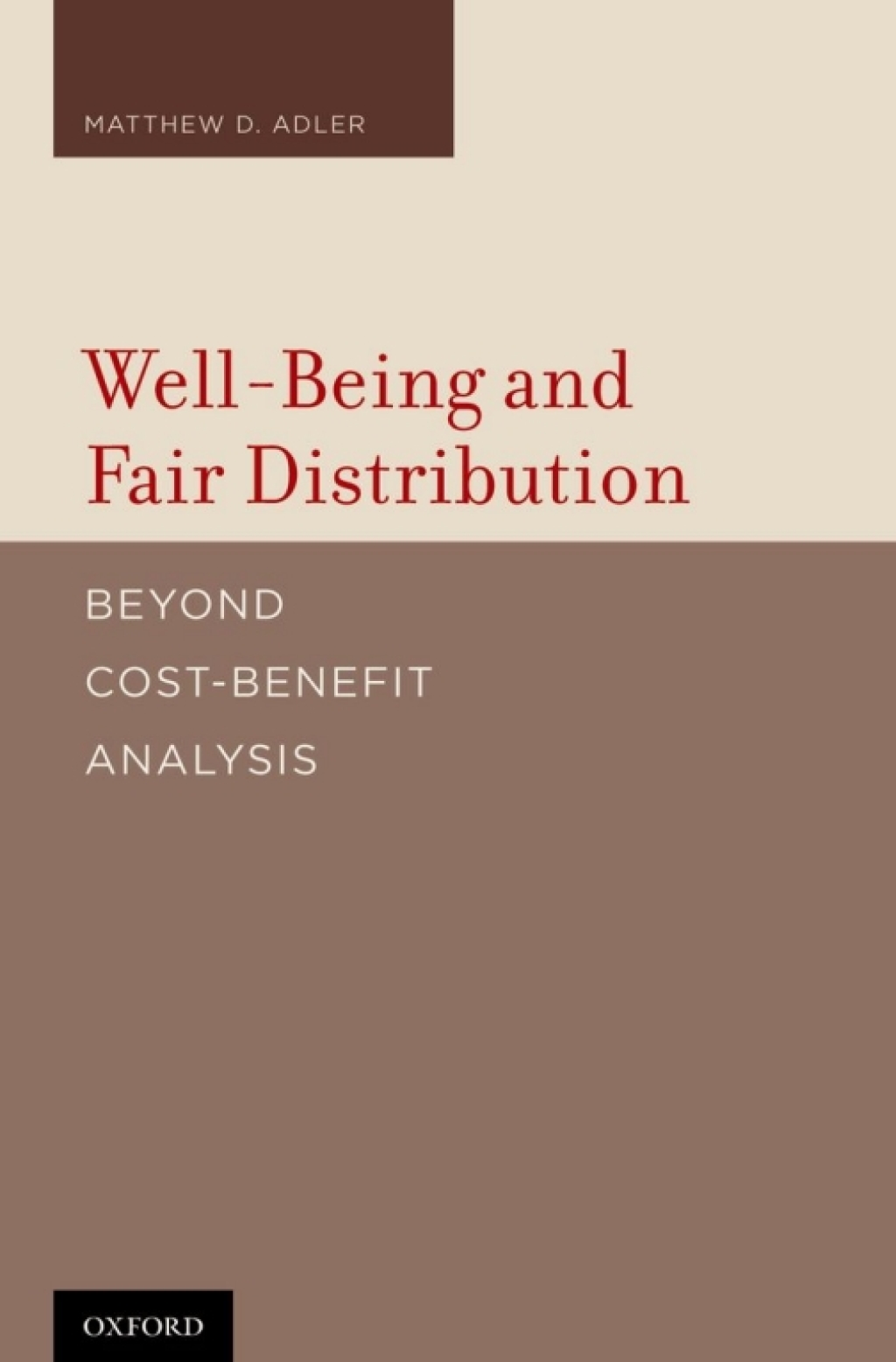

Well-Being and Fair Distribution Beyond Cost-Benefit Analysis – PDF/EPUB Version Downloadable
$49.99
Author(s): Matthew Adler
Publisher: Oxford University Press
ISBN: 9780195384994
Edition:
In Well-Being and Fair Distribution: Beyond Cost-Benefit Analysis, author Matthew D. Adler provides readers with a comprehensive, philosophically grounded argument for the use of social welfare functions as a framework for governmental policy analysis–a framework that is welfarist but not utilitarian, and sensitive to the distribution of human well-being. Well-Being and Fair Distribution addresses a range of relevant theoretical issues, including the nature of well-being and the possibility of interpersonal welfare comparisons; the moral value of equality, and how that bears on the form of the social welfare function; social choice under uncertainty; and the integration of individual responsibility into the social-welfare function approach. Adler also explores issues of implementation by looking at how survey data and other sources of evidence might be used to calibrate both a well-being metric and a social welfare function, and discussing whether distributive goals are ever best pursued through regulation rather than the tax system. In working through this range of theoretical and practical issues, Well-Being and Fair Distribution draws from a wide variety of literatures, including philosophical scholarship on equality, “prioritarianism,” responsibility, well-being, and personal identity over time; the social choice literature within economics; applied economic literatures concerning the measurement of inequality and poverty; legal and policy-analytic scholarship on cost-benefit analysis, environmental justice, and the choice between regulation and taxation; and the burgeoning field of “happiness studies.”