
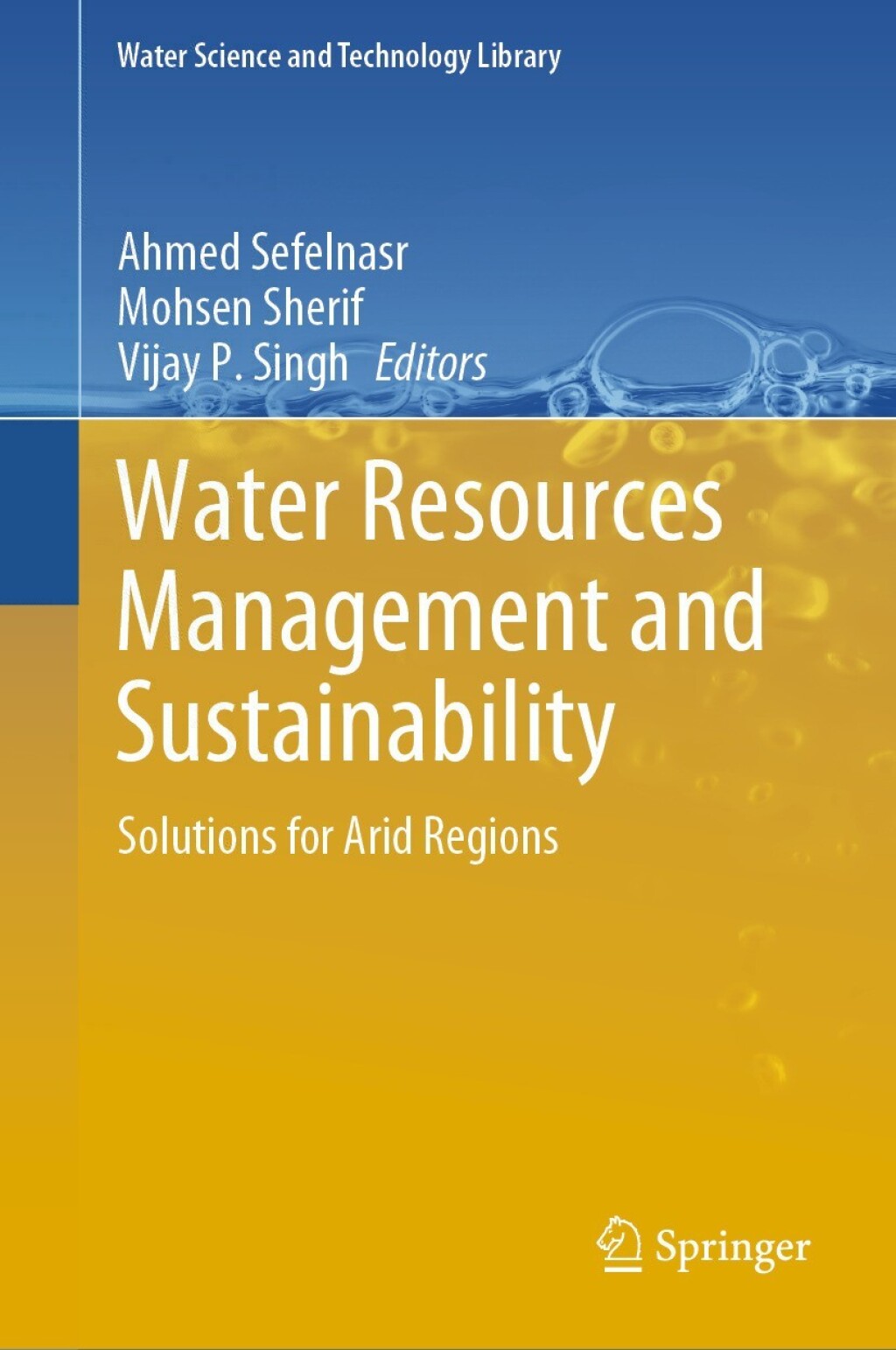
Water Resources Management and Sustainability Solutions for Arid Regions – PDF/EPUB Version Downloadable
$49.99
Author(s):
Publisher: Springer
ISBN: 9783031805196
Edition:
The first section deals with hydrological topics, problems, and principles. In this chapter, detailed studies related to hydrological monitoring are carried out. Overland flow velocity estimation, wireless sensor networks, and application of deep learning techniques are discussed. These topics are helpful to estimate overland flow velocities using tracer techniques based on the infrared thermography and fluorescent properties of quinine which can help in the visualization of shallow flows, evaluation of high-resolution rainfall measurement, and extracting water bodies from high-resolution drones and satellite imagery using an integrated deep learning method. The chapter critically discusses the advantage of thermal tracers, utilizing the wireless sensor networks for the accurate capture of spatially varied precipitation patterns, and evaluation and quality assessment of water extraction using deep learning techniques. It highlights recommendations and limitations that should be taken into account for hydrological monitoring. Moreover, this section discusses rainfall and floods and their related attributes in arid regions, including flood mitigation and risk assessment. Flood mapping and assessment, recent trends of floods and their impacts are comprehensively discussed. The outcomes are for useful hydrologic infrastructure design under changing climate. This part also highlights the importance of applying new methodologies, considering the statements and questions asked by scientists and researchers. The second section addresses droughts and their analysis and assessment. Drought events are great challenges faced by nature in the wake of climate change. This part will help stakeholders gather useful information and develop a deep understanding of these salient features of climate change’s impacts. It deals with the various studies conducted in the field of drought and flash drought. Flash drought is a composition of various factors leading to intense drought conditions. So, limitations and recommendations to mitigate drought events are discussed in detail. The third section discusses groundwater as an important component in the water budget in arid regions. Threats, recharges, quality, and management options of this resource are also discussed. Beginning with a perspective on the management of this resource, the papers go on to discuss rational decision making, challenges, use of information technology, integrated management, and modeling for groundwater resources management. Section four deals with water quality. This part discusses modern techniques for water quality assessment and treatment procedures. The industrial and commercial area generates a large amount of waste which is indiscriminately disposed of. leading to several environmental issues. This section provides a detailed analysis on water quality, hydrogeochemistry, impact and benefits of treating municipal wastewater to tertiary quality, groundwater table and quality deterioration. Recommendations for adequate planning, design, construction, and location of open dumpsites to ameliorate groundwater pollution, and the closing of trace metal boreholes to avoid possible health implications or outbreaks that are likely occurring or are expected to occur. Section five discusses water resources management. This topic has been receiving a fair amount of attention in many arid countries of the world and more specifically in the Gulf region. This section addresses regulations for conservation, reuse, and security. The limited freshwater resources must be developed, managed, and used as efficiently as possible. Decision support systems for water resources planning, management, and water rights analyses and control have been discussed as well.
Related products
-1st-edition-%E2%80%93-pdfepub-version-downloadable-8741-yaq5g.jpg)
Water Resources Management and Sustainability Solutions for Arid Regions – PDF/EPUB Version Downloadable
$49.99
Author(s):
Publisher: Springer
ISBN: 9783031245053
Edition:
The book will be of interest to researchers and practitioners in the field of hydrology, environmental engineering, agricultural engineering, earth sciences, and watershed and range sciences, as well as to those engaged in water resources planning, development and management in arid and semi-arid areas. Given the lack of literature on arid regions, this book not only provides an assessment of water resource management in arid regions but also addresses solutions, and it can also be an outstanding textbook on water resources management and sustainability for arid regions.This volume in the Water Science and Technology Library includes selected papers that have been presented and discussed during the International Water Resources Management and Sustainability: Solutions for Arid Regions, 22–-24 March 2022, Dubai, United Arab Emirates. The conference was organized by the National Water and Energy Center, UAE University, in collaboration with the South Australian Goyder Institute for Water Research, and the Department for Environment and Water, Government of South Australia. The conference attracted a large number of nationally and internationally well-known experts who have been at the forefront of water resources management and sustainability in arid and semi-arid regions. More than 55 countries, covering the five continents, were represented. The conference was designed to facilitate and encourage new perspectives on how science and innovative technologies can transform water management and sustainability in arid and semi-arid regions around the world. It addressed current challenges and priorities in water management and provided a forum to share knowledge, experiences, research, and discoveries.