
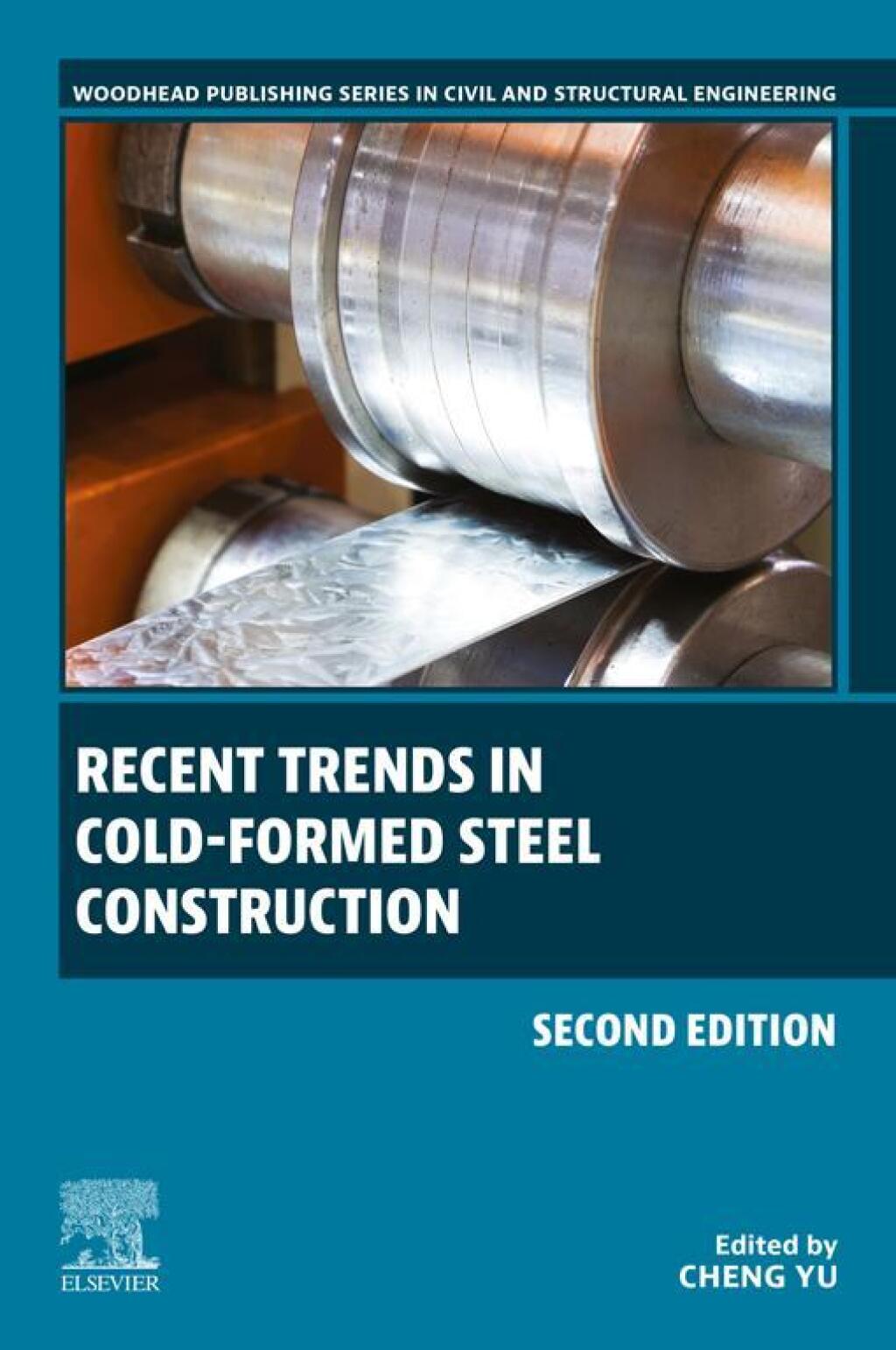

Recent Trends in Cold-Formed Steel Construction 2nd Edition – PDF/EPUB Version Downloadable
$49.99
Author(s): Cheng Yu
Publisher: Woodhead Publishing
ISBN: 9780443190551
Edition: 2nd Edition
Recent Trends in Cold-Formed Steel Construction, Second Edition focuses on the application and use of this important construction material. In this updated edition, new chapters take on these developments, offering updates on cutting-edge new technologies and design methods for using cold-formed steel as a structural material and providing technical guidance on how to design and build sustainable and energy-efficient cold-formed steel buildings. Sections introduce codes, specifications and design methods, provide computational analysis of cold-formed steel structures, examine the structural performance of cold-formed steel buildings, and review thermal performance, acoustic performance, fire protection, floor vibrations and blast resistance.
Over the last few years, there has been major breakthroughs for cold-formed steel design with modular building applications now becoming more widely accepted. Other scientific developments include research on system reliability applications, AI machine learning, and the use of high strength steel, as well as new connection methods and changes in DSM codes.
- Addresses building science issues and provides performance solutions for the design of cold-formed steel buildings
- Provides guidance for using next generation design methods, computational tools and technologies
- Edited by an experienced researcher and educator with significant knowledge on new developments in cold-formed steel construction
- Covers new developments such as modular construction, machine learning and code developments in Europe, Australia and China