
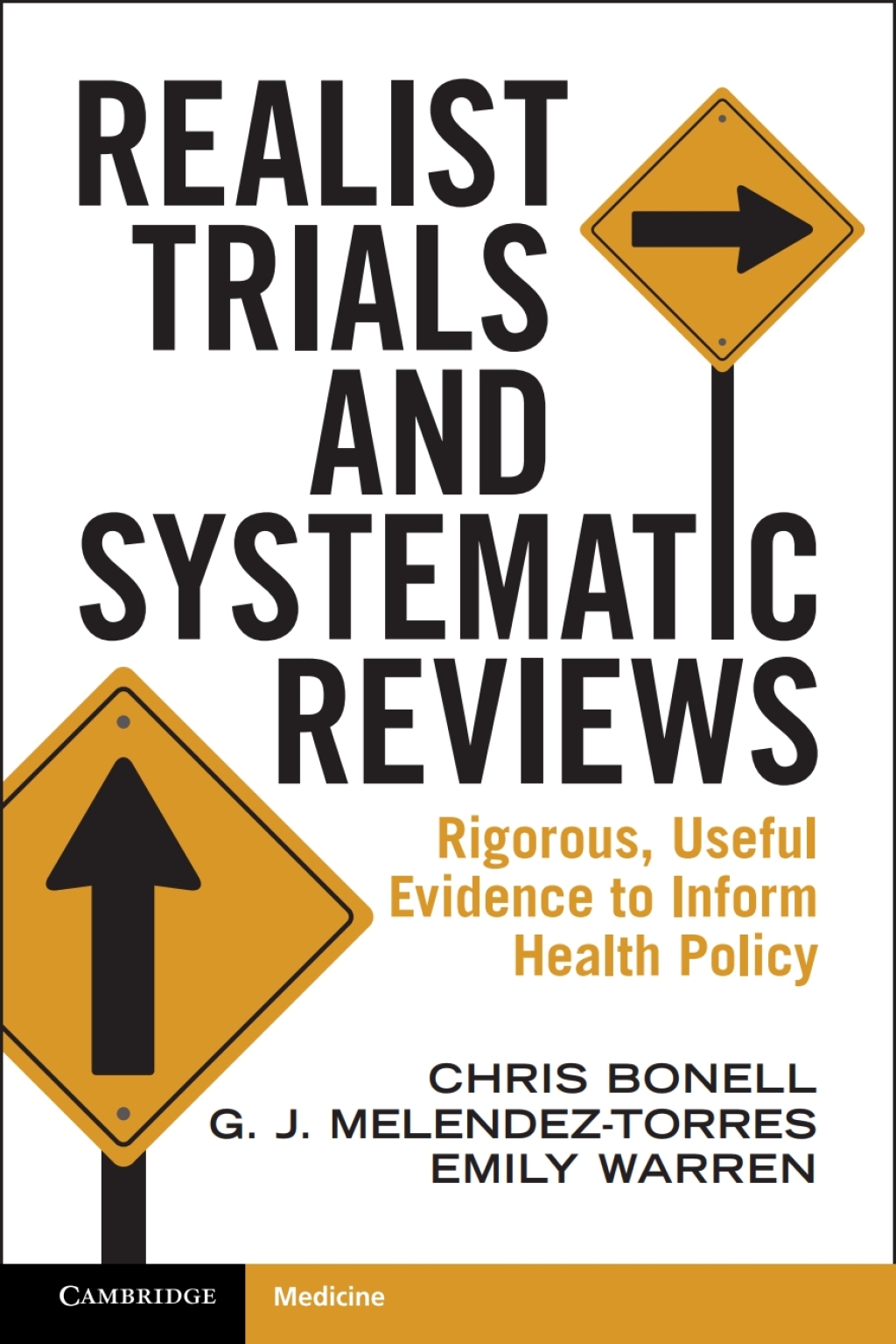

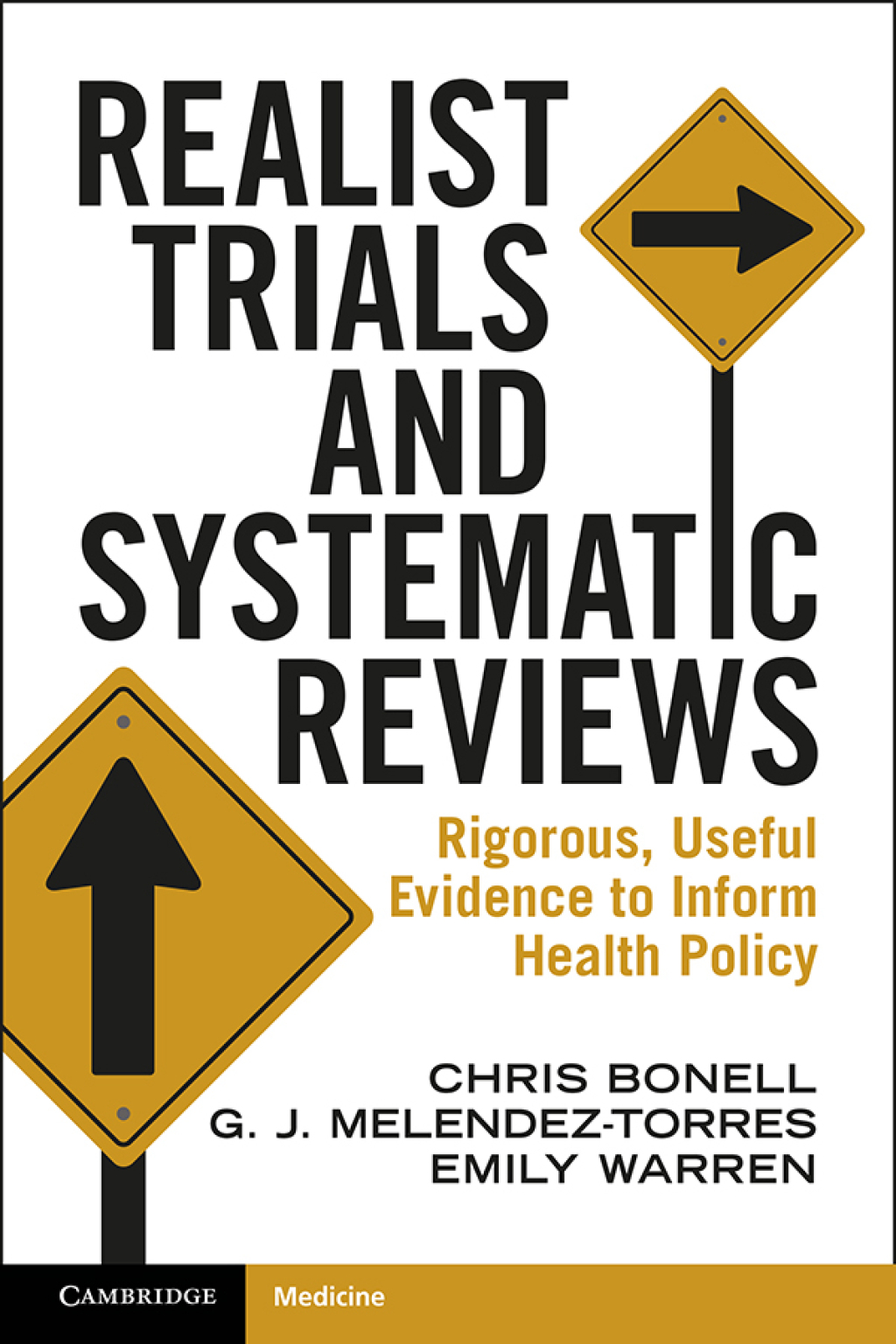
Realist Trials and Systematic Reviews Rigorous, Useful Evidence to Inform Health Policy – PDF/EPUB Version Downloadable
$49.99
Author(s): Chris Bonell; G. J. Melendez-Torres; Emily Warren
Publisher: Cambridge University Press
ISBN: 9781009456609
Edition:
This book describes an innovative approach to the evaluation of complex health interventions, assessing what interventions work, how and for whom. Rejecting the stalemate between trials and realist evaluation, it draws on the best of both. Randomised controlled trials and systematic reviews offer the least biased means of assessing intervention effects but tell us little scientifically about how interventions work. Policy-makers and practitioners are also not supported to decide which interventions are likely to achieve most benefits in their local contexts. Realists use other forms of evaluation and evidence synthesis exploring how intervention mechanisms interact with context to generate outcomes. But these approaches lack rigour in assessing causality. This book proposes how realist evaluation methods may be incorporated within randomised controlled trials and systematic reviews. This enables evaluations and evidence synthesis to benefit from the more nuanced questions posed within realist enquiry while maintaining rigour in assessing causality.
Related products
-1st-edition-%E2%80%93-pdfepub-version-downloadable-4292-c4gaw.jpg)




Realist Trials and Systematic Reviews Rigorous, Useful Evidence to Inform Health Policy – PDF/EPUB Version Downloadable
$49.99
Author(s): Chris Bonell; G. J. Melendez-Torres; Emily Warren
Publisher: Cambridge University Press
ISBN: 9781009456609
Edition:
This book describes an innovative approach to the evaluation of complex health interventions, assessing what interventions work, how and for whom. Rejecting the stalemate between trials and realist evaluation, it draws on the best of both. Randomised controlled trials and systematic reviews offer the least biased means of assessing intervention effects but tell us little scientifically about how interventions work. Policy-makers and practitioners are also not supported to decide which interventions are likely to achieve most benefits in their local contexts. Realists use other forms of evaluation and evidence synthesis exploring how intervention mechanisms interact with context to generate outcomes. But these approaches lack rigour in assessing causality. This book proposes how realist evaluation methods may be incorporated within randomised controlled trials and systematic reviews. This enables evaluations and evidence synthesis to benefit from the more nuanced questions posed within realist enquiry while maintaining rigour in assessing causality.