
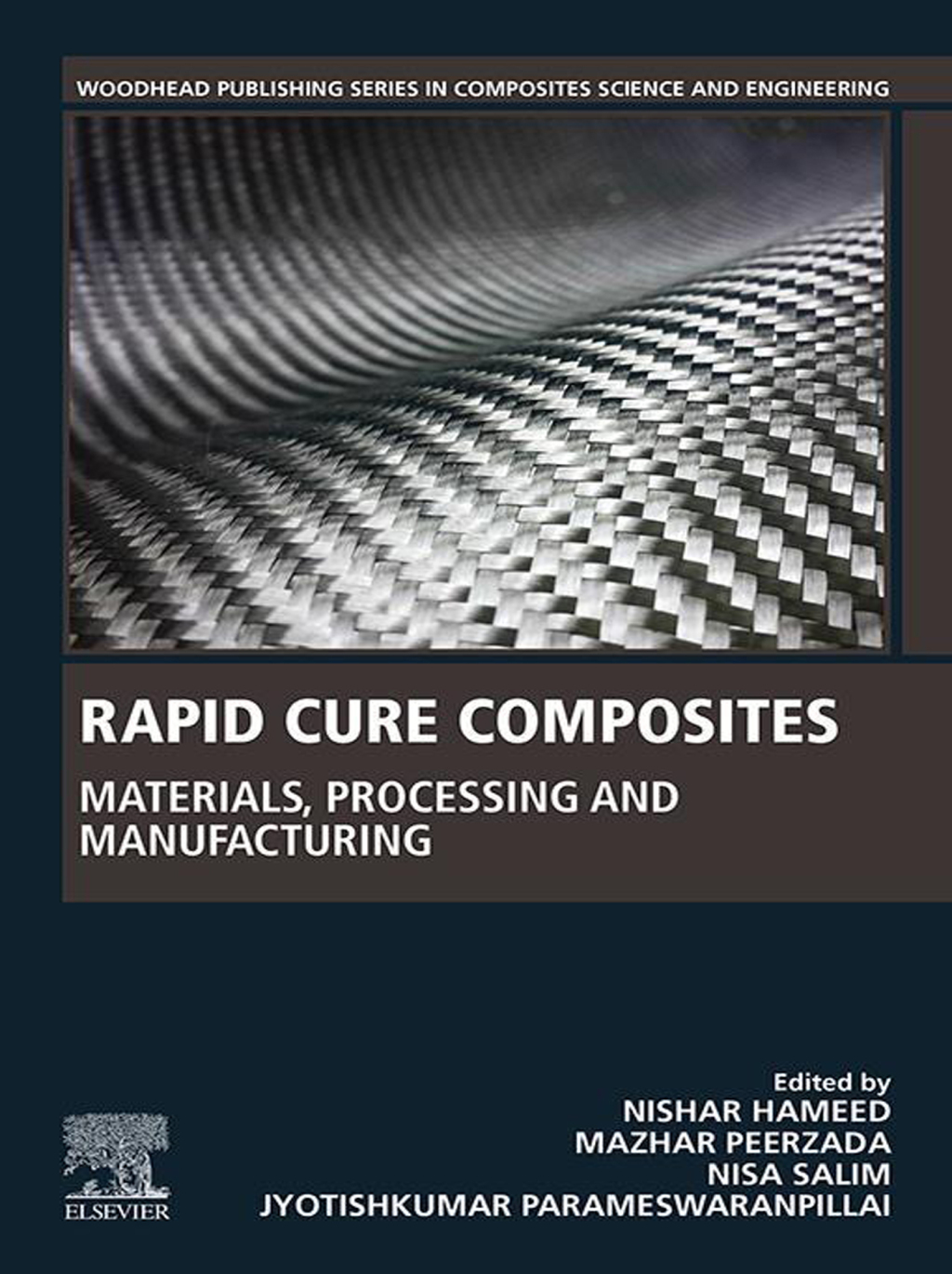


Rapid Cure Composites Materials, Processing and Manufacturing 1st Edition – PDF/EPUB Version Downloadable
$49.99
Author(s): Nishar Hameed; Mazhar Peerzada; Nisa Salim; Jyotishkumar Parameswaranpillai
Publisher: Woodhead Publishing
ISBN: 9780323983372
Edition: 1st Edition
Rapid Cure Composites: Materials, Processing and Manufacturing presents up-to-date information on the design criteria to formulate matrix systems for rapid curing. Emphasis is placed on the role different materials [resin compound and fiber reinforcement] play in developing fast curing composites, assessment of current and novel manufacturing techniques for adapting fast curing processes, the comparison between conventional curing and rapid curing, and different applications in various industrial sectors [e.g., aerospace, automotive, renewables and marine]. The book will be an essential reference resource for academic and industrial researchers working in the field of composite materials, processing and manufacturing organizations, materials scientists, and more.
Polymer composites are widely used in several industries, including aerospace, automobile, spray and coatings, and electronics due to their lightweight and superior mechanical properties. However, one of the dominant hurdles towards their growth in commercial industries is the long curing cycle and slow production.
- Comprehensively addresses the scientific and technological development of rapid cured epoxy composites
- Covers, in detail, the chemistry, processing, structure and performance of rapid cured epoxy composites
- Provides detailed comparisons of how/why rapid cure composites are different to conventional composites
- Discusses the challenges of the existing technology and future trends