
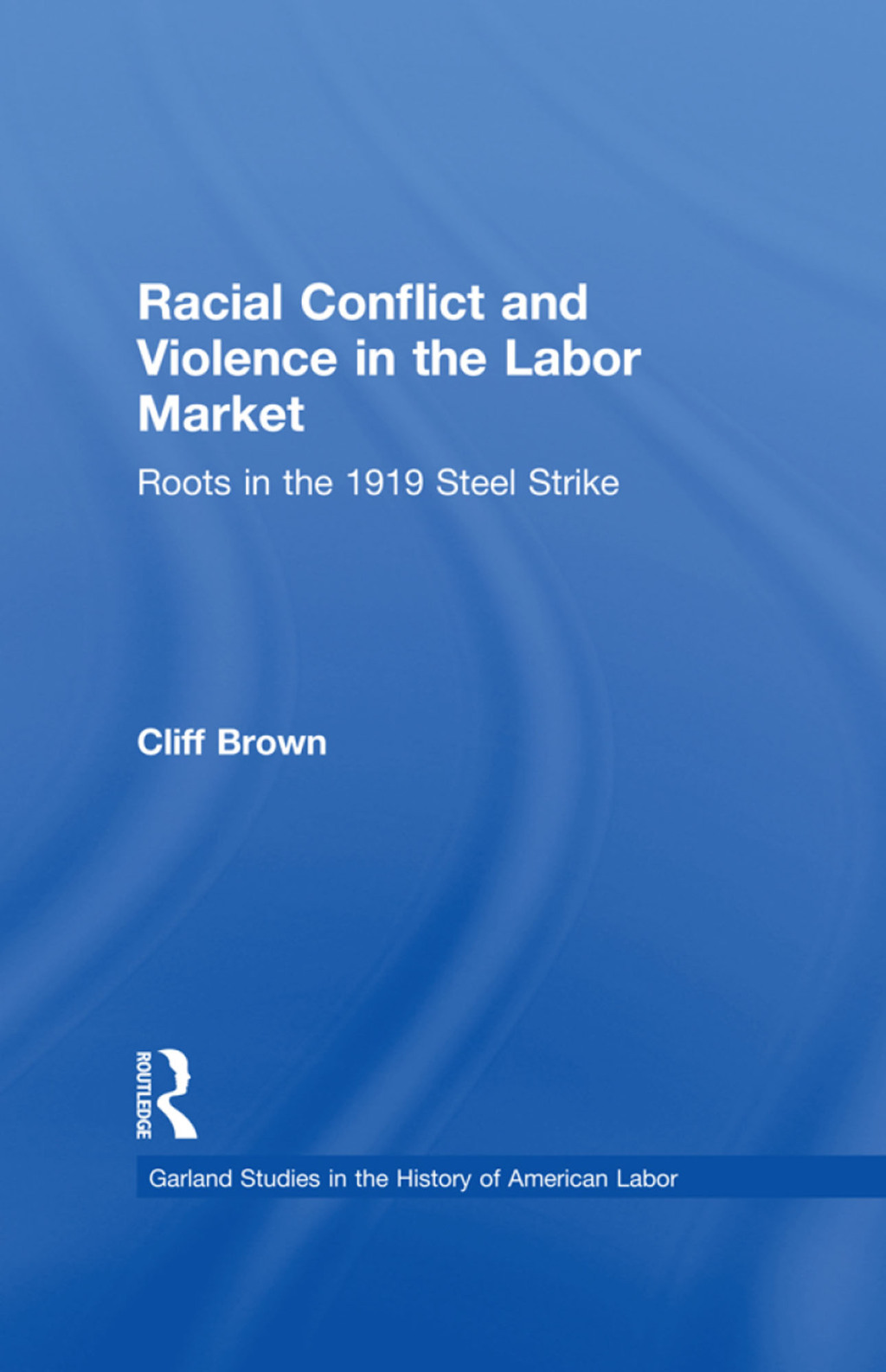

Racial Conflicts and Violence in the Labor Market Roots in the 1919 Steel Strike 1st Edition – PDF/EPUB Version Downloadable
$49.99
Author(s): Cliff Brown
Publisher: Routledge
ISBN: 9781138880191
Edition: 1st Edition
This book focuses on community-level race relations during the 1919 Steel Strike, when intense job competition contributed to racial conflict among the nation’s steel workers. As the Great Migration brought thousands of black workers to northern cities, their lower labor costs generated racially split labor markets in the industrial sector. Further, the discriminatory policies of labor unions forced many blacks to serve as strike breakers during periods of class conflict. As a result, the migration heightened racial conflict and undercut important union organizing initiatives. The 1919 Steel Strike illustrates how racial divisions crippled many American unions, a pattern that helps to explain the demise of organized labor during the 1920’s. No previous studies of the 1919 Steel Strike have systematically compared community processes to determine how local events shaped the strike’s outcome. Despite the failure of the 1919 Steel Strike, the varied experiences of workers in different communities reveal much about the causes of racial conflict and the possibilities of interracial solidarity. This study finds that patterns of black migration, local government repression of labor, the organizational strength of local unions, and employers’ efforts to inflame racial tension all help to explain community-level variation in interracial solidarity and conflict. (Ph. D. dissertation, Emory University, 1996; revised with new preface)
-1st-edition-%E2%80%93-pdfepub-version-downloadable-4292-c4gaw.jpg)