
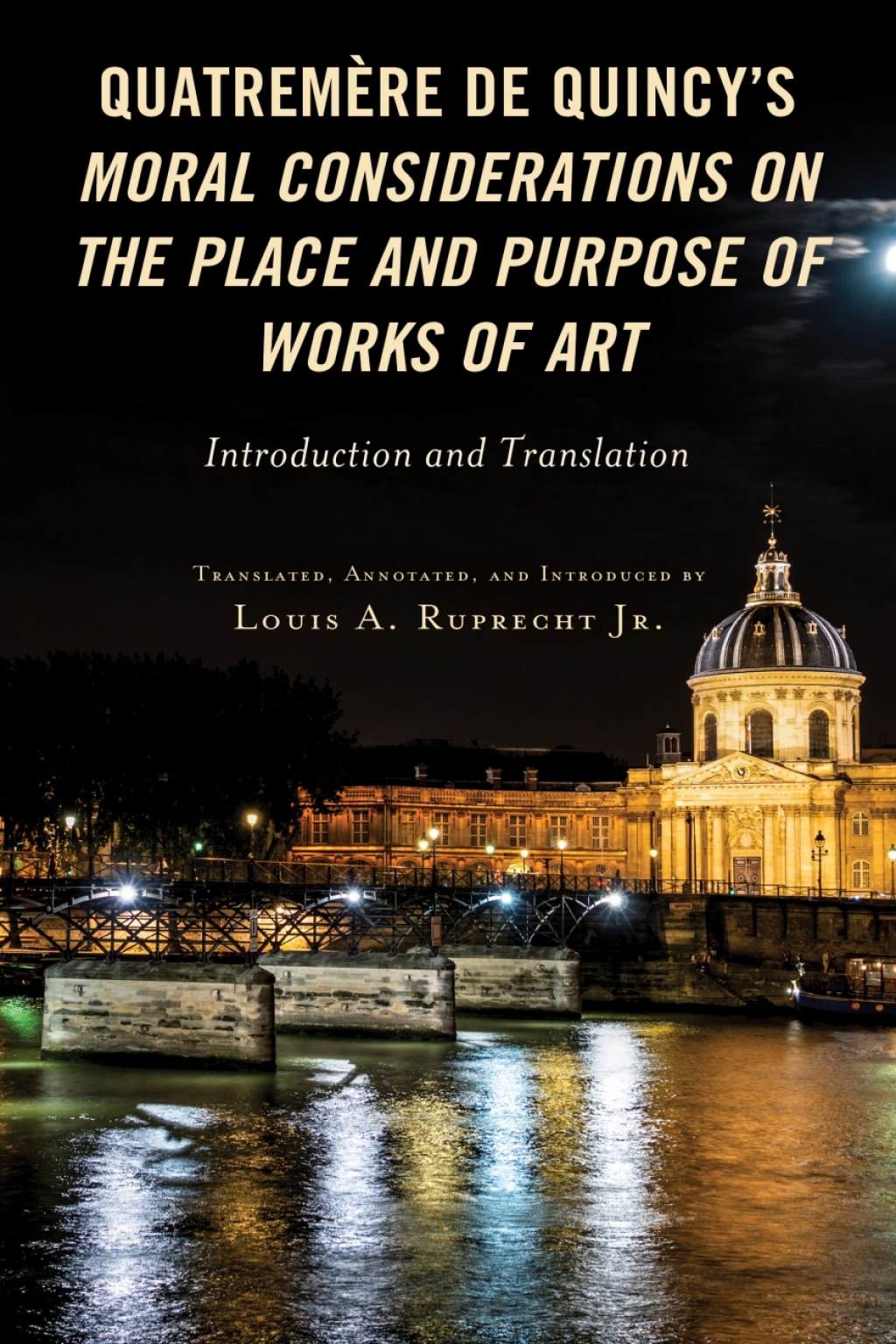
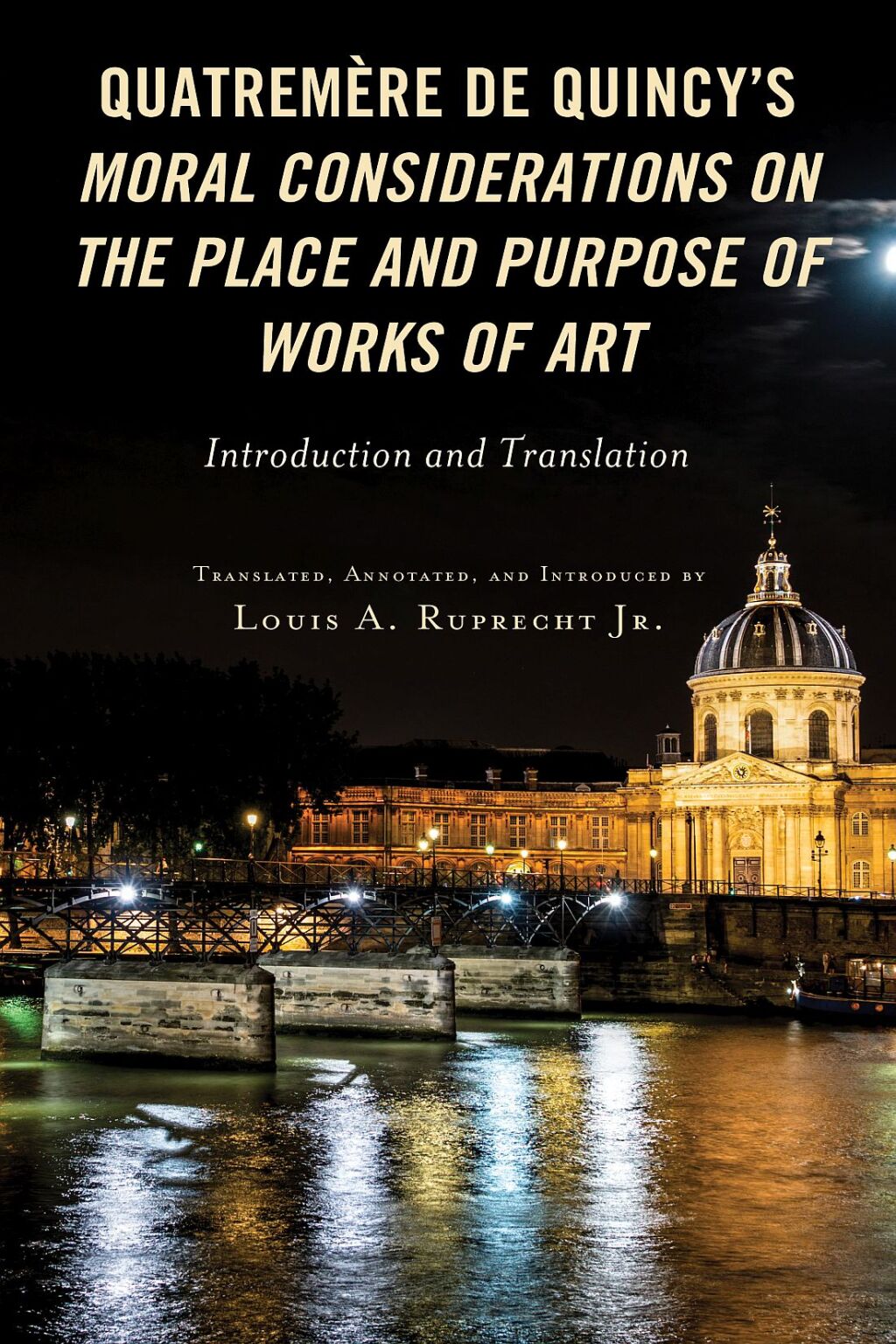
Quatremère de Quincy’s Moral Considerations on the Place and Purpose of Works of Art Introduction and Translation 1st Edition – PDF/EPUB Version Downloadable
$49.99
Author(s):
Publisher: Lexington Books
ISBN: 9781793642196
Edition: 1st Edition
Antoine Chrysostome Quatremère de Quincy (1755-1849) was the most important Neoclassical art historian in the generation after Johann Joachim Winckelmann (1717-1768). It is difficult now to appreciate his importance, due in part to the lack of translations of his 21 published books: three were rendered into English in the 19th century, and one in the 21st. The Moral Considerations has long been considered the most shattering polemic against public museums ever written. But I will show that Quatremère’s polemic was aimed, not against museums per se, but rather against the imperialist and secularist curatorial purposes of Parisian museums in the age of Revolution. His Neoclassical commitments maintained the centrality of religion, and of incarnation, to any proper understanding of the place and purpose of the fine arts.
Related products


Quatremère de Quincy’s Moral Considerations on the Place and Purpose of Works of Art Introduction and Translation 1st Edition – PDF/EPUB Version Downloadable
$49.99
Author(s): Antoine Chrysostome Quatremère de Quincy
Publisher: Lexington Books
ISBN: 9781793642196
Edition: 1st Edition
Antoine Chrysostome Quatremère de Quincy (1755-1849) was the most important Neoclassical
art historian in the generation after Johann Joachim Winckelmann (1717-1768). It is difficult
now to appreciate his importance, due in part to the lack of translations of his 21 published
books: three were rendered into English in the 19th century, and one in the 21st. The Moral
Considerations has long been considered the most shattering polemic against public museums
ever written. But I will show that Quatremère’s polemic was aimed, not against museums per se,
but rather against the imperialist and secularist curatorial purposes of Parisian museums in the
age of Revolution. His Neoclassical commitments maintained the centrality of religion, and of
incarnation, to any proper understanding of the place and purpose of the fine arts.
-1st-edition-%E2%80%93-pdfepub-version-downloadable-8741-yaq5g.jpg)
-1st-edition-%E2%80%93-pdfepub-version-downloadable-4292-c4gaw.jpg)