
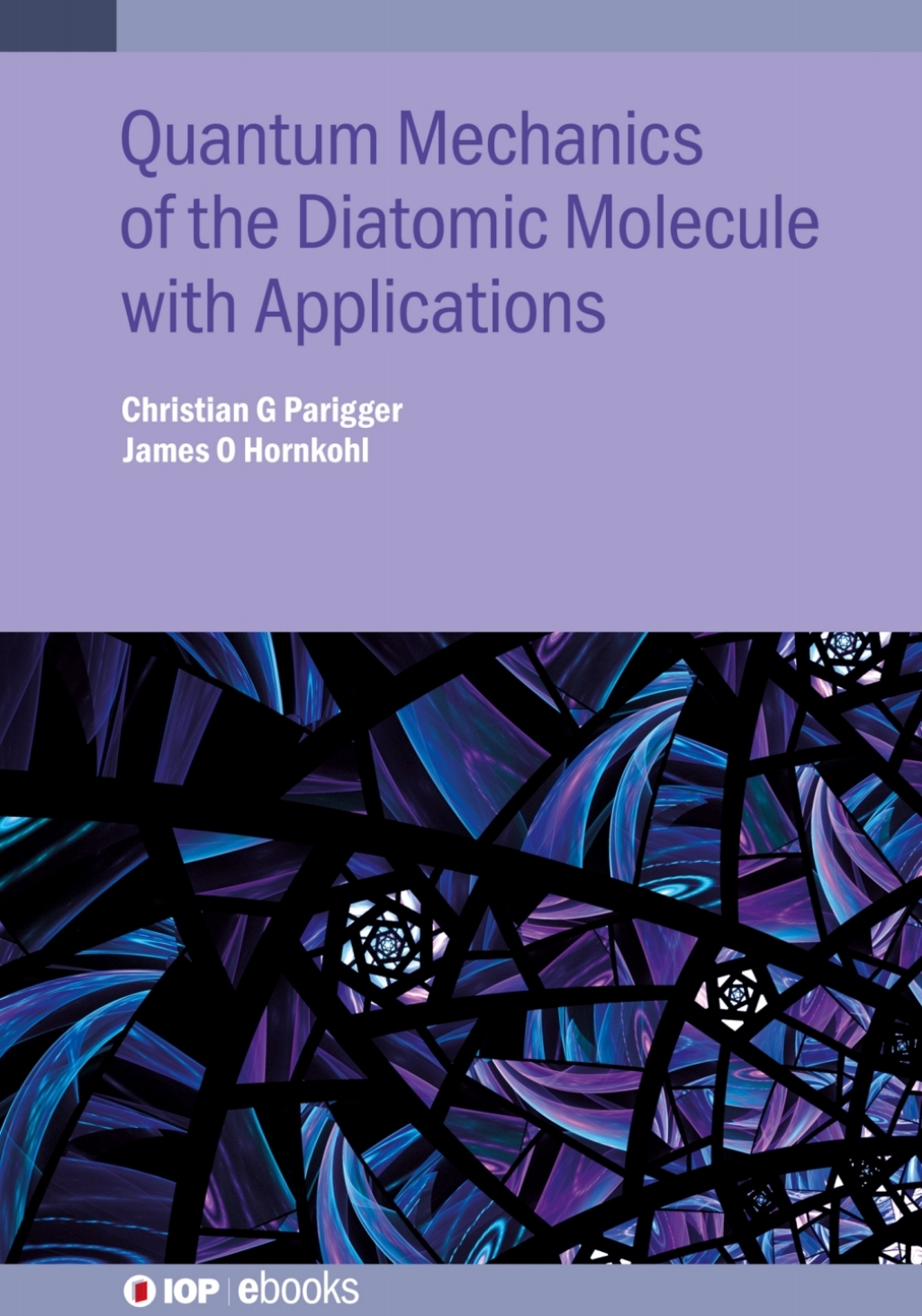
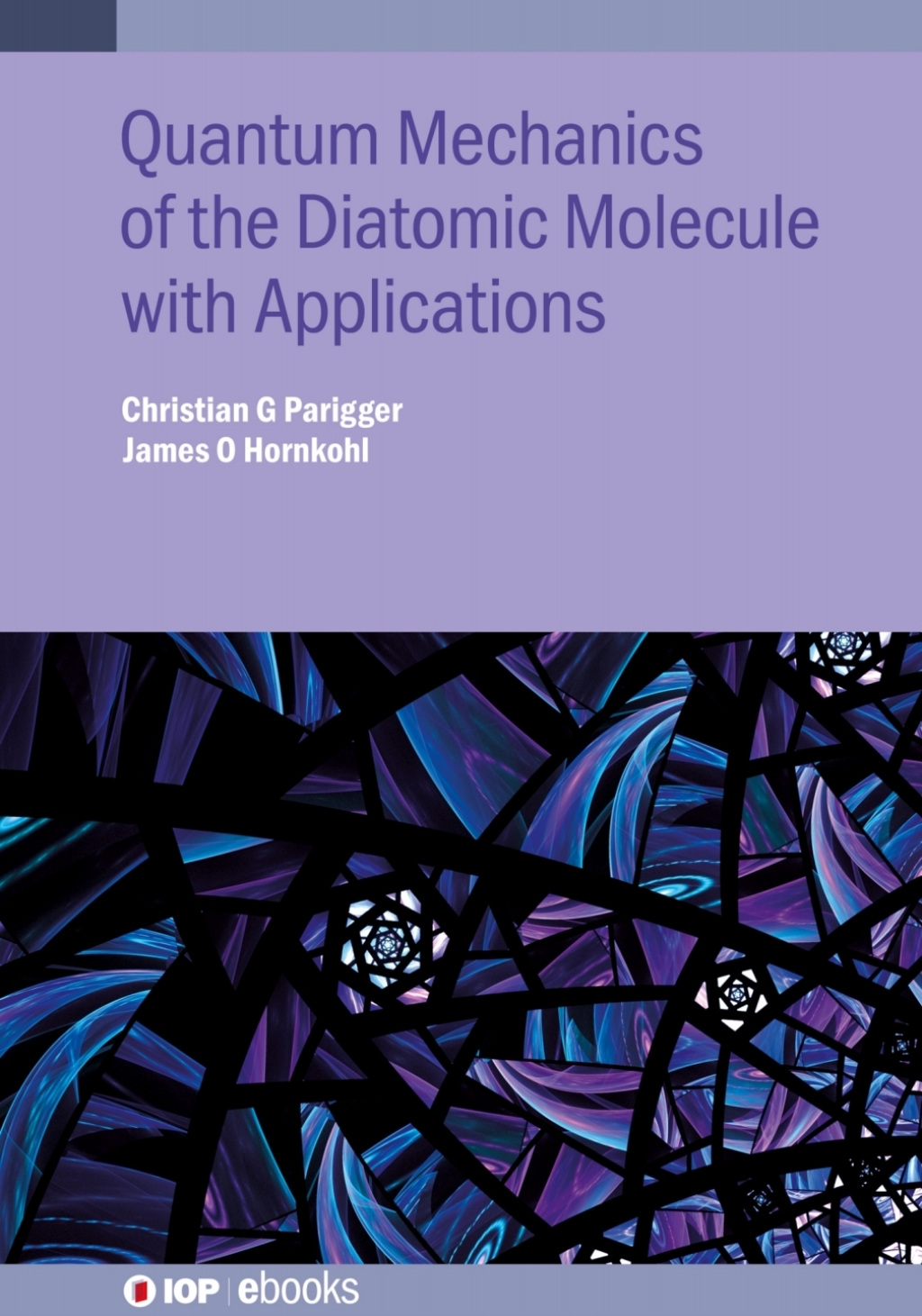
Quantum Mechanics of the Diatomic Molecule with Applications 1st Edition – PDF/EPUB Version Downloadable
$49.99
Author(s): Christian G Parigger; James O Hornkohl
Publisher: IOP Publishing (Institute of Physics)
ISBN: 9780750319904
Edition: 1st Edition
Consisting of just two atoms, diatomic molecules include
some of our most abundant elements: hydrogen, nitrogen and oxygen. In
this
book the authors describe how quantum mechanics can be used to predict
diatomic
molecule spectra in a gaseous state by discussing the calculation of
their
spectral line intensities. Summarizing more than 30 years of quantitative analysis
of temporally and spatially-resolved experimental records, and introducing
insights that are essential in utilizing the inherent symmetries associated
with diatomic molecules, this is a valuable reference to any academic engaged in
the field of spectroscopy and serves as a comprehensive guide to anyone with a
genuine interest in the subject.
Related products
-1st-edition-%E2%80%93-pdfepub-version-downloadable-4292-c4gaw.jpg)




Quantum Mechanics of the Diatomic Molecule with Applications 1st Edition – PDF/EPUB Version Downloadable
$49.99
Author(s): Christian G Parigger; James O Hornkohl
Publisher: IOP Publishing (Institute of Physics)
ISBN: 9780750319904
Edition: 1st Edition
Consisting of just two atoms, diatomic molecules include
some of our most abundant elements: hydrogen, nitrogen and oxygen. In
this
book the authors describe how quantum mechanics can be used to predict
diatomic
molecule spectra in a gaseous state by discussing the calculation of
their
spectral line intensities. Summarizing more than 30 years of quantitative analysis
of temporally and spatially-resolved experimental records, and introducing
insights that are essential in utilizing the inherent symmetries associated
with diatomic molecules, this is a valuable reference to any academic engaged in
the field of spectroscopy and serves as a comprehensive guide to anyone with a
genuine interest in the subject.