
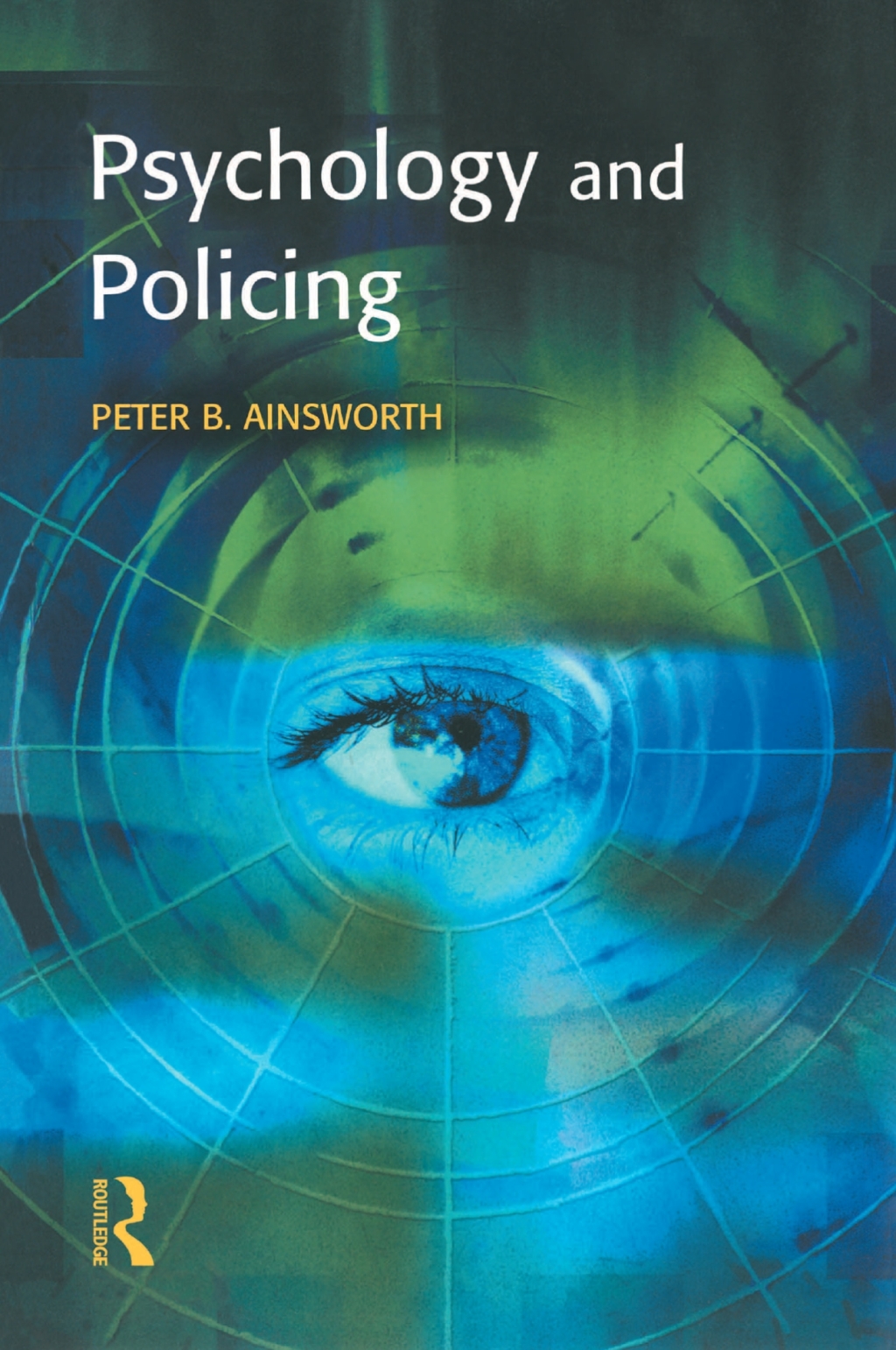
Psychology and Policing 1st Edition – PDF/EPUB Version Downloadable
$49.99
Author(s): Peter Ainsworth
Publisher: Willan
ISBN: 9781903240441
Edition: 1st Edition
Applied psychology has become increasingly important in the work of policing, police training and the academic study of policing. This book provides a highly accessible account of the way in which psychological principles and practices are applied to policing, reflecting the increasing attention being given to this area in the light of recent concerns about police training and its effectiveness – for example the MacPherson report. The book sets out the main areas of applied psychology which have particular relevance for policing, looking at how these impact in practice on police work – retrieving information, interviewing suspects, understanding crime patterns and profiling offenders, and negotiation and hostage taking. The author concludes with an assessment of the usefulness of psychology in police work, and the pitfalls and problems which arise with its use.
Related products

Psychology and Policing 1st Edition – PDF/EPUB Version Downloadable
$49.99
Author(s): Brewer, Neil; Wilson, Carlene
Publisher: Psychology Press
ISBN: 9780805814187
Edition: 1st Edition
Psychological theory and research have much to contribute to the knowledge and skill bases underlying effective policing. Much of the relevant information, however, is dispersed across a variety of different psychological and criminal justice/policing journals and seldom integrated for those applied psychologists interested in policing issues or for police policymakers/administrators and others working in the criminal justice area who are not familiar with the psychological literature. Designed to accommodate the needs of these different groups, this book addresses both operational policing issues and issues relevant to the improvement of organizational functioning by providing integrative reviews of psychological theory and research that deal with effective policing. It illustrates how the theory and research reviewed are relevant to specific policing practices. These include eyewitness testimony, conflict resolution, changing driver behavior, controlling criminal behavior, effective interviewing, and techniques of face reconstruction. The volume’s readable style makes it accessible to a diverse audience including undergraduate and postgraduate students in forensic/organizational/applied psychology, criminal justice, and police science programs, and police administrators and policymakers. It will also interest psychologists whose primary focus includes policing and criminal justice issues. The book should draw attention to the often unrecognized and valuable contribution that mainstream psychology can make to the knowledge base underpinning a wide variety of policing practices.
-1st-edition-%E2%80%93-pdfepub-version-downloadable-4292-c4gaw.jpg)