
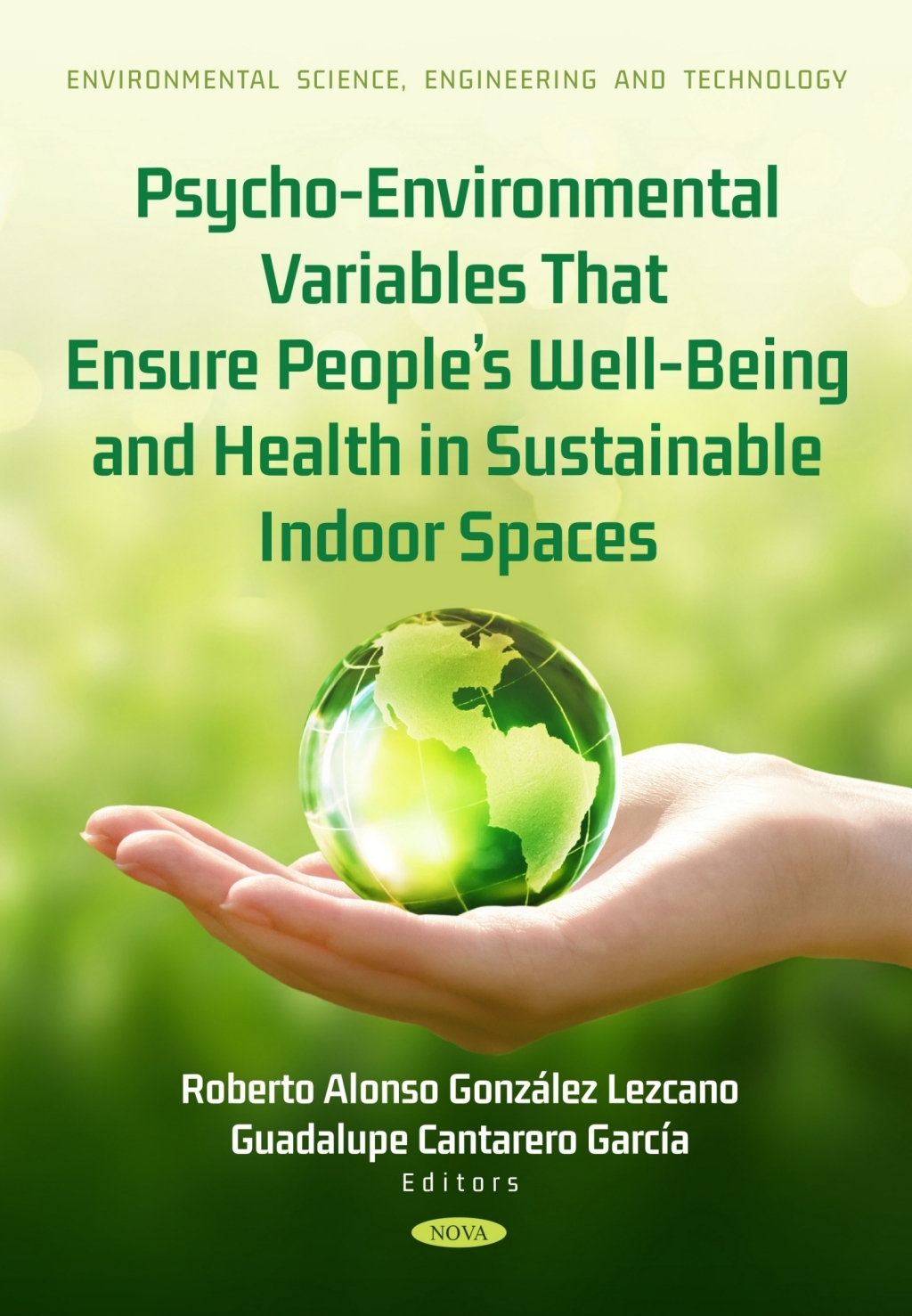


Psycho-Environmental Variables That Ensure People’s Well-Being and Health in Sustainable Indoor Spaces – PDF/EPUB Version Downloadable
$49.99
Author(s): Frank Columbus
Publisher: Nova
ISBN: 9798895308318
Edition:
Environmental air pollution and environmental exposures, year after year, are associated with high mortality and morbidity, especially in the susceptible and vulnerable population. There are sources of exposure so common that they lead to the misleading idea that they should not be causing problems in the environment or in people’s health. Revealing the effect that these exposures have on the environment and on the health of populations, as well as designing educational strategies to transmit the message of the damage they cause to the environment and to general health, is one of the most relevant tasks of our time for researchers working on the effects of environmental pollution on people’s lives. It is difficult to understand our life today without the use of electricity or the use of the internet or cell phones, but every day there is more evidence of the damage they cause to the environment and the health of populations. There is a need to better understand the specific aspects of green buildings that relate to various health, well-being and productivity outcomes. This book provides tools to examine existing buildings and to assist in the design of new green office buildings. In addition, these advances can be used in future research to systematically examine the relationship between green building characteristics and their occupants, thus helping to address conflicting findings on the positive effects of green buildings on health and productivity. This book provides its readers with a wide perspective on centralization, discussing its significance, costs and benefits in different areas, disciplines and circumstances. It includes chapters from a variety of areas including: brain research, political science, education, management, computer science, biology, language, planning and decision-making, law, psychology, economics, ethics and communication. It welcomes both theoretical and empirical contributions that discuss the significance of centralization in various circumstances and discipline areas.