
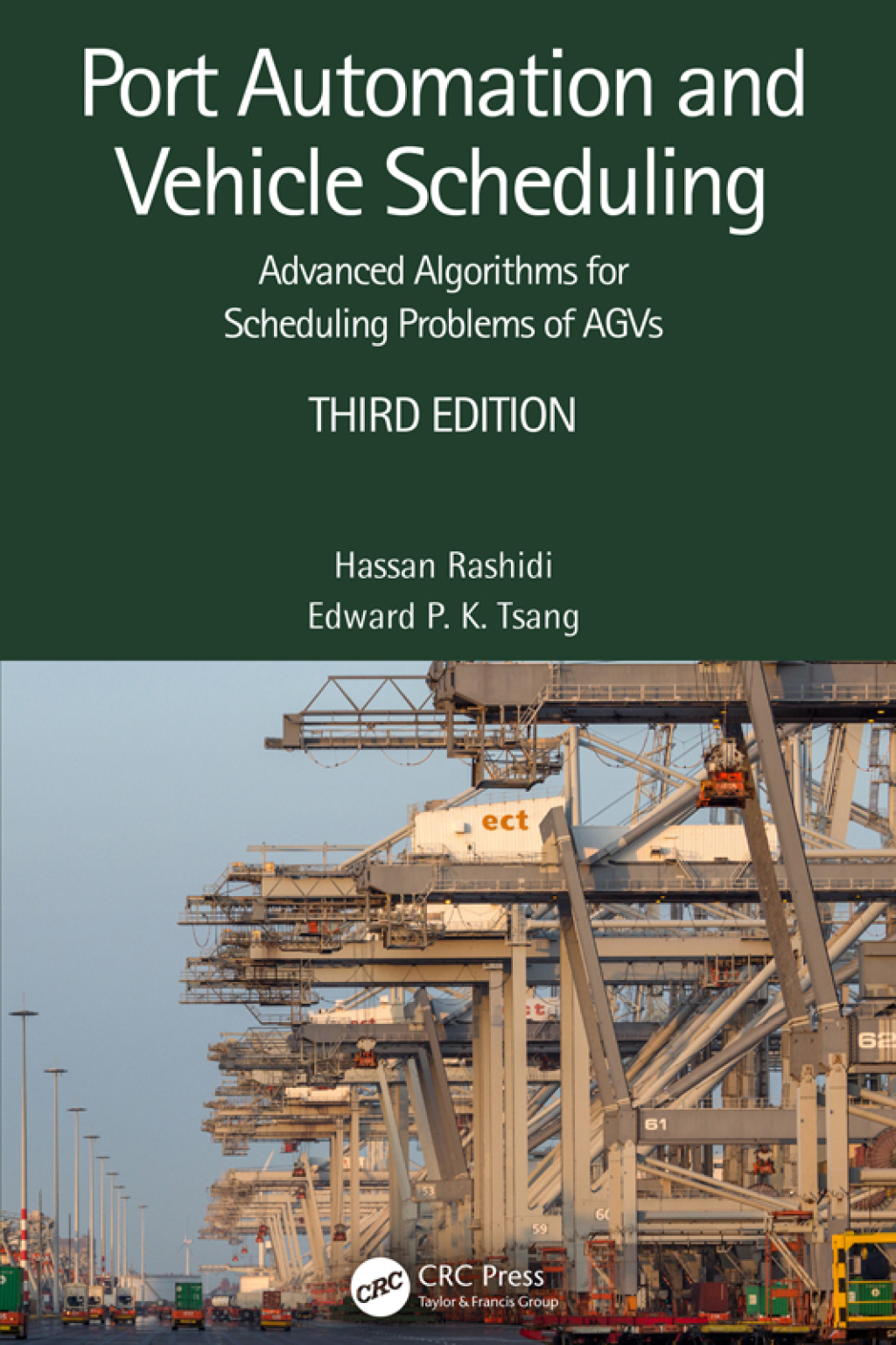
Port Automation and Vehicle Scheduling Advanced Algorithms for Scheduling Problems of AGVs 3rd Edition – PDF/EPUB Version Downloadable
$49.99
Author(s): Hassan Rashidi; Edward P. K. Tsang
Publisher: CRC Press
ISBN: 9781032306179
Edition: 3rd Edition
Container terminals are constantly being challenged to adjust their throughput capacity to match fluctuating demand. Examining the optimization problems encountered in today’s container terminals, Port Automation and Vehicle Scheduling: Advanced Algorithms for Scheduling Problems of AGVs, Third Edition provides advanced algorithms for handling the scheduling of Automated Guided Vehicles (AGVs) in ports. Building on the earlier editions, previously titled Vehicle Scheduling in Port Automation: Advanced Algorithms for Minimum Cost Flow Problems, this book has undergone extensive revisions and includes two new chapters. New material addresses the solutions to the modeling of decisions in Chapter 3, while in Chapter 11 the authors address an emerging challenge in automated container terminals with integrated management. Key Features: Classifies the optimization problems of the ports into five scheduling decisions. For each decision, it supplies an overview, formulates each of the decisions as constraint satisfaction and optimization problems, and then covers possible solutions, implementation, and performance. Explores in Part One of the book the various optimization problems in modern container terminals, while details in Part Two advanced algorithms for the minimum cost flow (MCF) problem and for the scheduling problem of AGVs in ports. Offers complete package that can help readers address the scheduling problems of AGVs in ports. This is a valuable reference for port authorities and researchers, including specialists and graduate students in operation research. For specialists, it provides novel and efficient algorithms for network flow problems. For students, it supplies the most comprehensive survey of the field along with a rigorous formulation of the problems in port automation.
-1st-edition-%E2%80%93-pdfepub-version-downloadable-4292-c4gaw.jpg)