
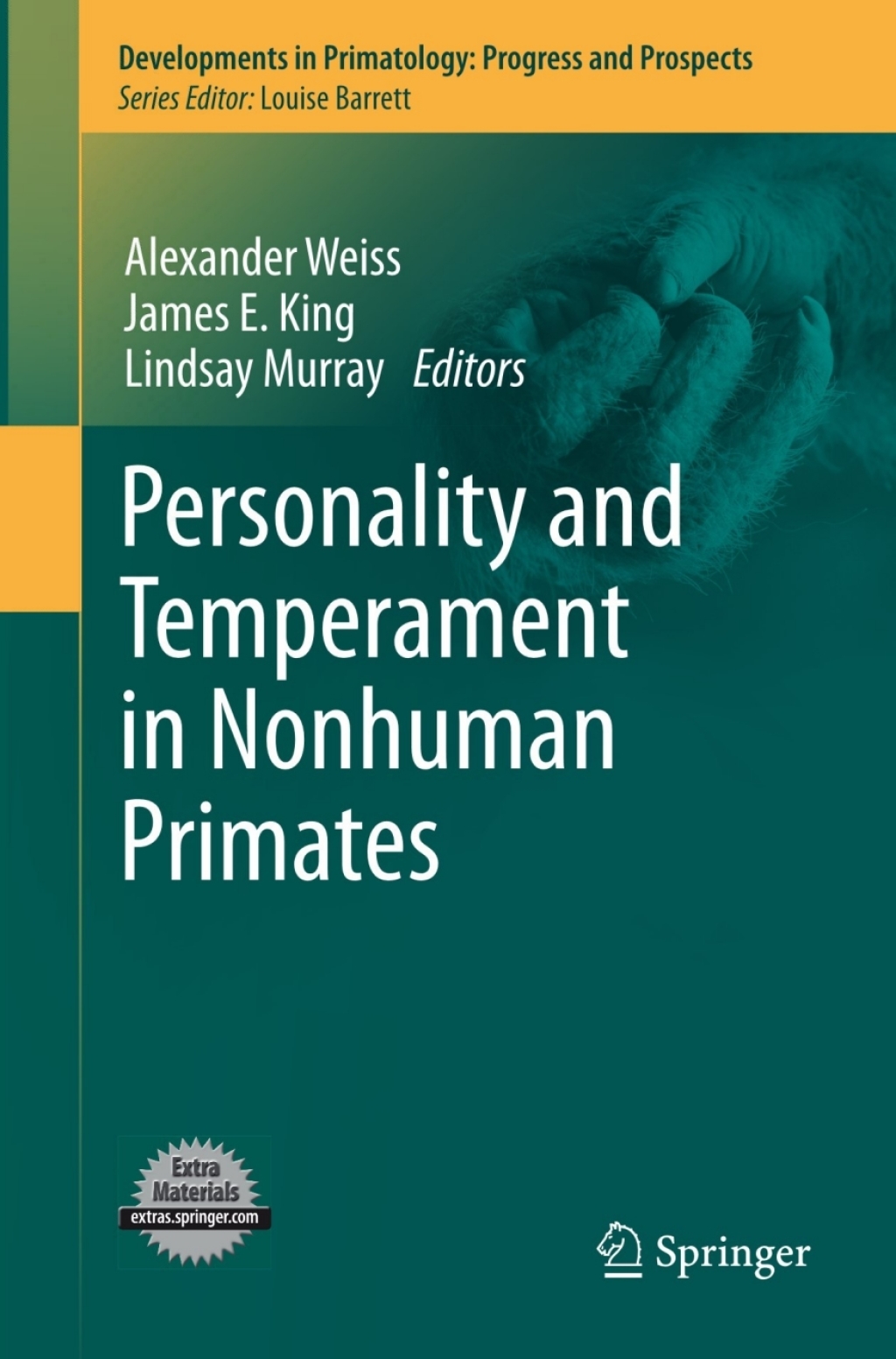

Personality and Temperament in Nonhuman Primates – PDF/EPUB Version Downloadable
$49.99
Author(s): Author
Publisher: Springer
ISBN: 9781461401759
Edition:
Recently, there has been an increased interest in research on personality, temperament, and behavioral syndromes (henceforth to be referred to as personality) in nonhuman primates and other animals. This follows, in part, from a general interest in the subject matter and the realization that individual differences, once consigned to ‘error’ terms in statistical analyses, are potentially important predictors, moderators, and mediators of a wide variety of outcomes ranging from the results of experiments to health to enrichment programs. Unfortunately, while there is a burgeoning interest in the subject matter, findings have been reported in a diverse number of journals and most of the methodological and statistical approaches were developed in research on human personality. The proposed volume seeks to gather submissions from a variety of specialists in research on individual differences in primate temperament, personality, or behavioral syndromes. We anticipate that chapters will cover several areas. The first part of this edited volume will focus on methodological considerations including the advantages and disadvantages of different means of assessing these constructs in primates and introduce some statistical approaches that have typically been the domain of human personality research. Another part of this edited volume will focus on present findings including the physiological and genetic bases of personality dimensions in primates; the relationship between personality and age; how personality may moderate or impact various outcomes including behavior, health, and well-being in captive and non-captive environments. For the third part of the volume we hope to obtain summaries of the existing work of the authors on the evolutionary important of personality dimensions and guideposts for future directions in this new and exciting area of research.