
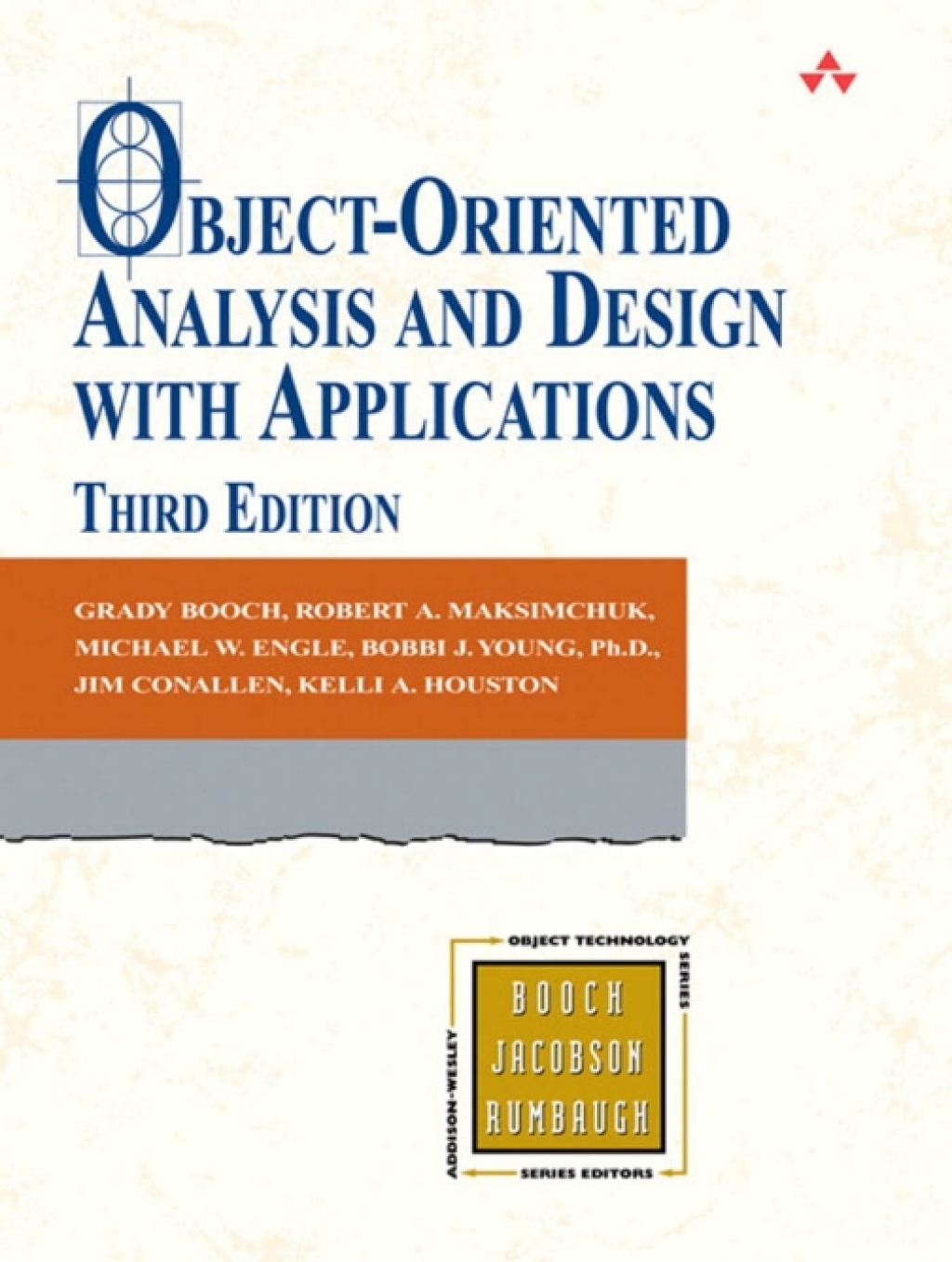
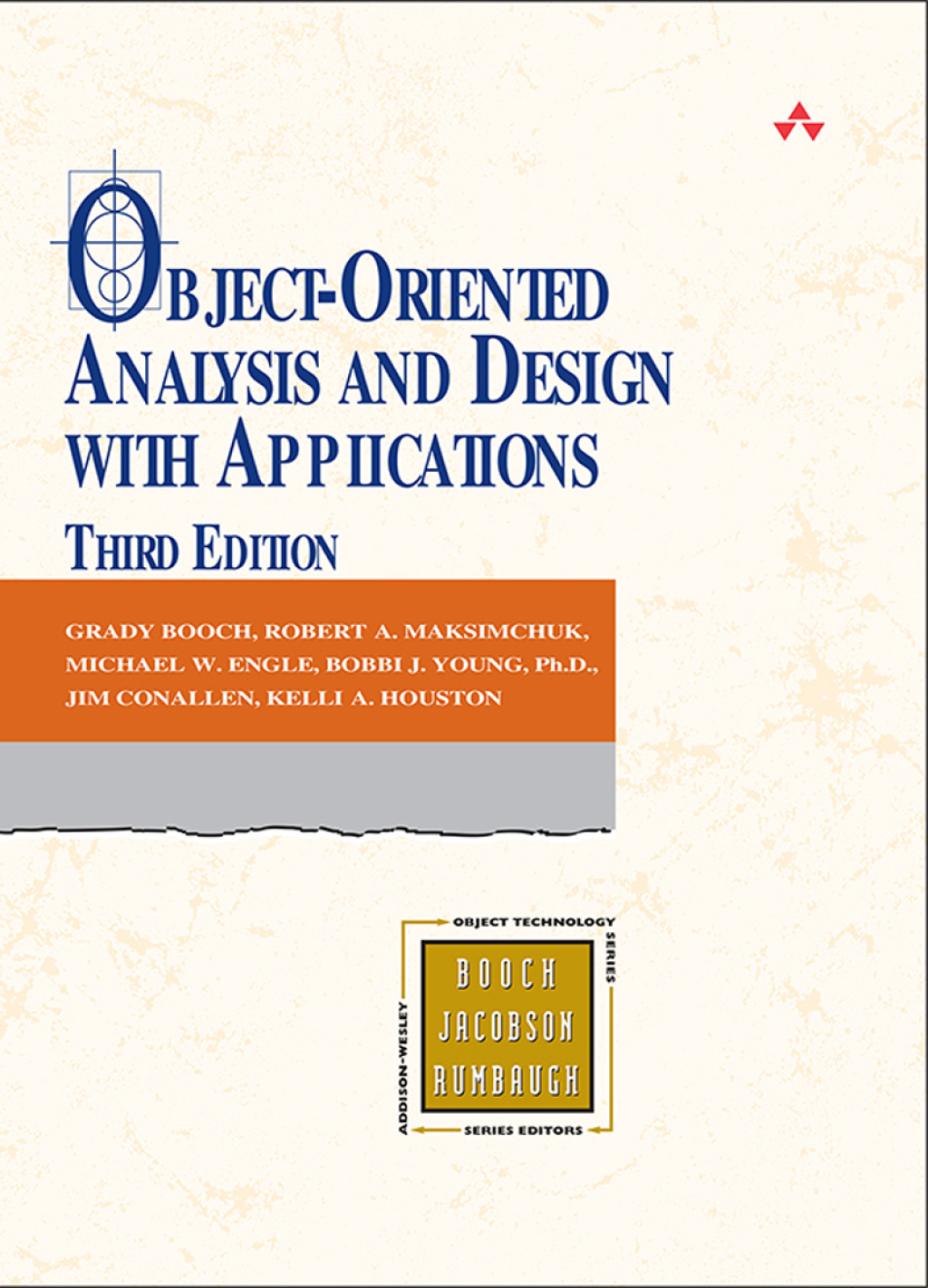
Object-Oriented Analysis and Design with Applications 3rd Edition – PDF/EPUB Version Downloadable
$49.99
Author(s): Grady Booch; Robert Maksimchuk; Michael Engle; Bobbi Young Ph.D.; Jim Conallen; Kelli Houston
Publisher: Addison-Wesley Professional PTG
ISBN: 9780321509376
Edition: 3rd Edition
This is the eBook version of the printed book. If the print book includes a CD-ROM, this content is not included within the eBook version.
Object-Oriented Design with Applications has long been the essential reference to object-oriented technology, which, in turn, has evolved to join the mainstream of industrial-strength software development. In this third edition–the first revision in 13 years–readers can learn to apply object-oriented methods using new paradigms such as Java, the Unified Modeling Language (UML) 2.0, and .NET.
The authors draw upon their rich and varied experience to offer improved methods for object development and numerous examples that tackle the complex problems faced by software engineers, including systems architecture, data acquisition, cryptoanalysis, control systems, and Web development. They illustrate essential concepts, explain the method, and show successful applications in a variety of fields. You’ll also find pragmatic advice on a host of issues, including classification, implementation strategies, and cost-effective project management.
New to this new edition are
- An introduction to the new UML 2.0, from the notation’s most fundamental and advanced elements with an emphasis on key changes
- New domains and contexts
- A greatly enhanced focus on modeling–as eagerly requested by readers–with five chapters that each delve into one phase of the overall development lifecycle.
- Fresh approaches to reasoning about complex systems
- An examination of the conceptual foundation of the widely misunderstood fundamental elements of the object model, such as abstraction, encapsulation, modularity, and hierarchy
- How to allocate the resources of a team of developers and mange the risks associated with developing complex software systems
- An appendix on object-oriented programming languages
This is the seminal text for anyone who wishes to use object-oriented technology to manage the complexity inherent in many kinds of systems.
Sidebars
Preface
Acknowledgments
About the Authors
Section I: Concepts
Chapter 1: Complexity
Chapter 2: The Object Model
Chapter 3: Classes and Objects
Chapter 4: Classification
Section II: Method
Chapter 5: Notation
Chapter 6: Process
Chapter 7: Pragmatics
Chapter 8: System Architecture: Satellite-Based Navigation
Chapter 9: Control System: Traffic Management
Chapter 10: Artificial Intelligence: Cryptanalysis
Chapter 11: Data Acquisition: Weather Monitoring Station
Chapter 12: Web Application: Vacation Tracking System
Appendix A: Object-Oriented Programming Languages
Appendix B: Further Reading
Notes
Glossary
Classified Bibliography
Index
Related products
-1st-edition-%E2%80%93-pdfepub-version-downloadable-4292-c4gaw.jpg)

Object-Oriented Analysis and Design with Applications 3rd Edition – PDF/EPUB Version Downloadable
$49.99
Author(s): Grady Booch; Robert Maksimchuk; Michael Engle; Jim Conallen; Kelli Houston; Bobbi Young Ph.D.
Publisher: Addison-Wesley Professional PTG
ISBN: 9780201895513
Edition: 3rd Edition
Object-Oriented Design with Applications has long been the essential reference to object-oriented technology, which, in turn, has evolved to join the mainstream of industrial-strength software development. In this third edition–the first revision in 13 years–readers can learn to apply object-oriented methods using new paradigms such as Java, the Unified Modeling Language (UML) 2.0, and .NET.
The authors draw upon their rich and varied experience to offer improved methods for object development and numerous examples that tackle the complex problems faced by software engineers, including systems architecture, data acquisition, cryptoanalysis, control systems, and Web development. They illustrate essential concepts, explain the method, and show successful applications in a variety of fields. You’ll also find pragmatic advice on a host of issues, including classification, implementation strategies, and cost-effective project management.
New to this new edition are
- An introduction to the new UML 2.0, from the notation’s most fundamental and advanced elements with an emphasis on key changes
- New domains and contexts
- A greatly enhanced focus on modeling–as eagerly requested by readers–with five chapters that each delve into one phase of the overall development lifecycle.
- Fresh approaches to reasoning about complex systems
- An examination of the conceptual foundation of the widely misunderstood fundamental elements of the object model, such as abstraction, encapsulation, modularity, and hierarchy
- How to allocate the resources of a team of developers and mange the risks associated with developing complex software systems
- An appendix on object-oriented programming languages
This is the seminal text for anyone who wishes to use object-oriented technology to manage the complexity inherent in many kinds of systems.
Sidebars
Preface
Acknowledgments
About the Authors
Section I: Concepts
Chapter 1: Complexity
Chapter 2: The Object Model
Chapter 3: Classes and Objects
Chapter 4: Classification
Section II: Method
Chapter 5: Notation
Chapter 6: Process
Chapter 7: Pragmatics
Chapter 8: System Architecture: Satellite-Based Navigation
Chapter 9: Control System: Traffic Management
Chapter 10: Artificial Intelligence: Cryptanalysis
Chapter 11: Data Acquisition: Weather Monitoring Station
Chapter 12: Web Application: Vacation Tracking System
Appendix A: Object-Oriented Programming Languages
Appendix B: Further Reading
Notes
Glossary
Classified Bibliography
Index