
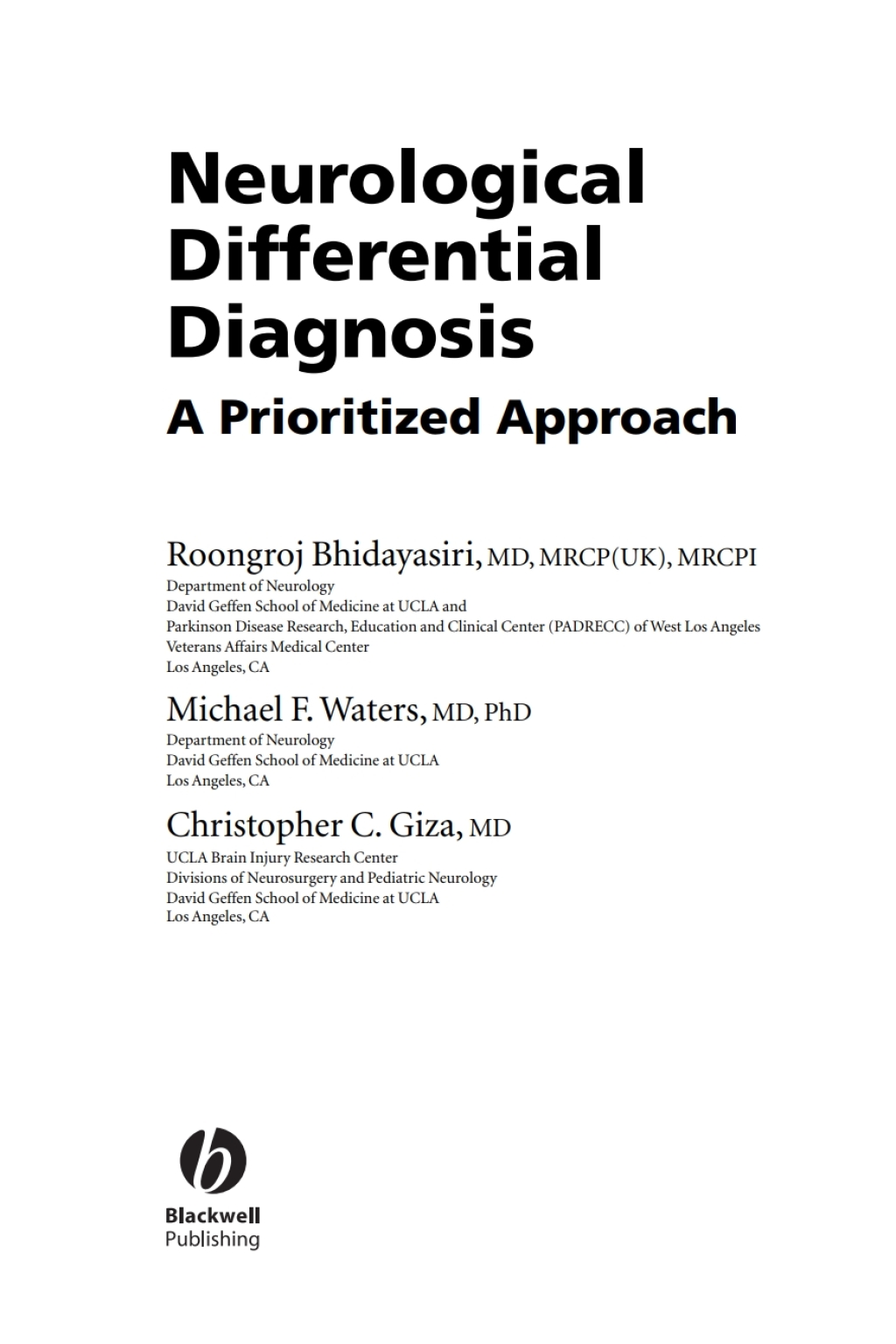

Neurological Differential Diagnosis A Prioritized Approach 1st Edition – PDF/EPUB Version Downloadable
$49.99
Author(s): Roongroj Bhidayasiri; Michael F. X. Waters; Christopher Giza
Publisher: Wiley-Blackwell
ISBN: 9781405120395
Edition: 1st Edition
Neurology is primarily characterized by a variety of diseases which seem very similar and are therefore difficult to distinguish between. Skill at differential diagnosis is therefore absolutely paramount. Neurological Differential Diagnosis is a streamlined handbook of prioritized differential diagnosis, to be used both in clinical practice and for exam review. By presenting differential diagnosis in order of frequency and importance, this book provides a practical handbook for clinicians in training, as well as a potential resource for quick board review. Whilst the book covers the most important syndromes and disease entities, readers are referred to other texts for more exhaustive differentials. By limiting differentials in this way – to the most likely and most serious diagnoses – the reader can more easily recall relevant disease processes when faced with a particular clinical situation, whether it be a patient in the emergency room or a difficult question on the board examination. The book specifically targets neurology residents and fellows, with overlap to neurosurgery and psychiatry. Internal medicine physicians with an interest in neurological problems and medical students looking for an edge in clinical neuroscience would also benefit from this text. The content is primarily mid-level material, in a pedagogic format. In order to organize the students’ thought processes concise tables and line drawing templates are included. The book is organized into broad chapters by type of disorder and some overlap occurs between particular chapters.