
Neural Network Control of Nonlinear Discrete-Time Systems 1st Edition – PDF/EPUB Version Downloadable
$49.99
Author(s): Jagannathan Sarangapani
Publisher: CRC Press
ISBN: 9780824726775
Edition: 1st Edition
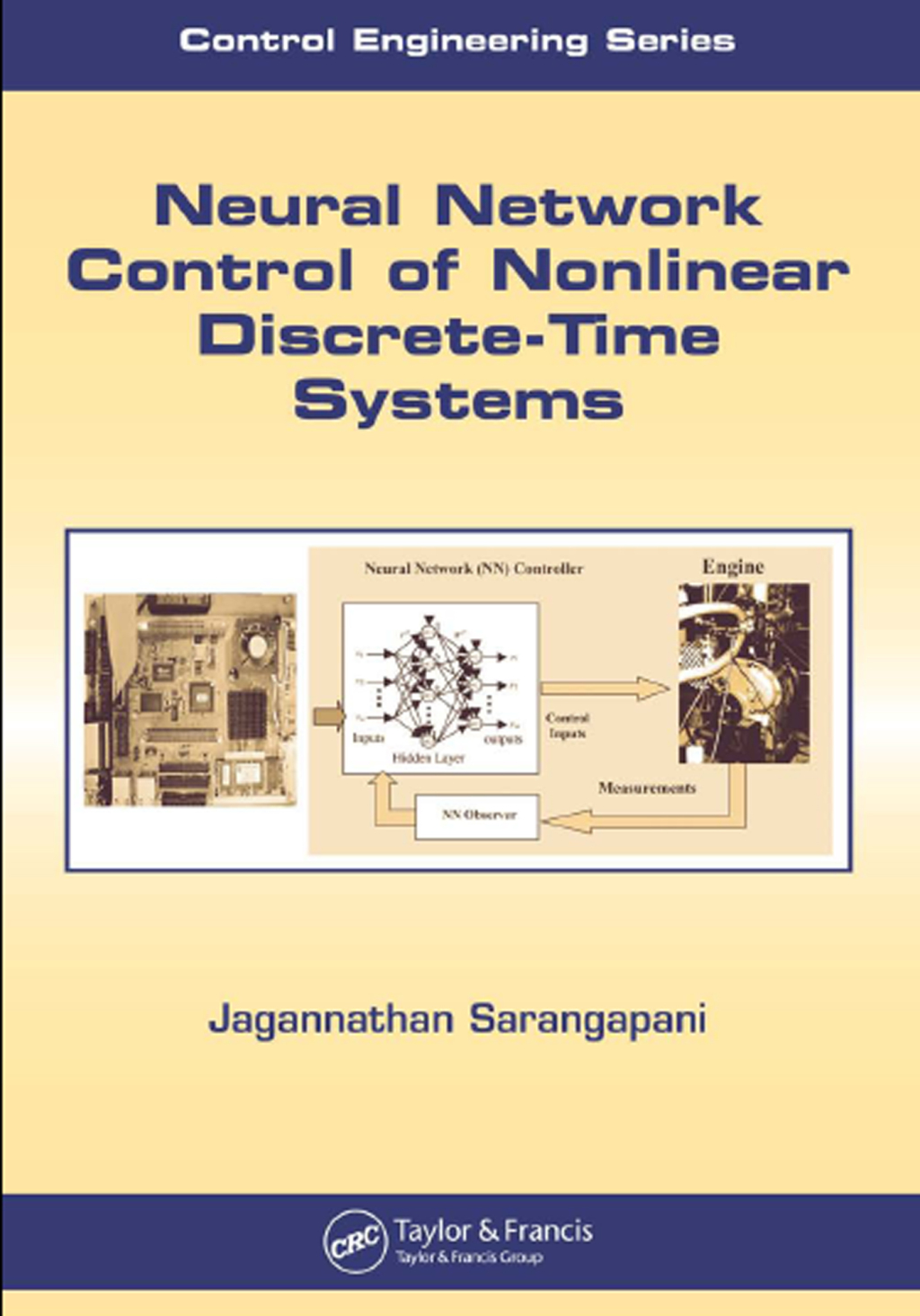
Intelligent systems are a hallmark of modern feedback control systems. But as these systems mature, we have come to expect higher levels of performance in speed and accuracy in the face of severe nonlinearities, disturbances, unforeseen dynamics, and unstructured uncertainties. Artificial neural networks offer a combination of adaptability, parallel processing, and learning capabilities that outperform other intelligent control methods in more complex systems.Borrowing from BiologyExamining neurocontroller design in discrete-time for the first time, Neural Network Control of Nonlinear Discrete-Time Systems presents powerful modern control techniques based on the parallelism and adaptive capabilities of biological nervous systems. At every step, the author derives rigorous stability proofs and presents simulation examples to demonstrate the concepts.Progressive DevelopmentAfter an introduction to neural networks, dynamical systems, control of nonlinear systems, and feedback linearization, the book builds systematically from actuator nonlinearities and strict feedback in nonlinear systems to nonstrict feedback, system identification, model reference adaptive control, and novel optimal control using the Hamilton-Jacobi-Bellman formulation. The author concludes by developing a framework for implementing intelligent control in actual industrial systems using embedded hardware.Neural Network Control of Nonlinear Discrete-Time Systems fosters an understanding of neural network controllers and explains how to build them using detailed derivations, stability analysis, and computer simulations.