
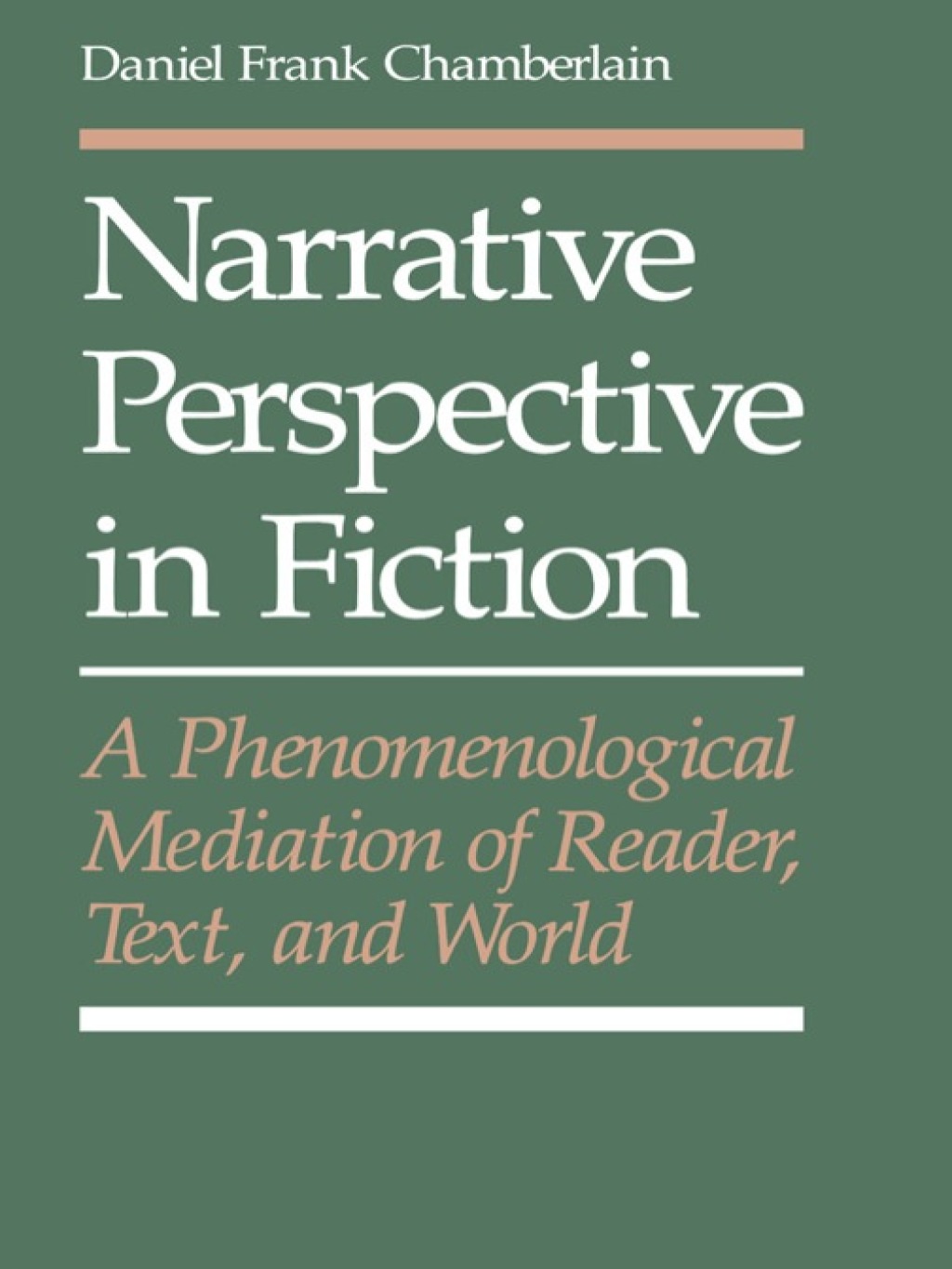
Narrative Perspective in Fiction A Phenomenological Meditation of Reader, Text, and World 1st Edition – PDF/EPUB Version Downloadable
$49.99
Author(s): Daniel Chamberlain
Publisher: University of Toronto Press
ISBN: 9780802058386
Edition: 1st Edition
Daniel Chamberlain examines the nature of narrative perspective in a manner that does not presuppose a passive definition of perception. Rather, he considers perspective as a medium through which the potential meanings of texts are disclosed and through which to share the vital experience of narrative from today’s familiar and culturally distant worlds.
The book is divided into two parts. The first part address narrative perspective within a theoretical framework. Chamberlain uses this in order to consider narrative perspective as an integral part of the more general process of perception that mediates language and the experience of texts. Perception is here understood as an active recreation of the world at every moment; as an opening through which one’s self-awareness and awareness of the world are correlated. By considering narrative perspective in terms of perception, equal importance is given to its temporal and spatial aspects. The dialectic of time and space inevitably comes to bear on narrative perspective through the techniques, strategies, and medium of a text’s transmission. Part one concludes with an examination of contemporary definitions of narrative perspective and with the presentation of an alternative approach to its study.
The second part offers a reading of two texts, each of which clearly presents the major issues facing this inquiry. The narrative perspective of each is considered as occupying a degree of similarity and difference within the dialectic of time and space. Each perspective is, in turn, correlated to the prevalent medium of discourse within its cultural milieu.
-1st-edition-%E2%80%93-pdfepub-version-downloadable-8741-yaq5g.jpg)