
-%2B-print-combo-access-code-for-a-pathway-to-introductory-statistics-2nd-edition-%E2%80%93-pdfepub-version-downloadable-6135-0uxr6.jpg)
-%2B-print-combo-access-code-for-algebra-and-trigonometry-enhanced-with-graphing-utilities-8th-edition-%E2%80%93-pdfepub-version-downloadable-9678-rg9ul.jpg)
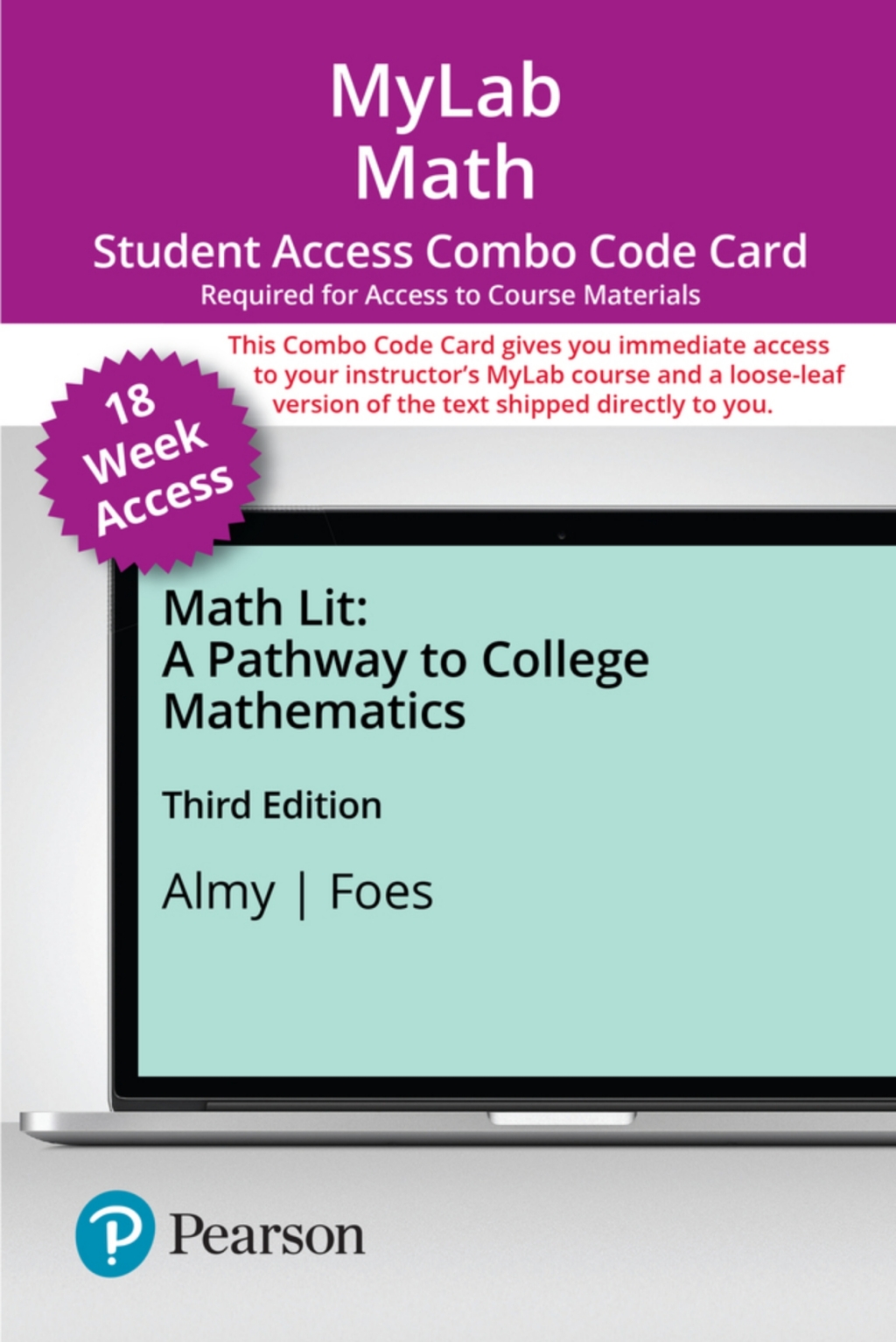
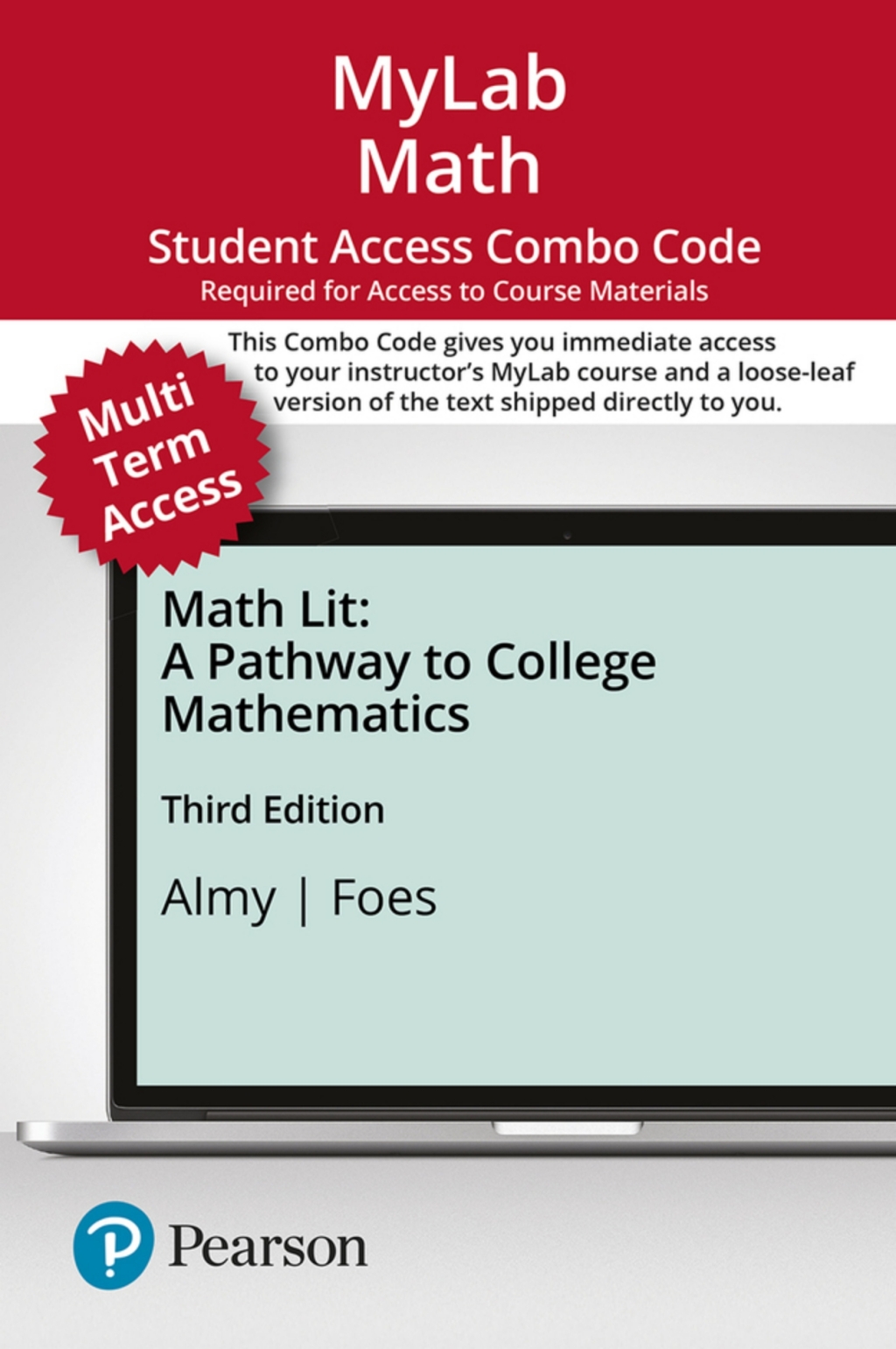
MyLab Math with Pearson eText + Print Combo Access Code for Math Lit: A Pathway to College Mathematics 3rd Edition – PDF/EPUB Version Downloadable
$49.99
Author(s): Kathleen Almy;Heather Foes
Publisher: Pearson
ISBN: 9780137418787
Edition: 3rd Edition
For Pathways courses (a 1-semester alternative to the 2-semester developmental algebra sequence for non-STEM students). 
Critical thinking in context
Math Lit, 3rd Edition prepares non-STEM students to move directly into liberal arts math or introductory statistics, while preparing STEM students for intermediate algebra. Emphasizing contextual problem solving, the authors approach each topic with two questions:  how does it work and how can I use it?  Students work through activities and explorations to gain a greater conceptual understanding of the four thematic strands: numeracy, proportional reasoning, algebraic reasoning, and functions. Topics from geometry and statistics are also included.  
Related products


-for-beginning-%26-intermediate-algebra-6th-edition-%E2%80%93-pdfepub-version-downloadable-4681-rrxat.jpg)
-%2B-print-combo-access-code-for-a-pathway-to-introductory-statistics-2nd-edition-%E2%80%93-pdfepub-version-downloadable-7339-xpo4k.jpg)
MyLab Math with Pearson eText + Print Combo Access Code for Math Lit: A Pathway to College Mathematics 3rd Edition – PDF/EPUB Version Downloadable
$49.99
Author(s): Kathleen Almy;Heather Foes
Publisher: Pearson
ISBN: 9780137418800
Edition: 3rd Edition
For Pathways courses (a 1-semester alternative to the 2-semester developmental algebra sequence for non-STEM students). 
Critical thinking in context
Math Lit, 3rd Edition prepares non-STEM students to move directly into liberal arts math or introductory statistics, while preparing STEM students for intermediate algebra. Emphasizing contextual problem solving, the authors approach each topic with two questions:  how does it work and how can I use it?  Students work through activities and explorations to gain a greater conceptual understanding of the four thematic strands: numeracy, proportional reasoning, algebraic reasoning, and functions. Topics from geometry and statistics are also included.