
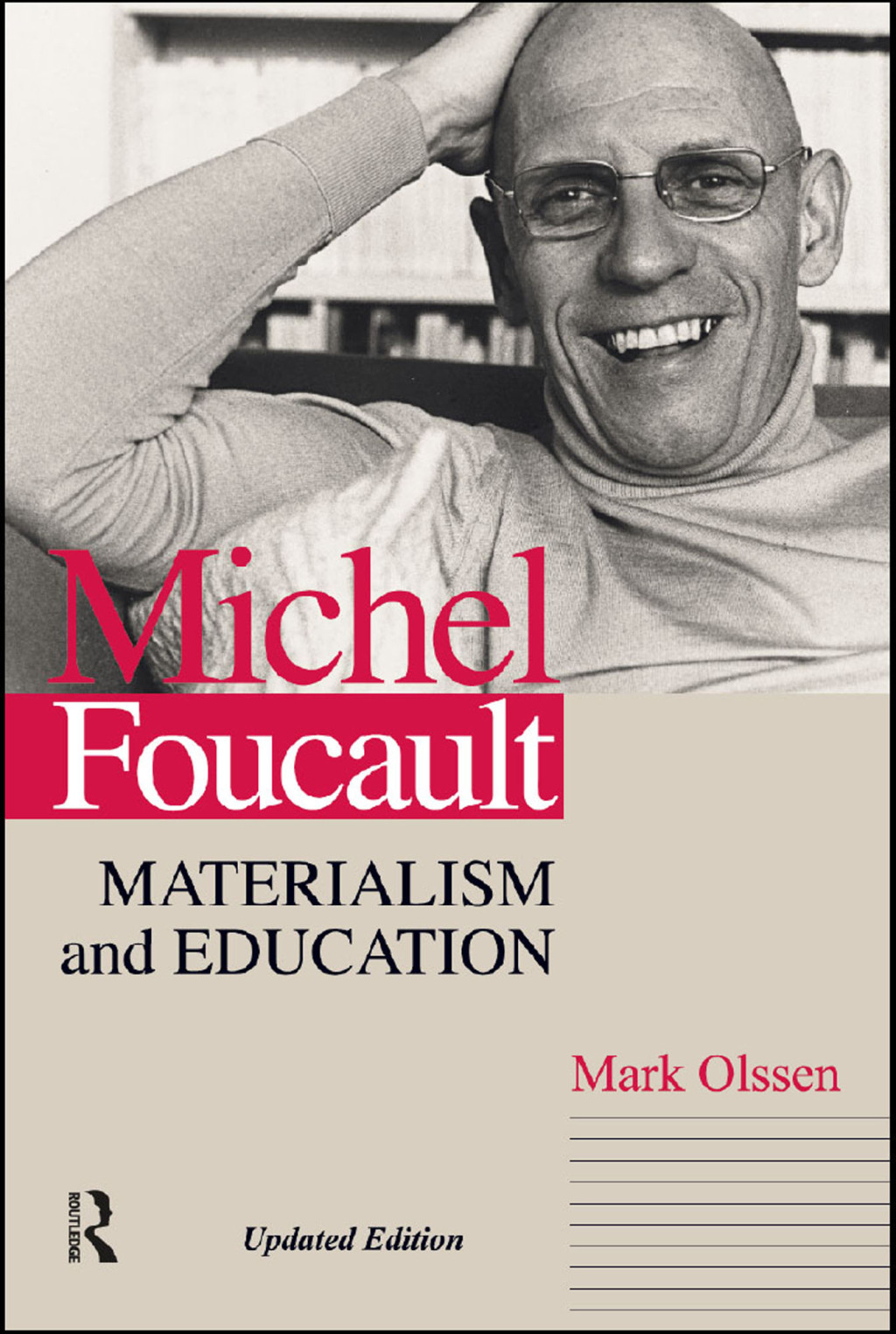

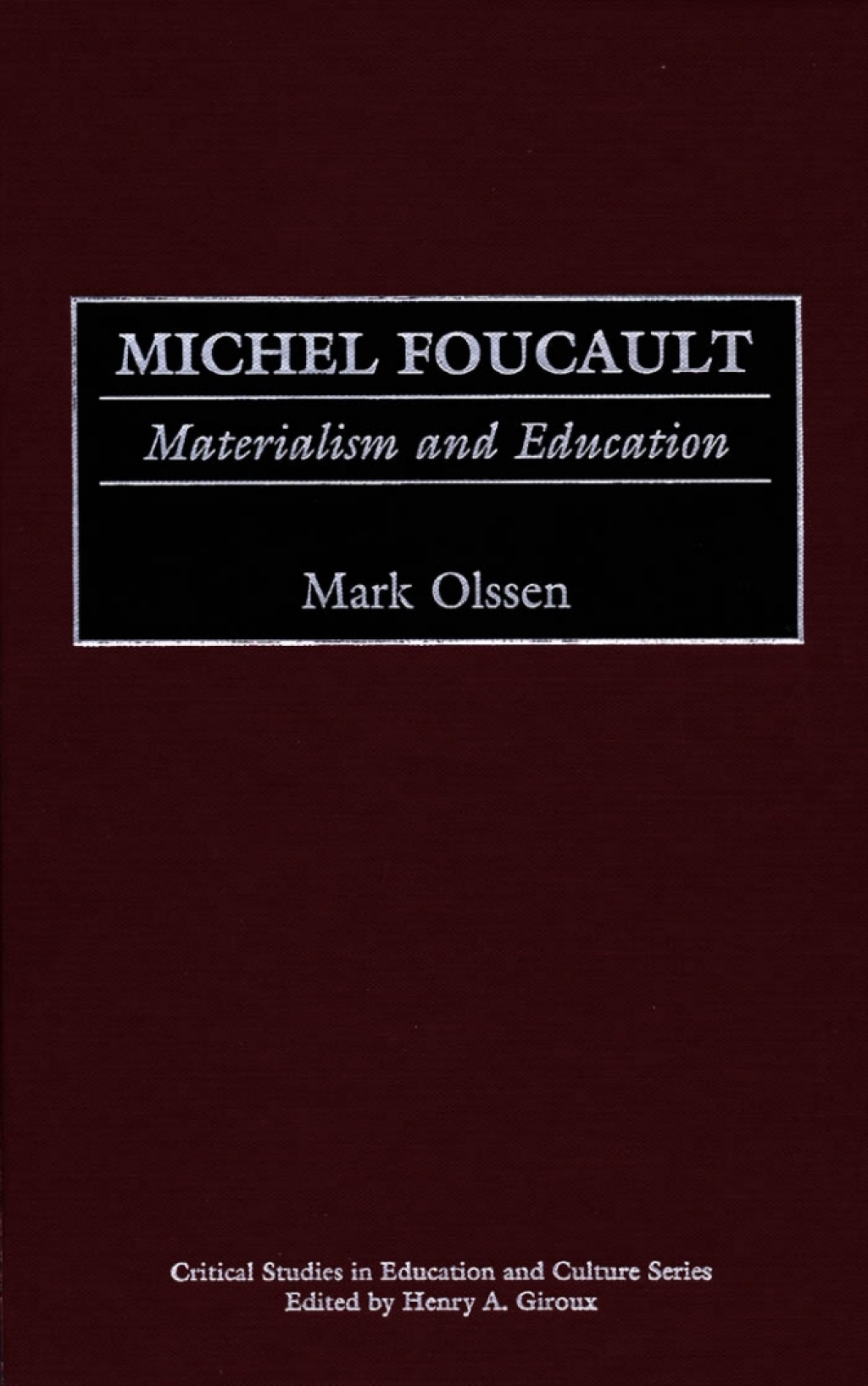
Michel Foucault Materialism and Education 1st Edition – PDF/EPUB Version Downloadable
$49.99
Author(s): Mark Olssen
Publisher: Routledge
ISBN: 9781594511691
Edition: 1st Edition
“Olssen ! brings Foucault to life and sheds new light on understanding his work…Educationalists and scholars across the disciplines will welcome this interpretation of Foucault.” Michael A. Peters, University of Glasgow “Olssen distills in brilliant and succinct language the core of Foucault’s most important insights. This is a book that every student should read in order to understand how to link theory to practice, and educational thought to legacy and work of one of Europe’s great thinkers.” Henry Giroux, McMaster University Michel Foucault is arguably one of the most important thinkers of the twentieth century, and his works are some of the most difficult to grasp. Mark Olssen offers an accessible overview of Foucault’s thought, putting into context the relevance of Foucault’s ideas. Olssen adds important new insights to Foucault scholarship by bringing to light the influences of other thinkers such as Marx, Nietzsche, Gramsci, Habermas, and others on Foucault’s development as a thinker, and their influence on the deep historical materialist strand that grounds and uniquely characterizes so much of Foucault’s thought.
Related products
-1st-edition-%E2%80%93-pdfepub-version-downloadable-8741-yaq5g.jpg)



Michel Foucault Materialism and Education 1st Edition – PDF/EPUB Version Downloadable
$49.99
Author(s): Mark Olssen
Publisher: Praeger
ISBN: 9780313003387
Edition: 1st Edition
Although Foucault departs from Marxism, his own approach constitutes a form of consistent materialism which has theoretical implications for the analysis of social and educational discursive systems. In seeking to demonstrate a correct reading of Foucault, linguistic readings of his work, such as those of Christopher Norris (1993), which represent him as part of the linguistic turn in French philosophy, where language (or representation) henceforth defines the limits of thought, will be dispelled in the process of being corrected. Rather, Foucault will be represented, as Habermas (1987) has suggested, not merely as a historicist but at the same time as a nominalist, materialist, and empiricist. Because the distinctiveness of Foucault’s approach can best be seen in contrast to other major philosophical systems and thinkers, considerable attention is given to examining Foucault’s relationship to Marxism, as well as his relations to Kant, Gramsci, Habermas, and the Greeks. In relation to education, there is in Foucault’s approach a double emphasis which constitutes an ordering principle for this work. On the one hand, attention is directed to discursive practices which perform an educative role in the constitution of subjects and of human forms of existence. On the other hand, forms of education are constituted and utilized for the purposes of collective ethical self-creation, a theme Foucault emphasized in his later works. The book assesses some of the more interesting recent utilizations of Foucault in educational research.
-1st-edition-%E2%80%93-pdfepub-version-downloadable-4292-c4gaw.jpg)