

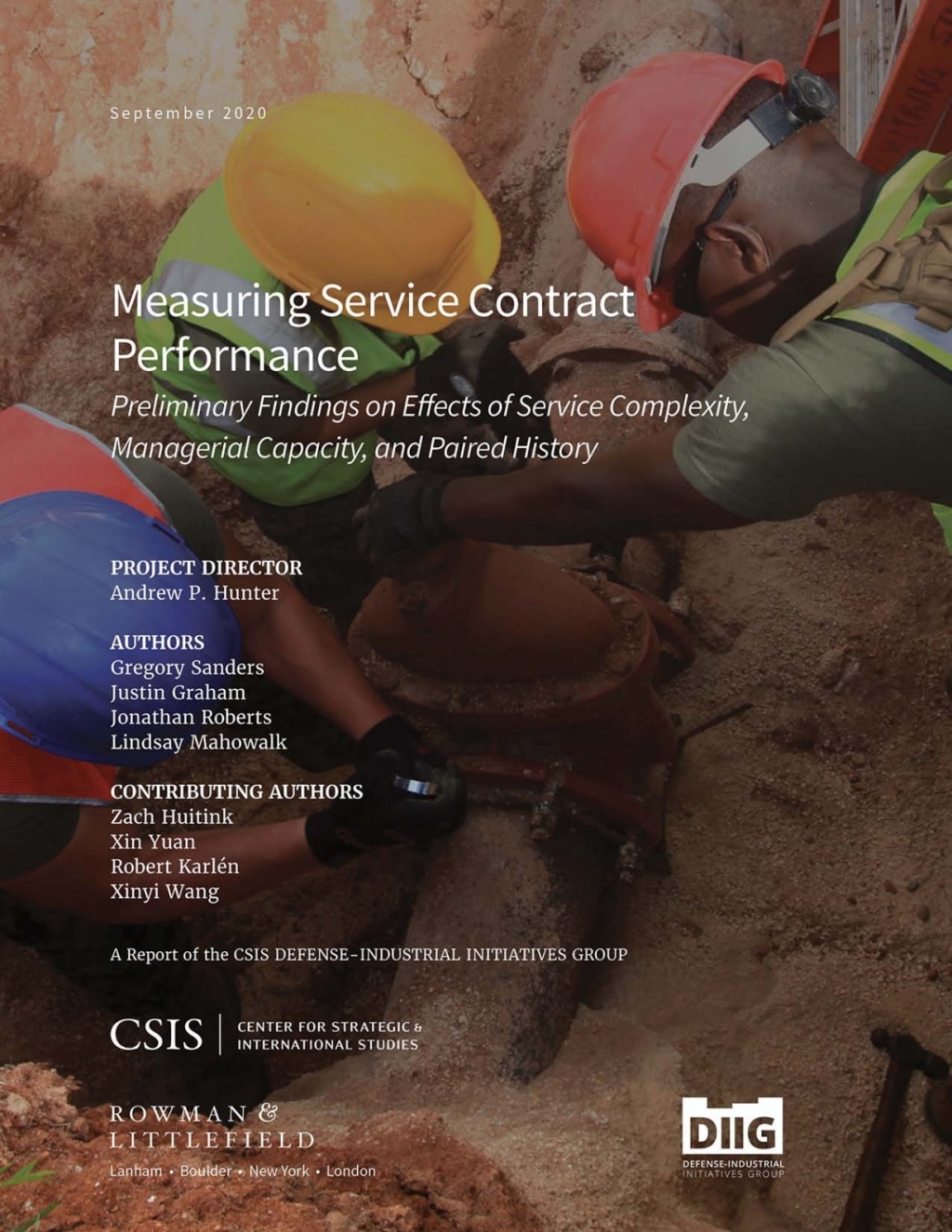

Measuring Service Contract Performance Preliminary Findings on Effects of Service Complexity, Managerial Capacity, and Paired History 1st Edition – PDF/EPUB Version Downloadable
$49.99
Author(s): Andrew P. Hunter; Gregory Sanders
Publisher: Center for Strategic & International Studies
ISBN: 9781538140253
Edition: 1st Edition
Researching and manufacturing fighters, ships, and tanks are only part of the picture for defense contracts. Contracting for services accounts for over 41 percent of DoD contract obligations in 2018. Services include maintaining equipment, moving people and things, creating software, providing server space, and construction. Service contracting is challenging as services can be difficult to define and measure. But services are increasingly central to the U.S. economy. The Department of Defense seeks to attract new firms that will increase its speed and agility—many of these firms are service providers, e.g., data analytics or cloud computing. CSIS looked at a million contracts to evaluate how three factors influence performance: 1.service complexity 2.contract-management capacity 3.vendor’s history working with a DoD contracting office The existing data fails to explain large differences in contract office performance. More DoD transparency about contracting office capacity could help make a case for further investments. The report also found that when vendors and contracting offices have a longer history, they tend to have better results. That means DoD needs to think not only about recruiting new partners, but also about helping them succeed.
Related products








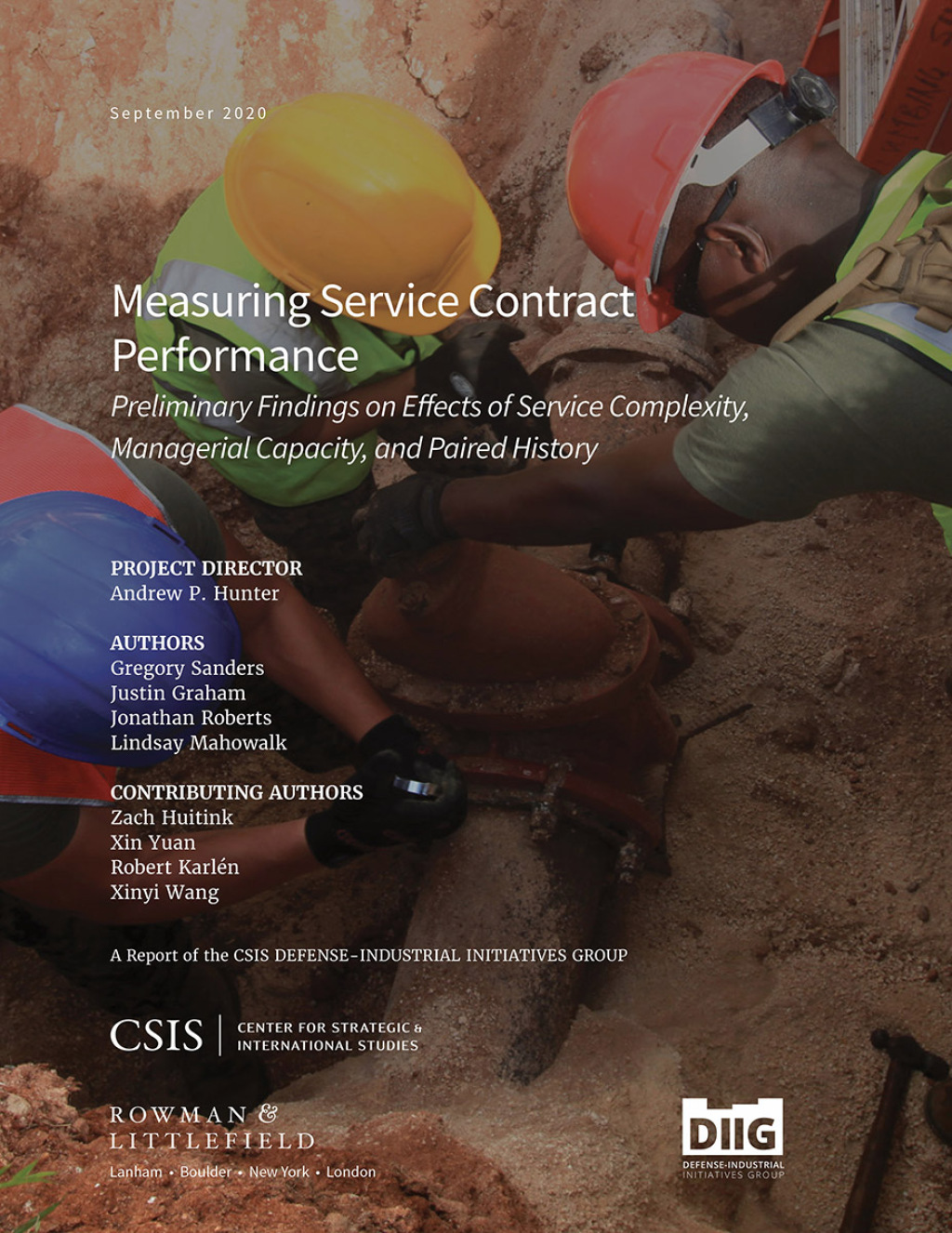

Measuring Service Contract Performance Preliminary Findings on Effects of Service Complexity, Managerial Capacity, and Paired History 1st Edition – PDF/EPUB Version Downloadable
$49.99
Author(s): Andrew P. Hunter; Gregory Sanders
Publisher: Center for Strategic & International Studies
ISBN: 9781538140253
Edition: 1st Edition
Researching and manufacturing fighters, ships, and tanks are only part of the picture for defense contracts. Contracting for services accounts for over 41 percent of DoD contract obligations in 2018. Services include maintaining equipment, moving people and things, creating software, providing server space, and construction. Service contracting is challenging as services can be difficult to define and measure. But services are increasingly central to the U.S. economy. The Department of Defense seeks to attract new firms that will increase its speed and agility—many of these firms are service providers, e.g., data analytics or cloud computing. CSIS looked at a million contracts to evaluate how three factors influence performance:
1.service complexity
2.contract-management capacity
3.vendor’s history working with a DoD contracting office
The existing data fails to explain large differences in contract office performance. More DoD transparency about contracting office capacity could help make a case for further investments.
The report also found that when vendors and contracting offices have a longer history, they tend to have better results. That means DoD needs to think not only about recruiting new partners, but also about helping them succeed.