
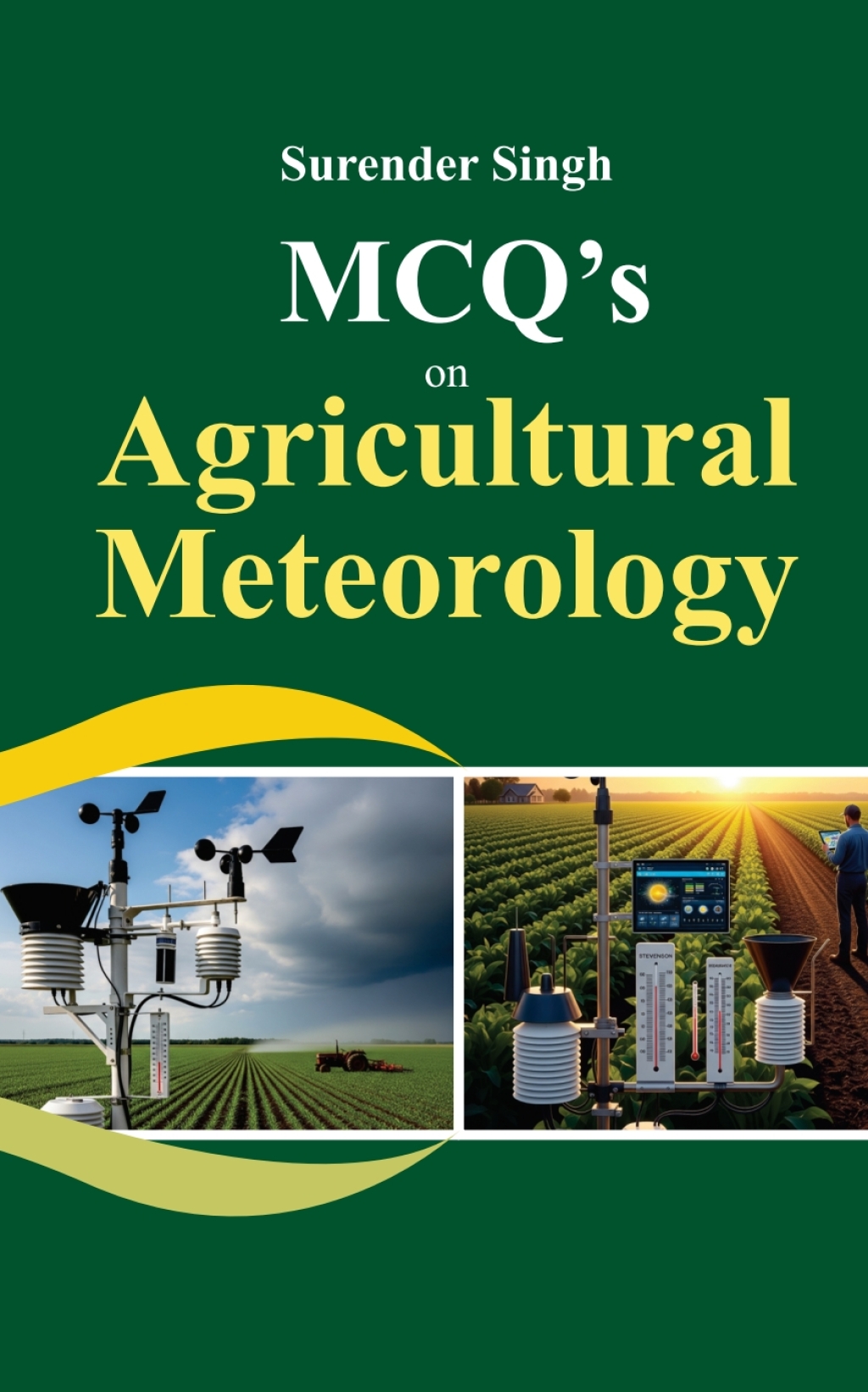

MCQ’s on Agricultural Meteorology 1st Edition – PDF/EPUB Version Downloadable
$49.99
Author(s): Surender Singh
Publisher: NIPA
ISBN: 9789372196450
Edition: 1st Edition
MCQs on Agricultural Meteorology is a specialized academic resource crafted to support students, researchers, and aspirants preparing for competitive examinations in the field of agrometeorology. Bridging the disciplines of meteorological science and agricultural practices, this subject is increasingly critical in the face of climate variability, resource management challenges, and the global push for sustainable agriculture.
This compilation offers a well-curated collection of Multiple Choice Questions (MCQs) across the core themes of:
Weather elements and instrumentation
Crop-weather relationships
Agroclimatic classification and zoning
Weather forecasting techniques
Agrometeorological advisory services
Climate-resilient agricultural practices
Simulation modeling in crop-weather systems
Remote sensing and GIS applications in agrometeorology
Each section is aligned with the curricula of national agricultural universities and major competitive exams such as those conducted by ICAR, ASRB, and other agricultural/allied service bodies. The MCQs are designed to test comprehension, strengthen conceptual clarity, and promote self-assessment, enabling readers to identify and address knowledge gaps effectively.
Combining theoretical knowledge with practical insight, this book serves as:
A revision tool for quick review
A classroom companion for structured learning
A ready reference for interdisciplinary applications in agrometeorology
By integrating scientific rigor with application-oriented framing, MCQs on Agricultural Meteorology empowers readers to make informed decisions in crop planning, climate risk mitigation, and sustainable food production. It contributes meaningfully to capacity-building in agricultural meteorology and supports the broader vision of climate-smart agriculture.
-1st-edition-%E2%80%93-pdfepub-version-downloadable-8741-yaq5g.jpg)