
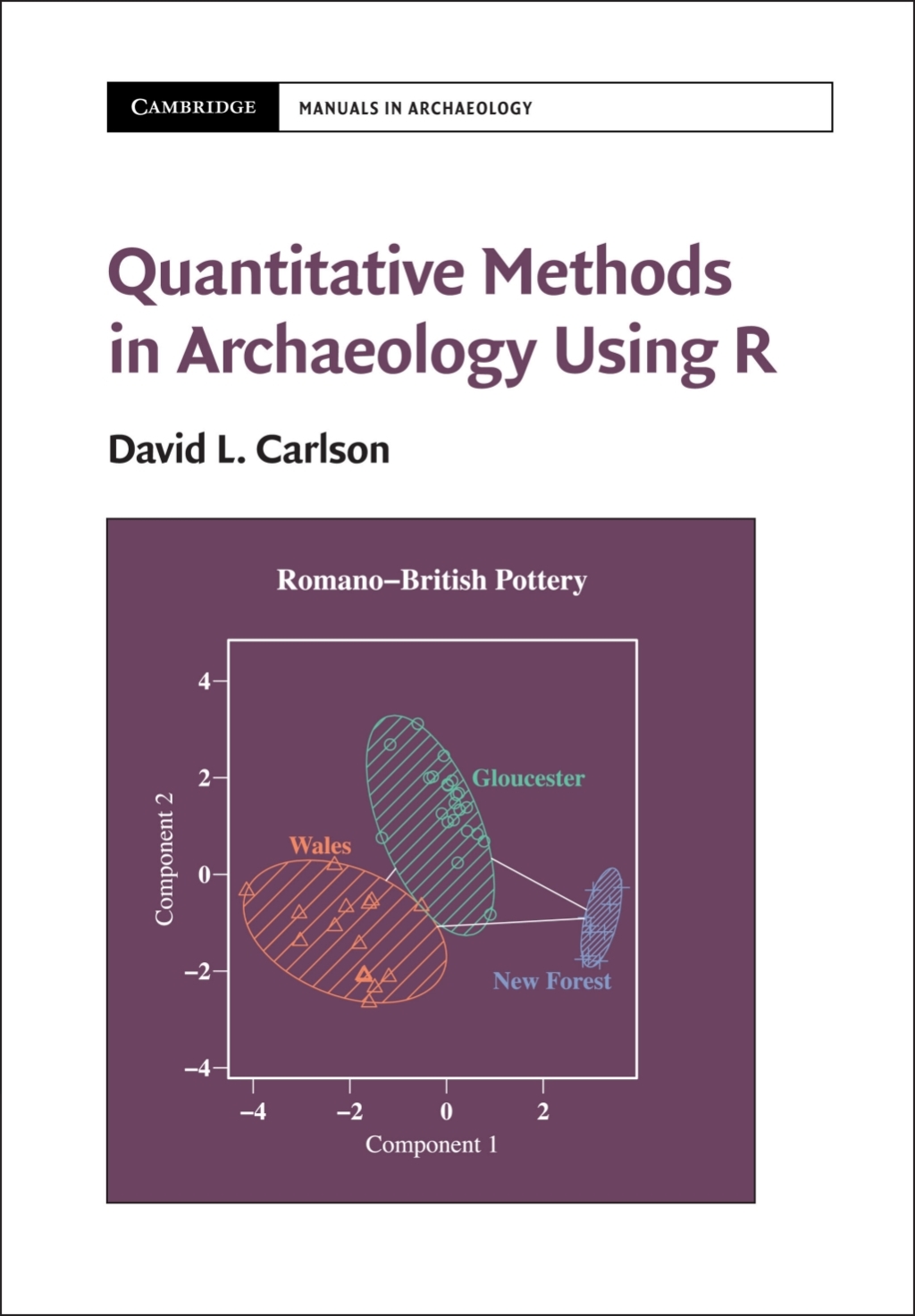


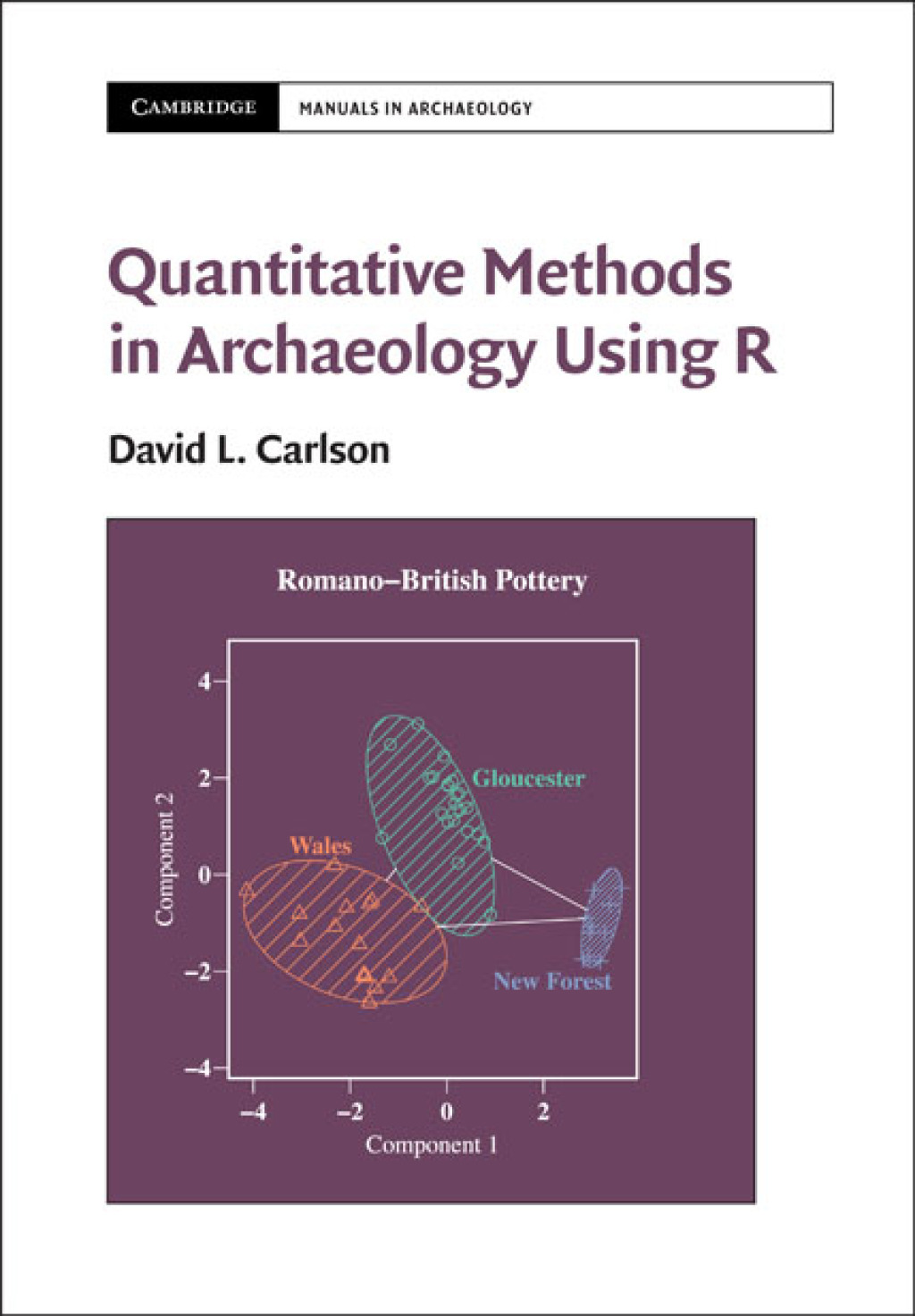
Quantitative Methods in Archaeology Using R – PDF/EPUB Version Downloadable
$49.99
Author(s): David L. Carlson
Publisher: Cambridge University Press
ISBN: 9781107040212
Edition:
Quantitative Methods in Archaeology Using R is the first hands-on guide to using the R statistical computing system written specifically for archaeologists. It shows how to use the system to analyze many types of archaeological data. Part I includes tutorials on R, with applications to real archaeological data showing how to compute descriptive statistics, create tables, and produce a wide variety of charts and graphs. Part II addresses the major multivariate approaches used by archaeologists, including multiple regression (and the generalized linear model); multiple analysis of variance and discriminant analysis; principal components analysis; correspondence analysis; distances and scaling; and cluster analysis. Part III covers specialized topics in archaeology, including intra-site spatial analysis, seriation, and assemblage diversity.
Related products





Quantitative Methods in Archaeology Using R – PDF/EPUB Version Downloadable
$49.99
Author(s): David L. Carlson
Publisher: Cambridge University Press
ISBN: 9781107040212
Edition:
Quantitative Methods in Archaeology Using R is the first hands-on guide to using the R statistical computing system written specifically for archaeologists. It shows how to use the system to analyze many types of archaeological data. Part I includes tutorials on R, with applications to real archaeological data showing how to compute descriptive statistics, create tables, and produce a wide variety of charts and graphs. Part II addresses the major multivariate approaches used by archaeologists, including multiple regression (and the generalized linear model); multiple analysis of variance and discriminant analysis; principal components analysis; correspondence analysis; distances and scaling; and cluster analysis. Part III covers specialized topics in archaeology, including intra-site spatial analysis, seriation, and assemblage diversity.