
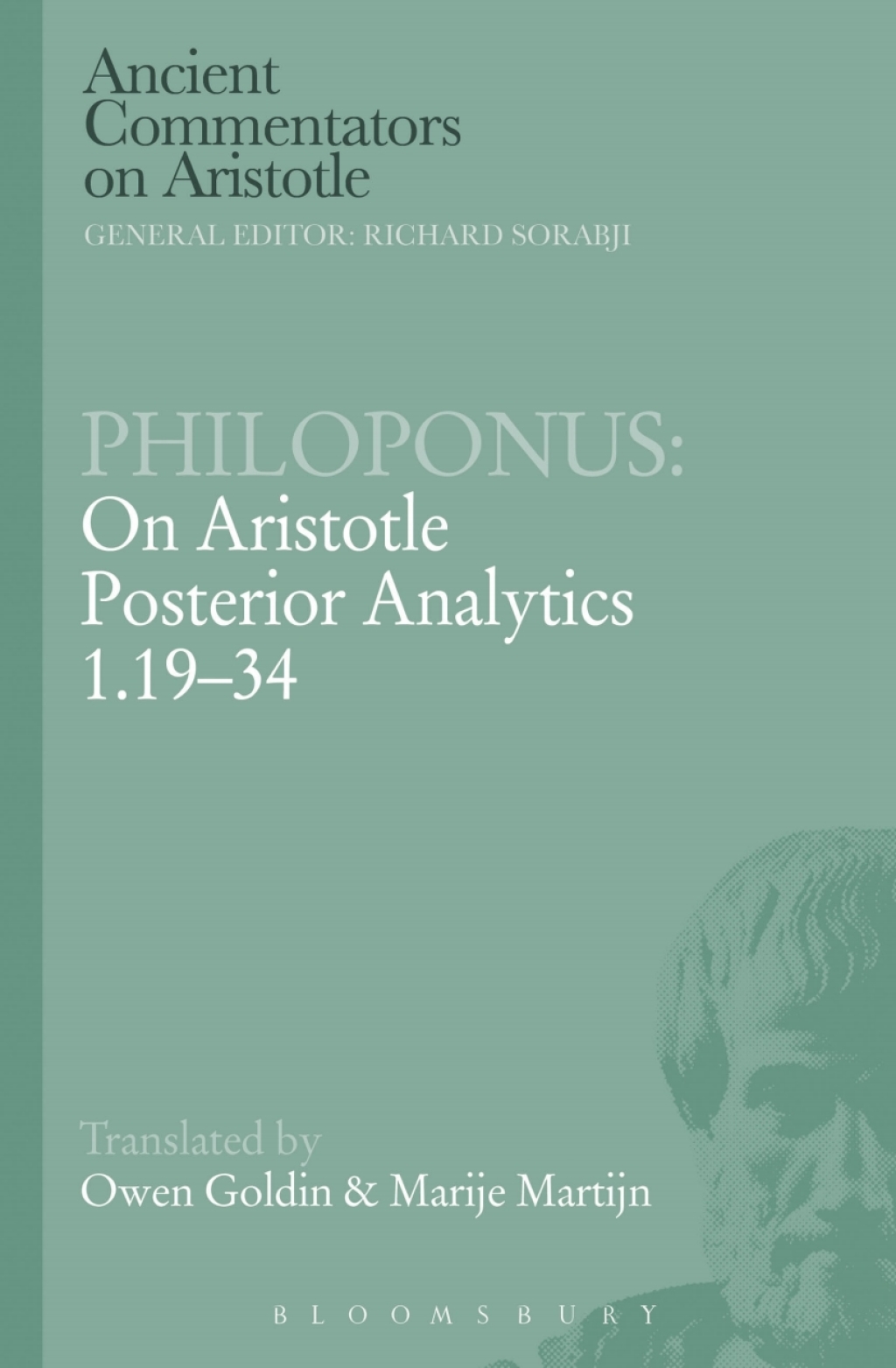
Philoponus: On Aristotle Posterior Analytics 1.19-34 1st Edition – PDF/EPUB Version Downloadable
$49.99
Author(s):
Publisher: Bloomsbury Academic
ISBN: 9781472557995
Edition: 1st Edition
Aristotle described the scientific explanation of universal or general facts as deducing them through scientific demonstrations, that is, through syllogisms that met requirements of logical validity and explanatoriness which he first formulated. In Chapters 19-23, he adds arguments for the further logical restrictions that scientific demonstrations can neither be indefinitely long nor infinitely extendible through the interposition of new middle terms. Chapters 24-26 argue for the superiority of universal over particular demonstration, of affirmative over negative demonstration, and of direct negative demonstration over demonstration to the impossible. Chapters 27-34 discuss different aspects of sciences and scientific understanding, allowing us to distinguish between sciences, and between scientific understanding and other kinds of cognition, especially opinion. Philoponus’ comments on these chapters are interesting especially because of his metaphysical analysis of universal predication and his understanding of the notion of subordinate sciences. We learn from his commentary that Philoponus believed in Platonic Forms as inherent in, and posterior to, the Divine Intellect, but ascribed to Aristotle an interpretation of Plato’s Forms as independent substances, prior to the Demiurgic Intellect. A very important notion from Aristotle’s Posterior Analytics is that of the ‘subordination’ of sciences, i.e. the idea that some sciences depend on ‘higher’ ones for some of their principles. Philoponus goes beyond Aristotle in suggesting a taxonomy of sciences, in which the subordinate science concerns the same scientific genus as the superordinate, but a different species. This volume contains the first English translation of Philoponus’ commentary, as well as a detailed introduction, extensive explanatory notes and a bibliography.
-1st-edition-%E2%80%93-pdfepub-version-downloadable-4292-c4gaw.jpg)