
-a-critical-introduction-1st-edition-%E2%80%93-pdfepub-version-downloadable-7171-wdomo.jpg)
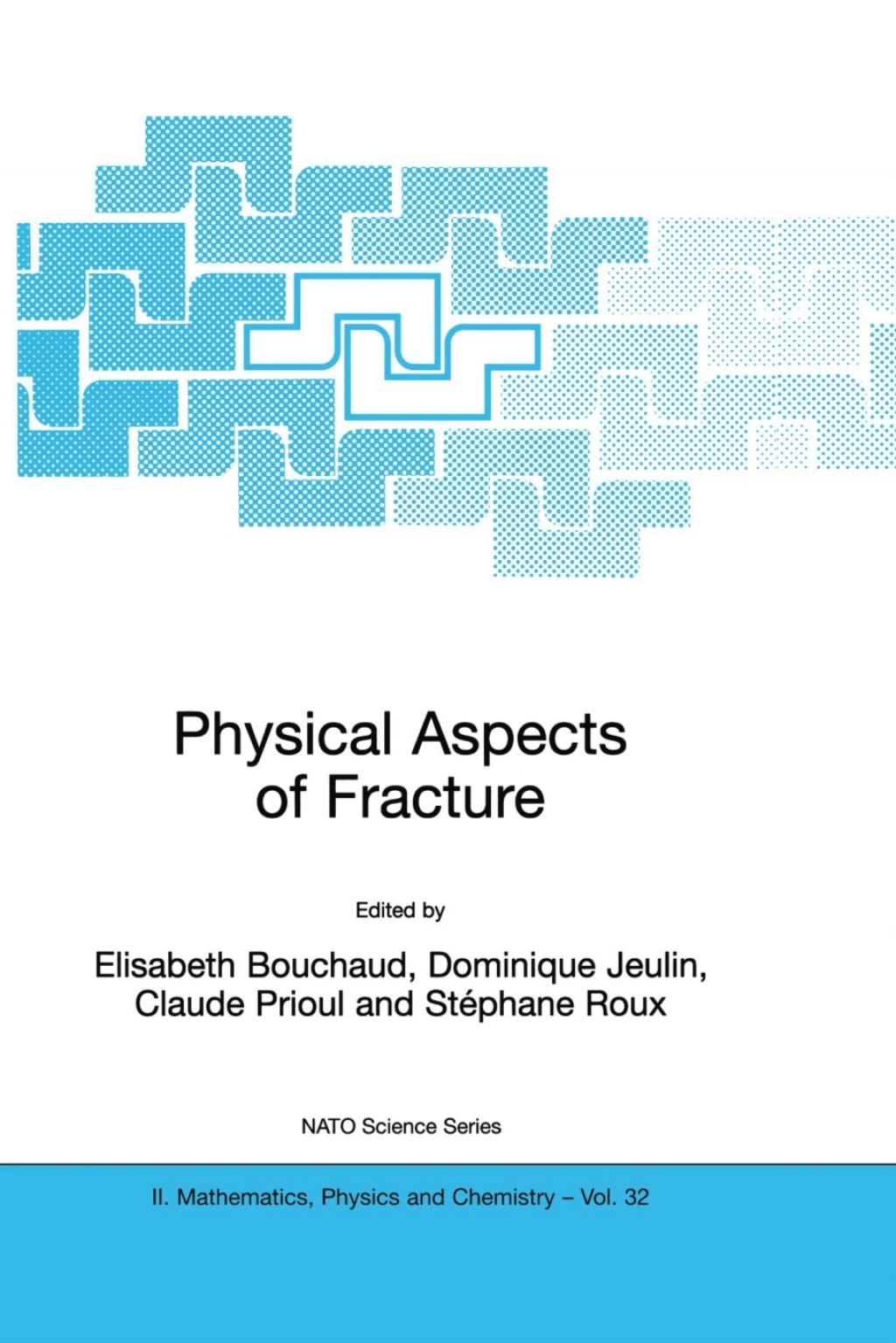
Physical Aspects of Fracture 1st Edition – PDF/EPUB Version Downloadable
$49.99
Author(s): Elisabeth Bouchaud; Dominique Jeulin; Claude Prioul
Publisher: Springer
ISBN: 9789401006569
Edition: 1st Edition
The main scope of this Cargese NATO Advanced Study Institute (June 5-17 2000) was to bring together a number of international experts, covering a large spectrum of the various Physical Aspects of Fracture. As a matter of fact, lecturers as well as participants were coming from various scientific communities: mechanics, physics, materials science, with the common objective of progressing towards a multi-scale description of fracture. This volume includes papers on most materials of practical interest: from concrete to ceramics through metallic alloys, glasses, polymers and composite materials. The classical fields of damage and fracture mechanisms are addressed (critical and sub-critical quasi-static crack propagation, stress corrosion, fatigue, fatigue-corrosion . . . . as well as dynamic fracture). Brittle and ductile fractures are considered and a balance has been carefully kept between experiments, simulations and theoretical models, and between the contributions of the various communities. New topics in damage and fracture mechanics – the effect of disorder and statistical aspects, dynamic fracture, friction and fracture of interfaces – were also explored. This large overview on the Physical Aspects of Fracture shows that the old barriers built between the different scales will soon “fracture”. It is no more unrealistic to imagine that a crack initiated through a molecular dynamics description could be propagated at the grain level thanks to dislocation dynamics included in a crystal plasticity model, itself implemented in a finite element code. Linking what happens at the atomic scale to fracture of structures as large as a dam is the new emerging challenge.