
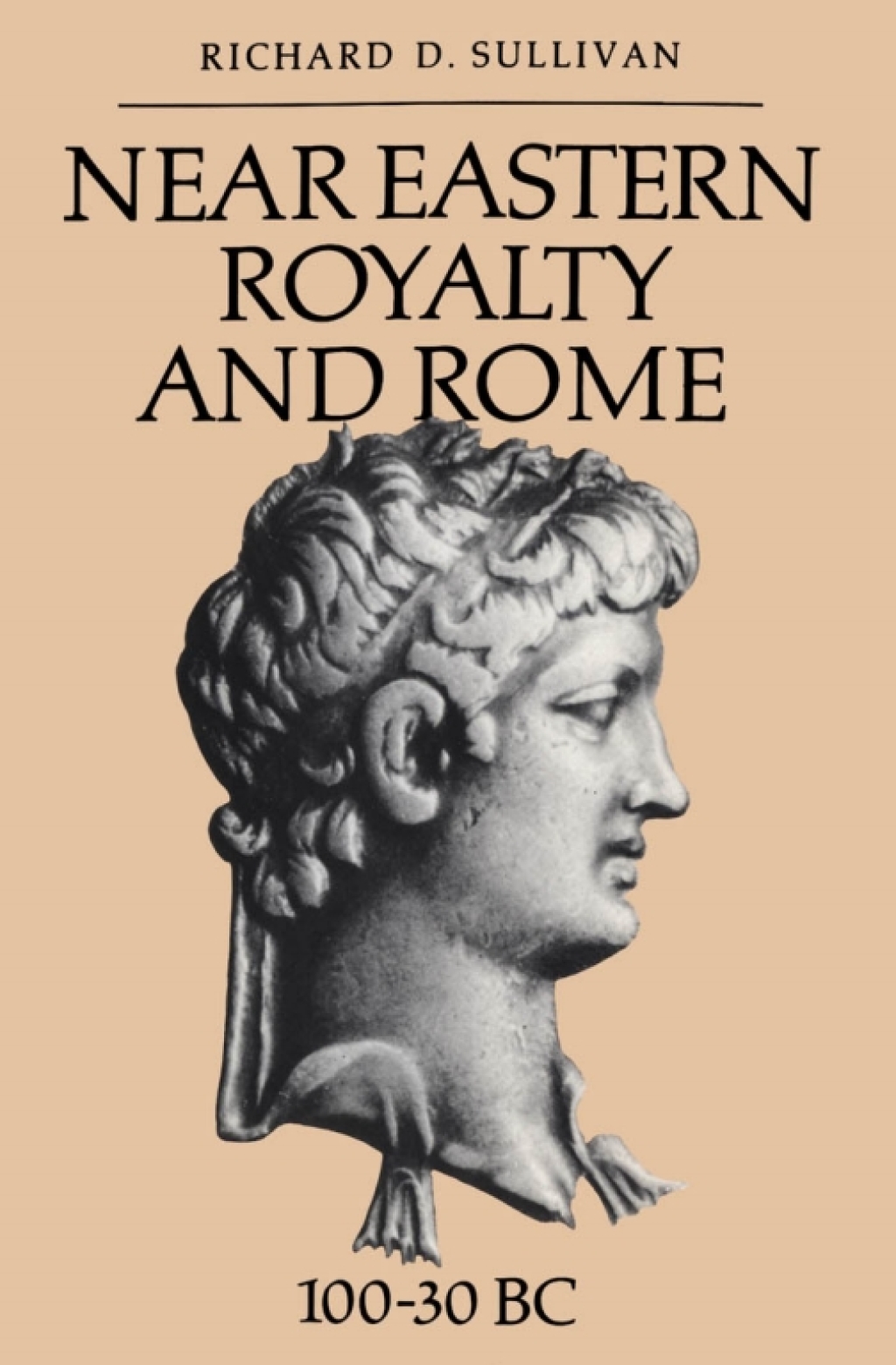


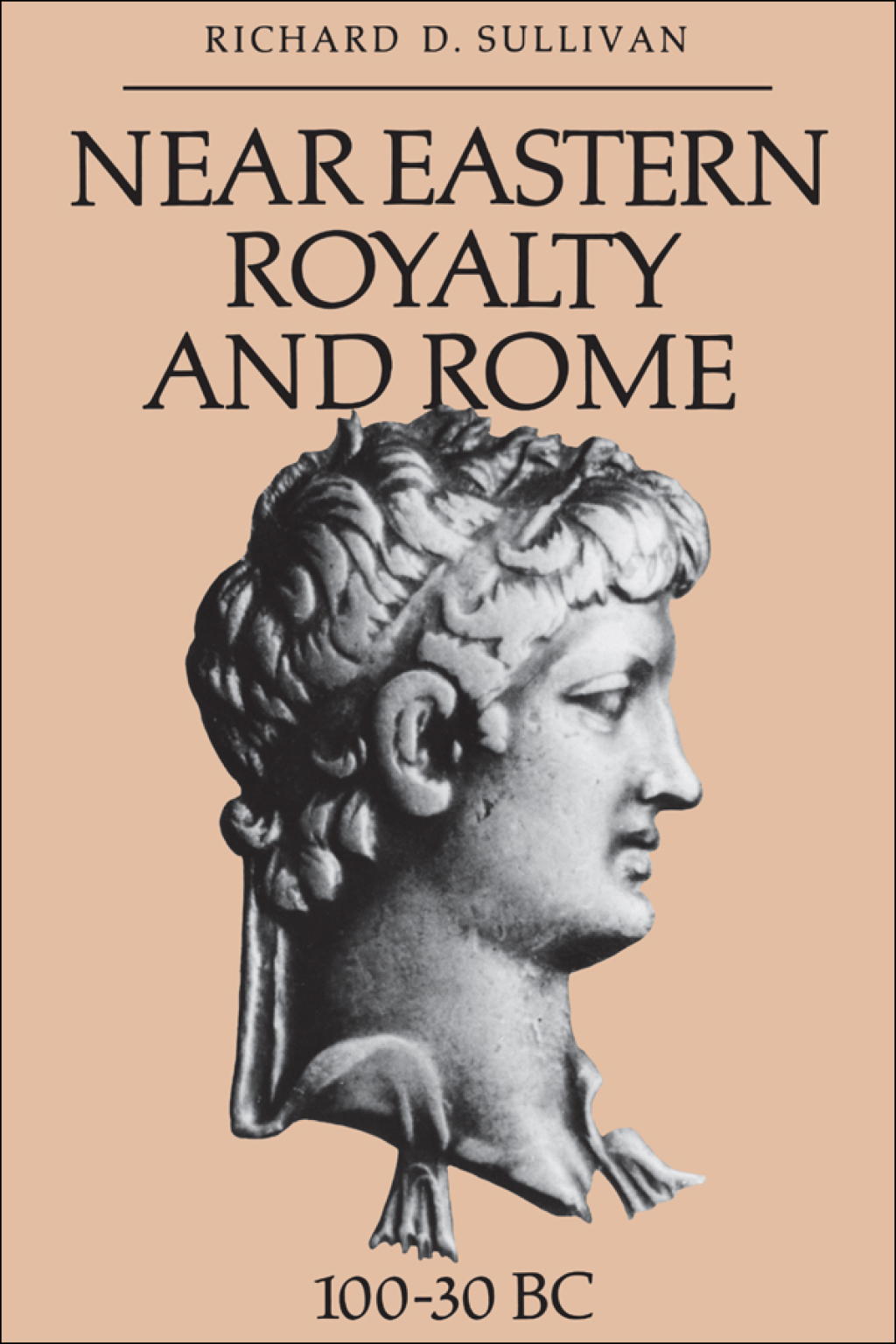
Near Eastern Royalty and Rome, 100-30 Bc 1st Edition – PDF/EPUB Version Downloadable
$49.99
Author(s): Richard D. Sullivan
Publisher: University of Toronto Press
ISBN: 9780802026828
Edition: 1st Edition
During the first century BC, the Near and Middle East saw a great transition from the Seleucid and Ptolemaic Empires, by way of the brief Pontic and Armenian Empires, to the triumphant Parthian and Roman Empires. Richard D. Sullivan offers a guide to the central role of royalty during this period. He provides, through narrative and citations, a context for the frequent references to Eastern kings and queens by Caesar, Cicero, Strabo, Josephus, Tacitus, Appian, Dio, and others. He also discusses related inscriptions, coins, and papyri.
Sullivan focuses on the personnel of the many dynasties which rules the Near and Middle East, from Thrace through Asia Minor and the Levant to Egypt, then eastward to Armenia, Mesopotamia, and Parthia. He studies such famous figures as Mithradates Eupator, Cleopatra, and Herod the Great as well as others now obscure. To ‘locate’ them properly, he provides a narrative history of each dynasty and draws them together in a coherent account of Eastern royal governance and its accommodations with Rome and Parthia.
Related products
-1st-edition-%E2%80%93-pdfepub-version-downloadable-8741-yaq5g.jpg)






Near Eastern Royalty and Rome, 100-30 Bc 1st Edition – PDF/EPUB Version Downloadable
$49.99
Author(s): Richard D. Sullivan
Publisher: University of Toronto Press
ISBN: 9781487592585
Edition: 1st Edition
During the first century BC, the Near and Middle Easy saw a great transition from the Seleucid and Ptolemaic Empires, by way of the brief Pontic and Armenian Empires, to the triumphant Parthian and Roman Empires. Richard D. Sullivan offers a guide to the central role of royalty during this period. He provides, through narrative and citations, a context for the frequent references to Eastern kings and queens by Caesar, Cicero, Strabo, Josephus, Tacitus, Appian, Dio, and others. He also discusses related inscriptions, coins, and papyri.
Sullivan focuses on the personnel of the many dynasties which rules the Near and Middle East, from Thrace through Asia Minor and the Levant to Egypt, then eastward to Armenia, Mesopotamia, and Parthia. He studies such famous figures as Mithradates Eupator, Cleopatra, and Herod the Great as well as others now obscure. To ‘locate’ them properly, he provides a narrative history of each dynasty and draws them together in a coherent account of Eastern royal governance and its accommodations with Rome and Parthia.