
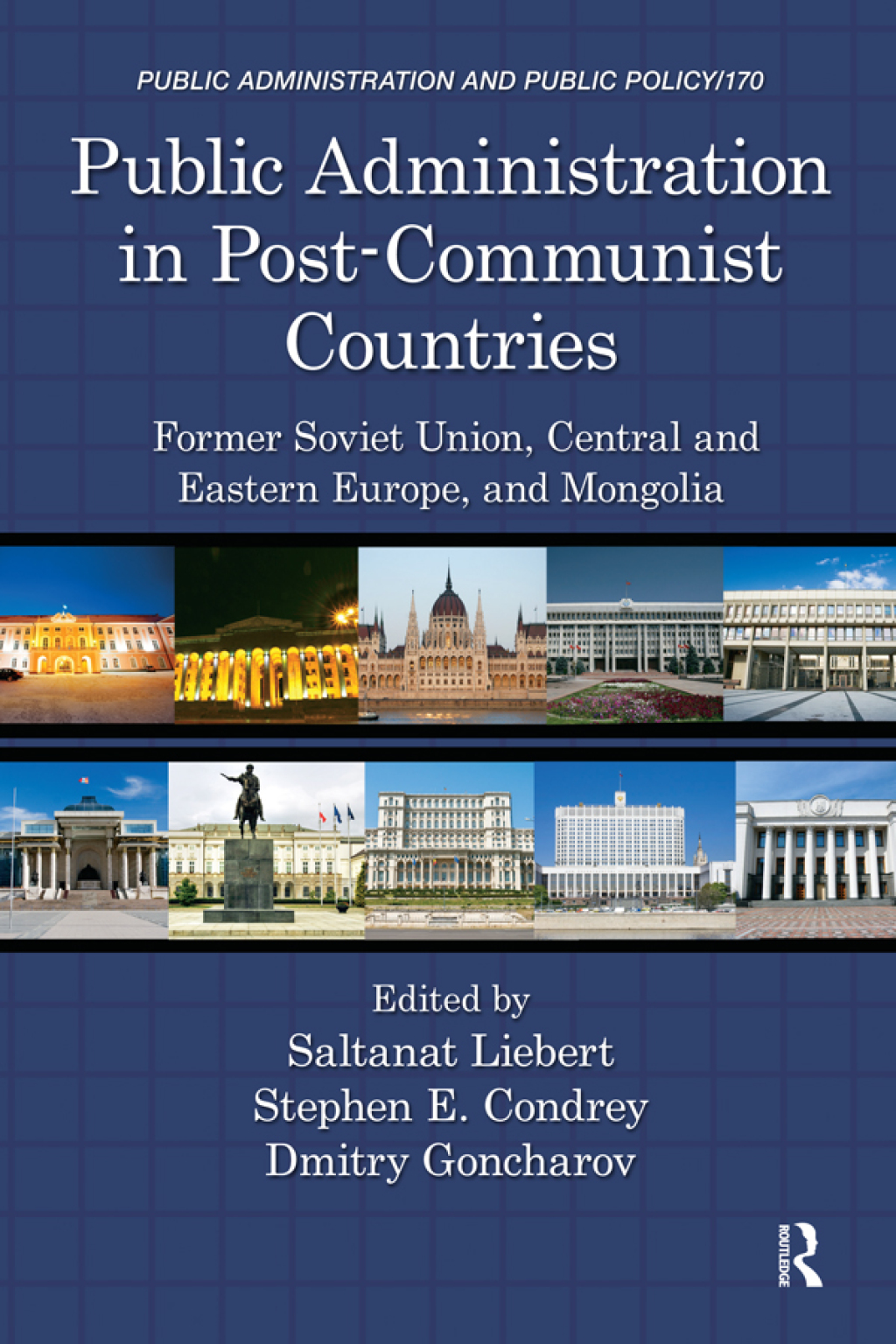
Public Administration in Post-Communist Countries Former Soviet Union, Central and Eastern Europe, and Mongolia 1st Edition – PDF/EPUB Version Downloadable
$49.99
Author(s): Saltanat Liebert
Publisher: Routledge
ISBN: 9781439861370
Edition: 1st Edition
Although it has been more than 20 years since Communism crumbled in Central and Eastern Europe and the Soviet Union, many scholars and politicians still wonder what the lifting of the Iron Curtain has really meant for these former Communist countries. And, because these countries were largely closed off to the world for so long, there has yet to be an all-inclusive study on their administrative systems—until now. In Public Administration in Post-Communist Countries: Former Soviet Union, Central and Eastern Europe, and Mongolia, expert contributors supply a comprehensive overview and analysis of public administration in their respective post-Communist countries. They illustrate each country’s transformation from an authoritarian system of governance into a modern, market-based, and in some cases, democratic government. The book covers the countries that were officially part of the Soviet Union (Russia, Ukraine, Moldova, Estonia, Lithuania, Georgia, Kazakhstan, and Kyrgyzstan); those that were theoretically independent but were subject to Soviet-dominated Communist rule (Bulgaria, Hungary, Romania, and Poland); as well as a satellite republic that was under significant Soviet influence (Mongolia). Each chapter includes a brief introduction to the specific country, an overview of politics and administration, and discussions on key aspects of public management and administration—including human resource management, public budgeting, financial management, corruption, accountability, political and economic reform, civil society, and prospects for future development in the region. The book concludes by identifying common themes and trends and pinpointing similarities and differences to supply you with a broad comparative perspective.
-1st-edition-%E2%80%93-pdfepub-version-downloadable-8741-yaq5g.jpg)