
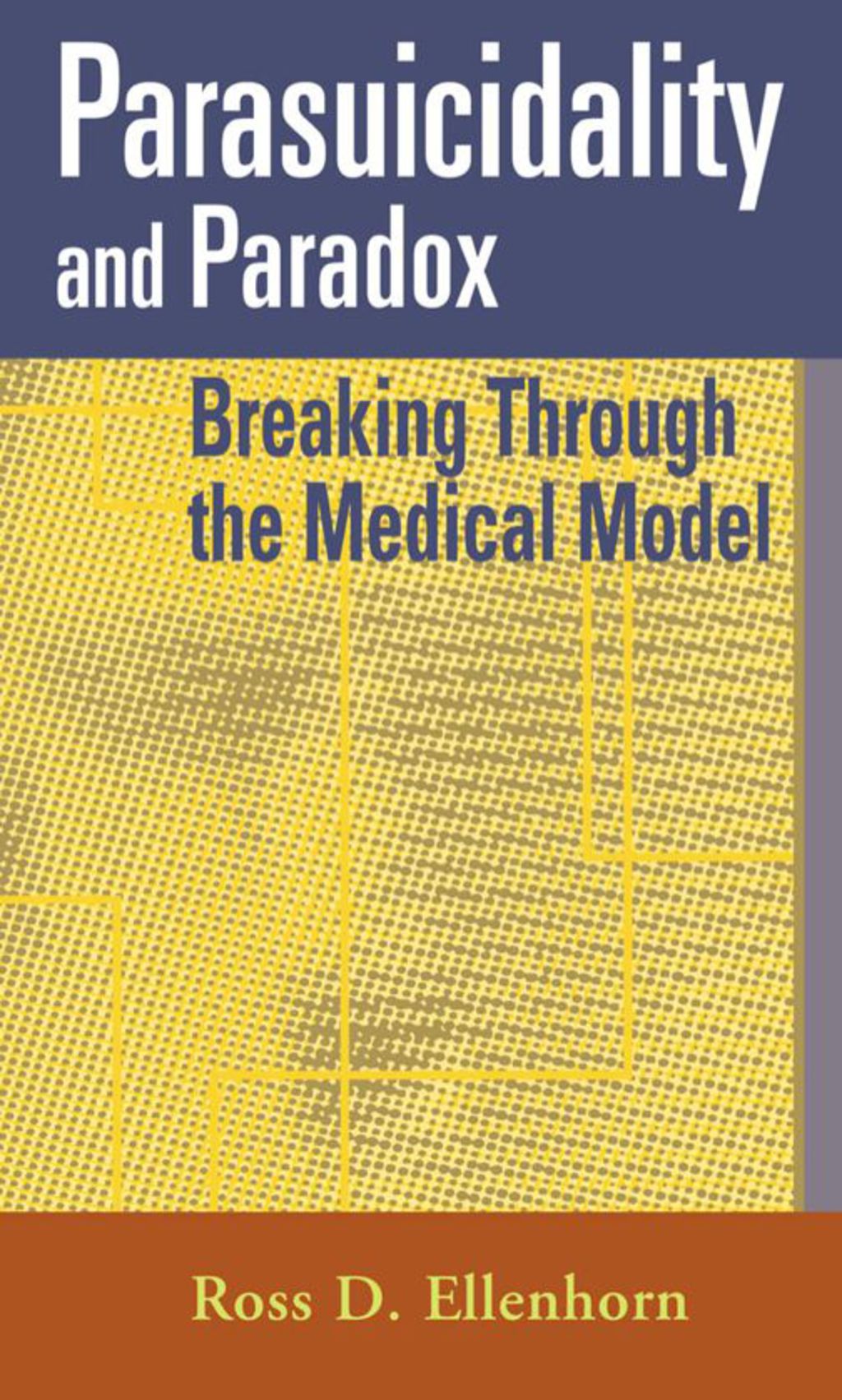

Parasuicidality and Paradox Breaking Through the Medical Model 1st Edition – PDF/EPUB Version Downloadable
$49.99
Author(s): Ross D. Ellenhorn
Publisher: Springer Publishing Company
ISBN: 9780826115461
Edition: 1st Edition
“This book describes parasuicidality from a different perspective, yet still within the framework of DBT. These concepts will be helpful to clinicians, who often spend much of their time dealing with these troubling behaviorsÖ.This book is well worth the price and the reader will not be disappointed.” Score: 94, 4 stars –Doody’s “Ross Ellenhorn brings a fresh, new look at what has been called parasuicidality. Rather seeing it solely as a medicalized symptom of mental disorder, he incisively shows how threats of suicide emerge from the social context and can be better understood and treated within a framework of social relationships. This well documented and clearly written book is must reading for anyone interested in better understanding and dealing with parasuicidality. ” “This book deals with the issue of parasuicidality using a dialectical behavior therapy (DBT) approach, but posits that clinical interactions aid and abet that specific behavior. It presents both theoretical and pragmatic ideas of how to deal wi th patients who often pose the greatest challenge to clinicians. ” Gary B Kaniuk, Psy.D. (Cermak Health Services) –Peter Conrad, Harry Coplan Professor of Social Sciences, Brandeis University, and author of The Medicalization of Society: On the Transformation of Human Conditions into Medical Disorders In this unique and groundbreaking book, Dr. Ellenhorn offers a very different approach to assisting parasuicidal patients with their problems, an approach that avoids medicalized interactions while enhancing authentic encounters with patients. He makes extensive use of vignettes to demonstrate various types of scenarios between clinicians and patients. A number of other effective techniques are discussed, including: Ways to enhance team treatment planning through a brainstorming process called “The Hourglass” Alternative methods of documenting treatment that serves to protect clinicians from concerns about liability Helping patients focus on life goals and changing themselves through clinician-patient interactions
-1st-edition-%E2%80%93-pdfepub-version-downloadable-8741-yaq5g.jpg)
-1st-edition-%E2%80%93-pdfepub-version-downloadable-4292-c4gaw.jpg)