


Passions and Subjectivity in Early Modern Culture 1st Edition – PDF/EPUB Version Downloadable
$49.99
Author(s): Freya Sierhuis
Publisher: Routledge
ISBN: 9781138245877
Edition: 1st Edition
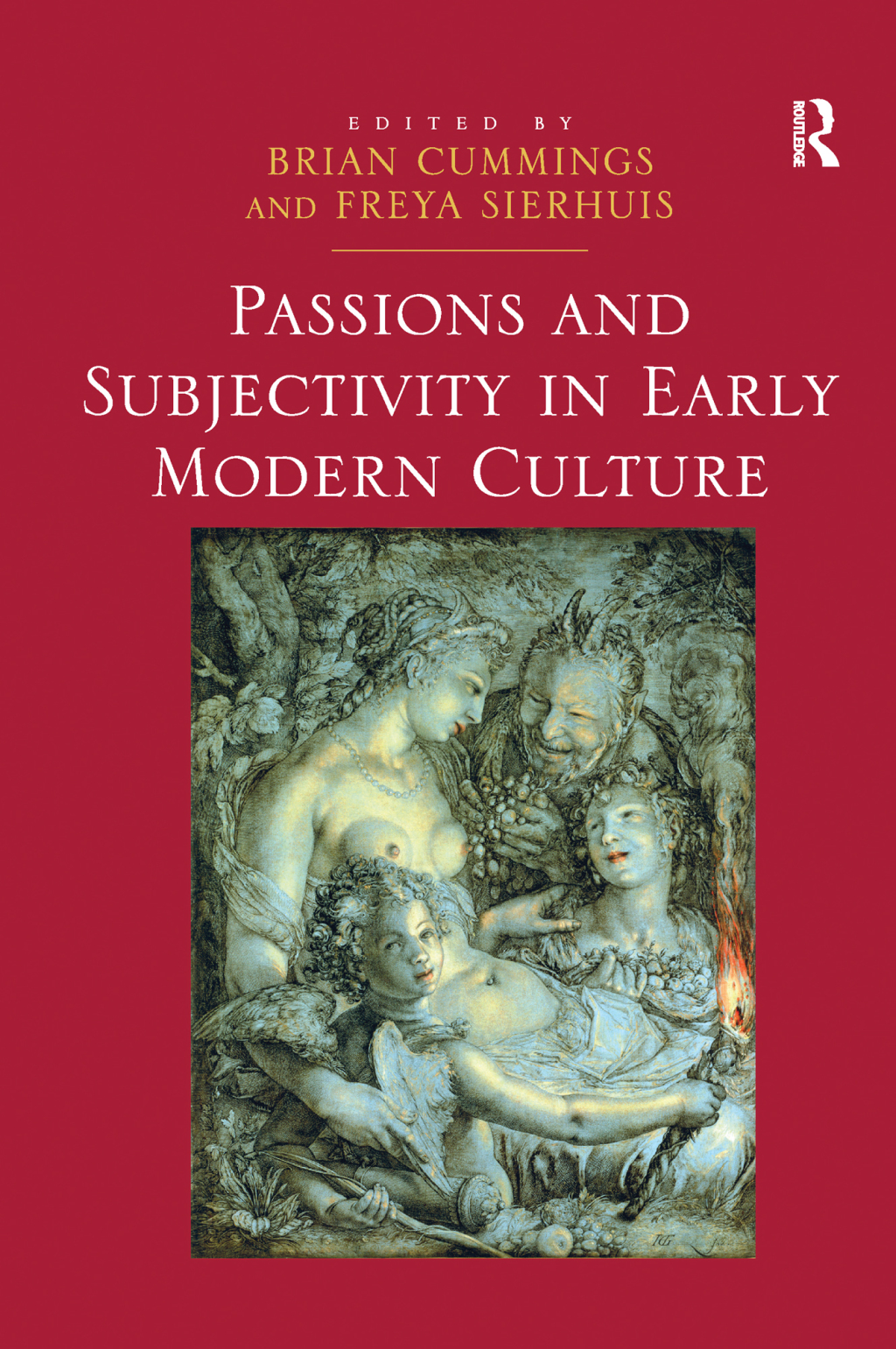
Bringing together scholars from literature and the history of ideas, Passions and Subjectivity in Early Modern Culture explores new ways of negotiating the boundaries between cognitive and bodily models of emotion, and between different versions of the will as active or passive. In the process, it juxtaposes the historical formation of such ideas with contemporary philosophical debates. It frames a dialogue between rhetoric and medicine, politics and religion, in order to examine the relationship between mind and body and between experience and the senses. Some chapters discuss literature, in studies of Shakespeare, Donne, and Milton; other essays concentrate on philosophical arguments, both Aristotelian and Galenic models from antiquity, and new mechanistic formations in Descartes, Hobbes and Spinoza. A powerful sense of paradox emerges in treatments of the passions in the early modern period, also reflected in new literary and philosophical forms in which inwardness was displayed, analysed and studiedâ€the autobiography, the essay, the soliloquyâ€genres which rewrite the formation of subjectivity. At the same time, the frame of reference moves outwards, from the world of interior states to encounter the passions on a public stage, thus reconnecting literary study with the history of political thought. In between the abstract theory of political ideas and the inward selves of literary history, lies a field of intersections waiting to be explored. The passions, like human nature itself, are infinitely variable, and provoke both literary experimentation and philosophical imagination. Passions and Subjectivity in Early Modern Culture thus makes new connections between embodiment, selfhood and the emotions in order to suggest both new models of the self and new models for interdisciplinary history.