
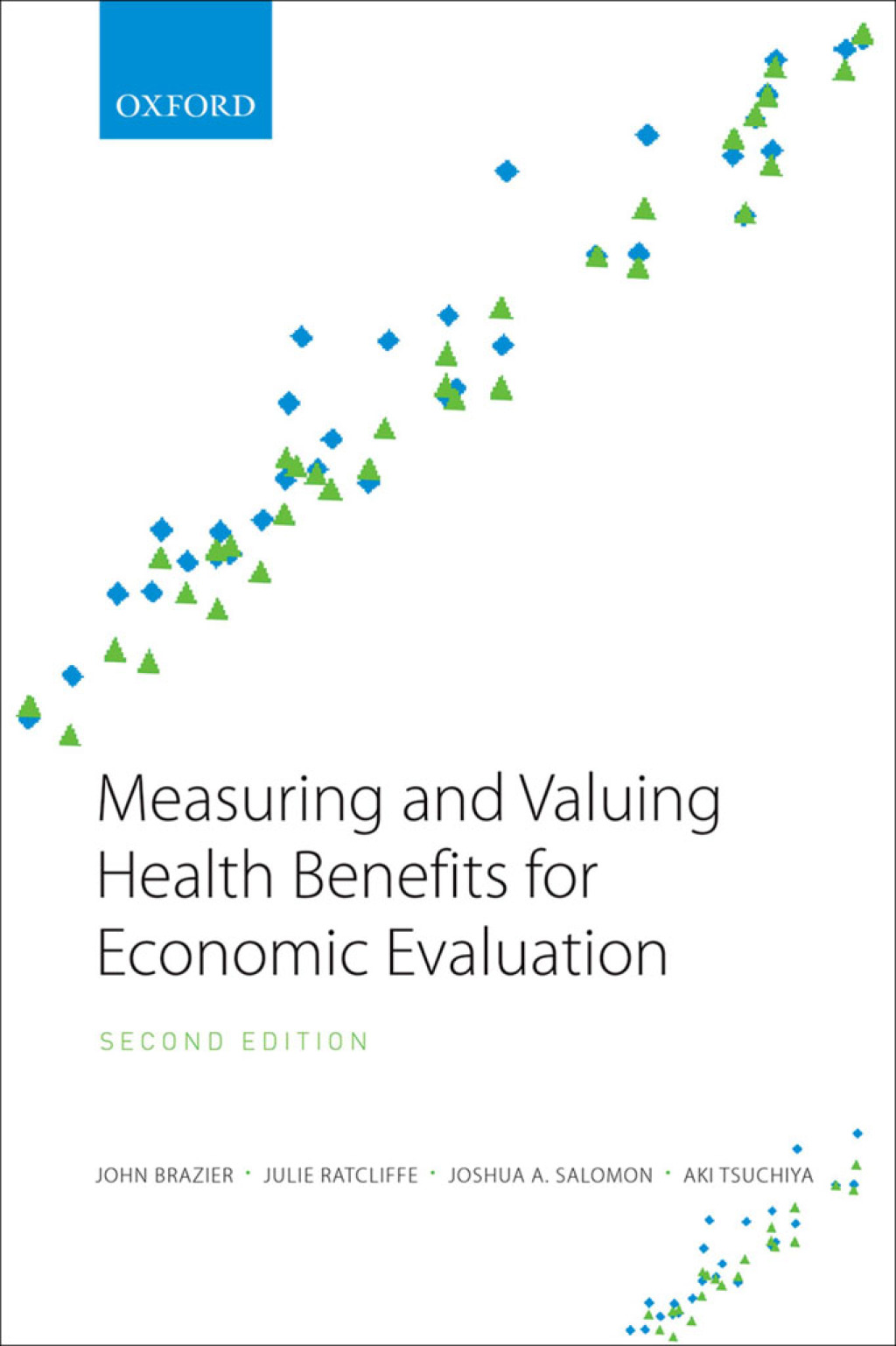


Measuring and Valuing Health Benefits for Economic Evaluation 2nd Edition – PDF/EPUB Version Downloadable
$49.99
Author(s): John Brazier; Julie Ratcliffe; Joshua Salomon; Aki Tsuchiya
Publisher: OUP Oxford
ISBN: 9780191038778
Edition: 2nd Edition
There are not enough resources in health care systems around the world to fund all technically feasible and potentially beneficial health care interventions. Difficult choices have to be made, and economic evaluation offers a systematic and transparent process for informing such choices. A key component of economic evaluation is how to value the benefits of health care in a way that permits comparison between health care interventions, such as through costs per quality-adjusted life years (QALY). Measuring and Valuing Health Benefits for Economic Evaluation examines the measurement and valuation of health benefits, reviews the explosion of theoretical and empirical work in the field, and explores an area of research that continues to be a major source of debate. It addresses the key questions in the field including: the definition of health, the techniques of valuation, who should provide the values, techniques for modelling health state values, the appropriateness of tools in children and vulnerable groups, cross cultural issues, and the problem of choosing the right instrument. This new edition contains updated empirical examples and practical applications, which help to clarify the readers understanding of real world contexts. It features a glossary containing the common terms used by practitioners, and has been updated to cover new measures of health and wellbeing, such as ICECAP, ASCOT and AQOL. It takes into account new research into the social weighting of a QALY, the rising use of ordinal valuation techniques, use of the internet to collect data, and the use of health state utility values in cost effectiveness models. This is an ideal resource for anyone wishing to gain a specialised understanding of health benefit measurement in economic evaluation, especially those working in the fields of health economics, public sector economics, pharmacoeconomics, health services research, public health, and quality of life research.
-1st-edition-%E2%80%93-pdfepub-version-downloadable-8741-yaq5g.jpg)