
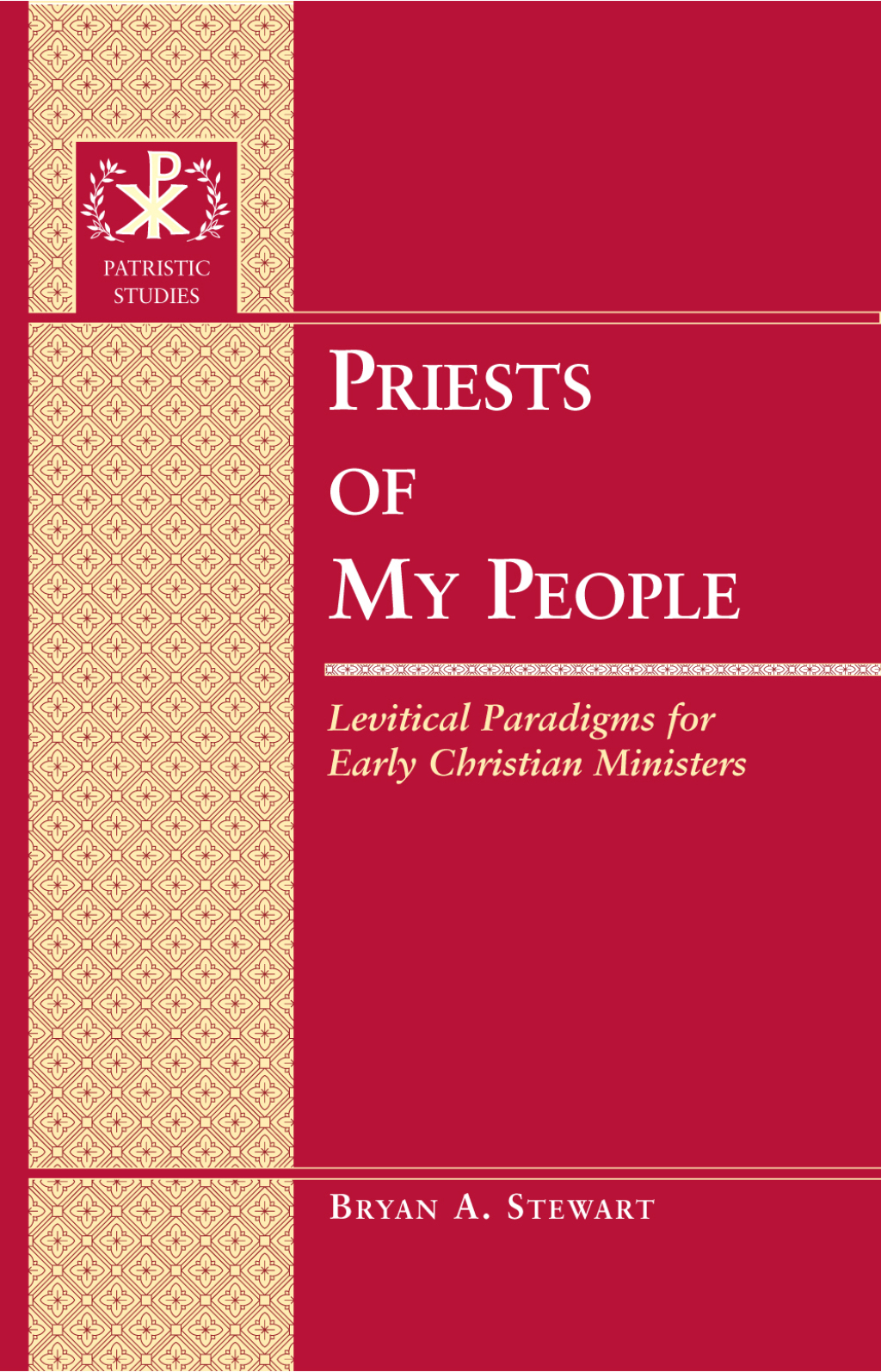
Priests of My People Levitical Paradigms for Early Christian Ministers 1st Edition – PDF/EPUB Version Downloadable
$49.99
Author(s): Bryan A. Stewart
Publisher: Peter Lang Inc., International Academic Publishers
ISBN: 9781433127618
Edition: 1st Edition
This book offers an innovative examination of the question: why did early Christians begin calling their ministerial leaders «priests» (using the terms hiereus/sacerdos)? Scholarly consensus has typically suggested that a Christian «priesthood» emerged either from an imitation of pagan priesthood or in connection with seeing the Eucharist as a sacrifice over which a «priest» must preside. This work challenges these claims by exploring texts of the third and fourth century where Christian bishops and ministers are first designated «priests»: Tertullian and Cyprian of Carthage, Origen of Alexandria, Eusebius of Caesarea, and the church orders Apostolic Tradition and Didascalia Apostolorum. Such an examination demonstrates that the rise of a Christian ministerial priesthood grew more broadly out of a developing «religio-political ecclesiology». As early Christians began to understand themselves culturally as a unique polis in their own right in the Greco-Roman world, they also saw themselves theologically and historically connected with ancient biblical Israel. This religio-political ecclesiology, sharpened by an emerging Christian material culture and a growing sense of Christian «sacred space», influenced the way Christians interpreted the Jewish Scriptures typologically. In seeing the nation of Israel as a divine nation corresponding to themselves, Christians began appropriating the Levitical priesthood as a figure or «type» of the Christian ministerial office. Such a study helpfully broadens our understanding of the emergence of a Christian priesthood beyond pagan imitation or narrow focus on the sacrificial nature of the Eucharist, and instead offers a more comprehensive explanation in connection with early Christian ecclesiology.